Issue · Criminal Justice

Criminal Justice (Law Enforcement)

Every criminal justice bill, vote, and legislator stance in Wisconsin, automatically classified by Maddy, our AI policy reader.

Total bills
75
2025-2026 Regular Session
Top supporter
Adam Neylon
100% support rate
Top opponent
Alex Joers
0% support rate
Ranked legislators
10
5 support · 5 oppose
Key legislators

Who's moving law enforcement in Wisconsin

Legislators moving law enforcement in Wisconsin
Legislator Party Stance Support rate Votes
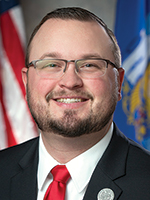
Adam Neylon
Adam Neylon House · District 15
R
Strong +
100% 5
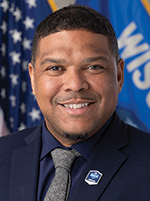
Alex Dallman
Alex Dallman House · District 39
R
Strong +
100% 5
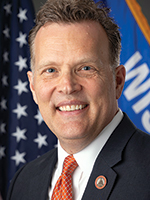
Amanda Nedweski
Amanda Nedweski House · District 32
R
Strong +
100% 5
Barbara Dittrich
Barbara Dittrich House · District 99
R
Strong +
100% 5
Ben Franklin
Ben Franklin House · District 88
R
Strong +
100% 5
Alex Joers
Alex Joers House · District 81
D
Strong −
0% 5
Amaad Rivera-Wagner
Amaad Rivera-Wagner House · District 90
D
Strong −
0% 5
Andrew Hysell
Andrew Hysell House · District 48
D
Strong −
0% 5
Angela Stroud
Angela Stroud House · District 73
D
Strong −
0% 5
Angelina Cruz
Angelina Cruz House · District 62
D
Strong −
0% 5
Showing 31–40 of 75 bills

All criminal justice bills

failed · Wisconsin · Assembly Mar 23, 2026

AB 738: Relating to: decertification of law enforcement, jail, or juvenile detention officers and tactical emergency medical services professionals and the use of force by law enforcement officers. (FE)

AB 738 requires the decertification (removal of professional certification) of law enforcement, jail, juvenile detention, and tactical emergency medical services officers within 30 days for specific actions, including resigning to avoid termination for cause or violating training rules. It also mandates that officers terminated while under investigation for misconduct cannot be recertified without a waiver from a police commission or local governing body. The bill directs the licensing board to develop and update biennially model "best practices" use-of-force policies, emphasizing de-escalation, limiting force against vulnerable populations (like those with disabilities or mental health conditions), and requiring officers to use the least force necessary. This applies directly to certified officers in law enforcement, jail, and juvenile detention roles across the state.
signed · Wisconsin · Assembly Mar 19, 2026

AB 136: Relating to: classification of the crime of impersonating law enforcement officers, fire fighters, and certain other emergency personnel and providing a penalty.

AB 136 makes it a Class A misdemeanor to intentionally impersonate a peace officer, firefighter, emergency medical services practitioner, or emergency medical responder with the intent to mislead others into believing the person is actually an emergency personnel member. The bill directly affects individuals who falsely claim these roles to deceive others, such as by wearing uniforms or using official equipment. Key provisions define specific penalties for each type of impersonation, clarifying that the offense applies when someone acts with deceptive intent. This legislation updates Wisconsin law to explicitly classify these impersonations as criminal acts with standardized misdemeanor penalties.
Sub-Topics Law Enforcement
failed · Wisconsin · Assembly Mar 23, 2026

AB 293: Relating to: sunset of the community-oriented policing-house grant program.

AB 293 extends the expiration date of Wisconsin's community-oriented policing grant program from July 1, 2025, to July 1, 2027. This bill directly affects local law enforcement agencies that receive these grants, ensuring continued eligibility for funding through 2027. The key provision amends Wisconsin Act 19 to update the sunset date in the relevant statute. The change delays the program's termination by two years without altering its structure or funding levels.
Sub-Topics Law Enforcement
failed · Wisconsin · Senate Mar 23, 2026

SB 332: Relating to: prohibition against undetectable firearms, possessing a frame or receiver of a firearm without a serial number, and providing a penalty.

SB 332 prohibits the possession, sale, or manufacture of undetectable firearms (those not detectable by standard metal detectors or security scanners) and unmarked firearm frames/receivers (the core components of a gun). It creates new felony penalties: Class G for possessing undetectable firearms, Class H for sharing manufacturing plans, and Class I for possessing unmarked frames/receivers. The law applies to the general public but includes exemptions for law enforcement officers, military personnel, and licensed manufacturers acting within their official duties. This directly affects individuals who own or attempt to build such firearms, aiming to enhance public safety through stricter firearm tracking and detection requirements.
failed · Wisconsin · Senate Mar 23, 2026

SB 329: Relating to: extreme risk protection temporary restraining orders and injunctions, making an appropriation, and providing a penalty. (FE)

SB 329 creates a $700,000 annual grant program to train law enforcement on filing extreme risk protection orders (ERPOs), which temporarily restrict firearm access for individuals deemed a risk to themselves or others. The bill amends background check requirements to include searches for active ERPOs under Section 813.124, ensuring courts and law enforcement verify if applicants are subject to such orders before firearm purchases. It also clarifies court procedures for ERPO cases, including venue rules and extensions of temporary orders when judges are reassigned. This bill directly affects law enforcement agencies (through training grants), courts (via updated procedures), and individuals subject to ERPOs.
failed · Wisconsin · Assembly Mar 23, 2026

AB 634: Relating to: release of audio and video footage following officer-involved deaths or other critical incidents involving a law enforcement officer. (FE)

AB 634 requires law enforcement agencies to publicly release bodycam, vehicle camera, and relevant audio/video footage within 15 days of specific incidents, including officer-involved deaths, critical incidents (like great bodily harm or death in custody), or firearm discharges by officers. This applies to footage showing actions leading to the incident, though agencies may redact sensitive information like victim identities, medical details, or confidential investigative strategies under defined exemptions. Affected parties, such as identified officers, victims, or families, must be notified 48 hours before release to review the footage. The bill aims to increase transparency while balancing privacy and investigative needs.
failed · Wisconsin · Senate Mar 23, 2026

SB 679: Relating to: prohibiting a law enforcement agency from accessing personal data in exchange for payment without a warrant.

SB 679 prohibits law enforcement agencies from obtaining personal data from third parties (like tech companies or data brokers) in exchange for payment without a court warrant. It covers data such as location history, health records, financial details, browsing habits, and biometric information. Exceptions allow access if police have a warrant, face an emergency involving immediate danger, the data is publicly available, or the individual consented. This directly affects how police can legally acquire personal information from private entities.
failed · Wisconsin · Assembly Mar 23, 2026

AB 34: Relating to: court-issued criminal complaints in officer-involved deaths.

AB 34 prevents courts from allowing criminal complaints against law enforcement officers in officer-involved deaths when a district attorney has already determined there is no basis for prosecution. The bill requires that courts and judges cannot issue complaints unless "new or unused evidence" is presented, effectively barring judicial override of a district attorney's initial decision. This directly affects law enforcement officers involved in such deaths and the legal process for pursuing criminal charges against them. The law applies to cases defined under statute 175.47 (1) (c), limiting judicial action based on a district attorney's prior assessment.
Sub-Topics Courts Law Enforcement
failed · Wisconsin · Assembly Mar 23, 2026

AB 609: Relating to: right to carry a weapon in this state, licenses to carry a concealed weapon, and providing a penalty. (FE)

AB 609 modifies firearm regulations in the state by reducing the restricted distance near schools and hospitals from 1,700 to 1,200 feet for hunting. It removes restrictions on loading firearms in vehicles and discharging weapons within 50 feet of roadways for certain individuals. The bill clarifies that law enforcement officers, qualified out-of-state officers, and former officers are exempt from specific firearm restrictions while acting in their official duties. These changes primarily affect law enforcement personnel and their operational procedures, not general public carry rights. The bill does not create new carry permits or alter concealed weapon licensing requirements.
failed · Wisconsin · Assembly Mar 23, 2026

AB 576: Relating to: limiting the use of automatic registration plate readers, requiring a search warrant for data from an automatic registration plate reader or security camera, and providing a penalty.

AB 576 limits most uses of automatic license plate readers (ALPRs), allowing them only for parking enforcement, secured private areas with restricted access, or weigh stations. It requires law enforcement to obtain a warrant before accessing ALPR or private security camera data, with exceptions only during emergencies involving immediate danger. The bill also restricts data retention to 90 days and imposes fines up to $10,000 for violations of these rules.
Sub-Topics Law Enforcement
Showing 31 to 40 of 75 bills
Previous 1 3 4 5 8 Next