Issue · Criminal Justice

Criminal Justice (Courts)

Every criminal justice bill, vote, and legislator stance in Wisconsin, automatically classified by Maddy, our AI policy reader.

Total bills
43
2025-2026 Regular Session
Top supporter
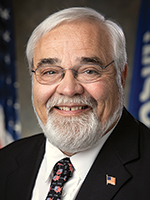
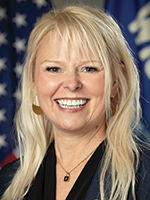
Jeff Mursau
100% support rate
Top opponent
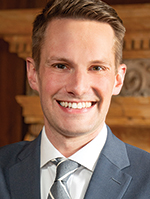
Robyn Vining
0% support rate
Ranked legislators
10
5 support · 5 oppose
Key legislators

Who's moving courts in Wisconsin

Legislators moving courts in Wisconsin
Legislator Party Stance Support rate Votes
Jeff Mursau
Jeff Mursau House · District 36
R
Strong +
100% 4
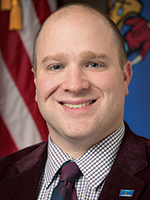
Eric Wimberger
Eric Wimberger Senate · District 2
R
Support
75% 4
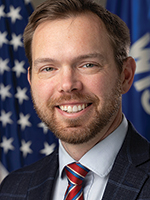
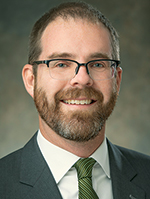
Adam Neylon
Adam Neylon House · District 15
R
Support
67% 6
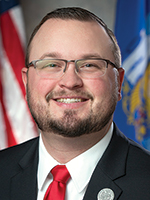
Alex Dallman
Alex Dallman House · District 39
R
Support
67% 6
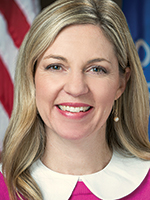
Amanda Nedweski
Amanda Nedweski House · District 32
R
Support
67% 6
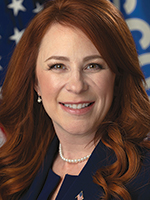
Robyn Vining
Robyn Vining House · District 13
D
Strong −
0% 4
Ryan Clancy
Ryan Clancy House · District 19
D
Strong −
0% 3
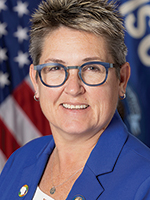
Kristin Dassler-Alfheim
Kristin Dassler-Alfheim Senate · District 18
D
Oppose
25% 4
Sarah Keyeski
Sarah Keyeski Senate · District 14
D
Oppose
25% 4
Alex Joers
Alex Joers House · District 81
D
Oppose
33% 6
Showing 31–40 of 43 bills

All criminal justice bills

failed · Wisconsin · Senate Mar 23, 2026

SB 95: Relating to: restitution orders following a conviction for human trafficking and restoration of the right to vote to a person barred from voting as a result of a felony conviction. (FE)

SB 95 changes voting rights restoration rules for people with felony convictions by requiring full payment of all financial obligations - including restitution, fines, costs, and fees - before voting rights are restored. For human trafficking convictions (specifically under sections 940.302(2) or 948.051), courts must order immediate restitution payments, with enforcement options like property execution if unpaid. This affects individuals barred from voting due to felony convictions who have completed sentences but still owe financial penalties. The bill updates two statutes to ensure voting rights restoration is tied directly to resolving all court-ordered financial responsibilities.
failed · Wisconsin · Assembly Mar 23, 2026

AB 148: Relating to: interpreter action by telephone or live audiovisual means in civil or criminal proceedings.

AB 148 allows courts to permit interpreters to provide services remotely via telephone or live video in civil and criminal court proceedings (excluding trials), upon a party's request. This amendment updates statutes to explicitly include remote interpretation as an option for civil cases (via 807.14) and criminal cases (via 967.09), replacing previous restrictions. It directly affects individuals involved in court cases who require language assistance, making it easier to access interpreters without in-person attendance. The bill does not mandate remote interpretation but expands court flexibility in approving it. This change applies to all relevant civil and criminal proceedings where an interpreter is requested.
Sub-Topics Courts
failed · Wisconsin · Assembly Mar 23, 2026

AB 331: Relating to: establishing a civil cause of action for civil rights violations.

AB 331 creates a new legal right for individuals who believe their constitutional rights (such as due process or equal protection) were violated by government officials acting under color of law, including police or state employees. It allows victims to sue for damages, court orders to stop violations, and court-ordered attorney fees. The law sets a 6-year deadline to file such lawsuits and applies to both federal and state civil rights violations. It does not apply to cases already covered by existing statutes like 893.80 or 893.82.
Sub-Topics Civil Rights Courts Policing Tags Civil Liberties
failed · Wisconsin · Senate Mar 23, 2026

SB 372: Relating to: crime victim notification cards. (FE)

SB 372 creates standardized crime victim notification cards to help victims of crime stay informed about court proceedings involving offenders. The bill requires the director of state courts to design these cards, which victims can complete with their contact information and the offender's details, and send to the relevant court clerk. County courts and victim/witness offices must provide these cards at no cost to victims, and the law protects victim mailing addresses from public inspection under state law. This directly affects crime victims in Wisconsin who need to receive updates about offender sentencing or probation modifications.
passed · Wisconsin · Assembly Mar 23, 2026

AB 514: Relating to: authorizing additional circuit court and criminal justice system positions. (FE)

AB 514 authorizes new circuit court branches and additional judicial staff in Kenosha, Brown, and Menominee/Shawano counties to address growing caseloads. Specifically, it adds a ninth branch in Kenosha County (effective August 2028), a ninth branch in Brown County (effective August 2027) and a tenth branch (effective August 2028), and a third branch in Menominee/Shawano Counties (effective August 2027). The bill also authorizes new circuit judge and court reporter positions for these branches, plus 30.5 additional assistant district attorney positions across 24 counties. These changes are funded through existing state court appropriations and will take effect on the specified dates.
Sub-Topics Courts Judges
failed · Wisconsin · Senate Mar 23, 2026

SB 80: Relating to: statutory recognition of specialized treatment court and commercial court dockets.

Senate Bill 80 provides statutory recognition for specialized treatment courts and commercial court dockets within the state court system. For treatment courts, the bill formally acknowledges various types, such as drug, mental health, and veterans courts, which aim to address underlying issues related to criminal behavior through treatment and multidisciplinary teams to reduce recidivism. For commercial courts, it establishes a framework for handling complex business cases. The bill mandates that certain types of disputes involving business organizations be assigned to these dockets, with specific circuit court judges selected to preside over them.
Sub-Topics Courts
failed · Wisconsin · Assembly Mar 23, 2026

AB 510: Relating to: use of certain statements as evidence in prosecution for prostitution.

AB 510 prevents law enforcement or medical providers from using statements about prostitution as evidence in court if a person contacts them to report another crime (like theft or assault) or seek medical care. It applies directly to individuals seeking help for non-prostitution issues, including those reporting on behalf of others. The bill prohibits using any prostitution-related statements obtained during these unrelated contacts in prosecution for prostitution or attempted prostitution. This policy change ensures that people accessing emergency services or reporting other crimes cannot face additional charges based on their initial contact. The bill is currently pending in the Judiciary Committee after its October 2025 introduction.
vetoed · Wisconsin · Assembly May 13, 2026

AB 73: Relating to: statutory recognition of specialized treatment court and commercial court dockets.

AB 73 creates a new statute (Chapter 798) to formally recognize two types of specialized court programs in Wisconsin: treatment courts and commercial courts. Treatment courts (e.g., drug, mental health, veterans courts) address underlying issues like addiction to reduce recidivism through treatment and supervision, while commercial courts handle business disputes more efficiently. The bill establishes these dockets within the existing court system, requiring judges to receive specialized training and operate using graduated sanctions and rewards. It directly affects courts handling these case types, aiming to improve outcomes for participants and streamline dispute resolution.
signed · Wisconsin · Assembly Dec 8, 2025

AB 201: Relating to: extortion, sexual extortion, and providing a penalty.

AB 201 modifies Wisconsin law to require sex offender registration for individuals convicted of sexual extortion or certain related offenses. It directs courts to mandate registration under Wisconsin Statute 301.45 if the underlying conduct was "sexually motivated" (as defined in Statute 980.01(5)), including violations of statutes related to sexual extortion (e.g., 942.09, 942.095). The bill affects offenders convicted of sexual extortion or sexually motivated crimes under Chapters 940, 942, 943, 944, or 948. Courts may later release individuals from registration if they meet conditions set by the court. This is a policy change to expand registration requirements for specific sexual offenses, not a new criminal penalty.
Sub-Topics Courts
failed · Wisconsin · Assembly Mar 23, 2026

AB 29: Relating to: impoundment of vehicles used in certain traffic offenses.

AB 29 allows police to seize (impound) vehicles used in specific traffic violations, such as a second speeding offense exceeding 25 mph over the limit, repeated DUI-related violations, or reckless driving. It directly affects drivers convicted of these offenses, requiring vehicles to be held for 90 days unless released earlier through owner request (if they didn’t operate the vehicle during the violation) or court order. Owners can petition a court for immediate release within 30 days if charges are dismissed or if they prove ownership and lack of consent during the violation. If convicted, courts may adjust the impound period, and drivers must cover law enforcement’s reasonable impoundment costs.
Showing 31 to 40 of 43 bills
Previous 1 3 4 5 Next