Issue · Criminal Justice

Criminal Justice (Law Enforcement)

Every criminal justice bill, vote, and legislator stance in Wisconsin, automatically classified by Maddy, our AI policy reader.

Total bills
64
2025-2026 Regular Session
Top supporter
Adam Neylon
100% support rate
Top opponent
Alex Joers
0% support rate
Ranked legislators
10
5 support · 5 oppose
Key legislators

Who's moving law enforcement in Wisconsin

Legislators moving law enforcement in Wisconsin
Legislator Party Stance Support rate Decisive votes
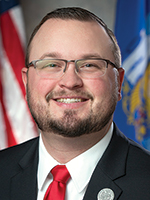
Adam Neylon
Adam Neylon House · District 15
R
Strong +
100% 5
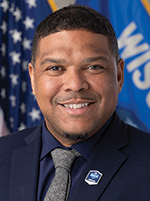
Alex Dallman
Alex Dallman House · District 39
R
Strong +
100% 5
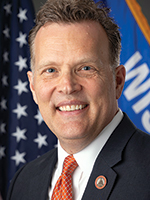
Amanda Nedweski
Amanda Nedweski House · District 32
R
Strong +
100% 5
Barbara Dittrich
Barbara Dittrich House · District 99
R
Strong +
100% 5
Ben Franklin
Ben Franklin House · District 88
R
Strong +
100% 5
Alex Joers
Alex Joers House · District 81
D
Strong −
0% 5
Amaad Rivera-Wagner
Amaad Rivera-Wagner House · District 90
D
Strong −
0% 5
Andrew Hysell
Andrew Hysell House · District 48
D
Strong −
0% 5
Angela Stroud
Angela Stroud House · District 73
D
Strong −
0% 5
Angelina Cruz
Angelina Cruz House · District 62
D
Strong −
0% 5
Showing 31–40 of 64 bills

All criminal justice bills

failed · Wisconsin · Assembly Mar 23, 2026

AB 738: Relating to: decertification of law enforcement, jail, or juvenile detention officers and tactical emergency medical services professionals and the use of force by law enforcement officers. (FE)

AB 738 requires the decertification (removal of professional certification) of law enforcement, jail, juvenile detention, and tactical emergency medical services officers within 30 days for specific actions, including resigning to avoid termination for cause or violating training rules. It also mandates that officers terminated while under investigation for misconduct cannot be recertified without a waiver from a police commission or local governing body. The bill directs the licensing board to develop and update biennially model "best practices" use-of-force policies, emphasizing de-escalation, limiting force against vulnerable populations (like those with disabilities or mental health conditions), and requiring officers to use the least force necessary. This applies directly to certified officers in law enforcement, jail, and juvenile detention roles across the state.
failed · Wisconsin · Assembly Mar 23, 2026

AB 293: Relating to: sunset of the community-oriented policing-house grant program.

AB 293 extends the expiration date of Wisconsin's community-oriented policing grant program from July 1, 2025, to July 1, 2027. This bill directly affects local law enforcement agencies that receive these grants, ensuring continued eligibility for funding through 2027. The key provision amends Wisconsin Act 19 to update the sunset date in the relevant statute. The change delays the program's termination by two years without altering its structure or funding levels.
Sub-Topics Law Enforcement
failed · Wisconsin · Senate Mar 23, 2026

SB 329: Relating to: extreme risk protection temporary restraining orders and injunctions, making an appropriation, and providing a penalty. (FE)

SB 329 creates a $700,000 annual grant program to train law enforcement on filing extreme risk protection orders (ERPOs), which temporarily restrict firearm access for individuals deemed a risk to themselves or others. The bill amends background check requirements to include searches for active ERPOs under Section 813.124, ensuring courts and law enforcement verify if applicants are subject to such orders before firearm purchases. It also clarifies court procedures for ERPO cases, including venue rules and extensions of temporary orders when judges are reassigned. This bill directly affects law enforcement agencies (through training grants), courts (via updated procedures), and individuals subject to ERPOs.
failed · Wisconsin · Assembly Mar 23, 2026

AB 634: Relating to: release of audio and video footage following officer-involved deaths or other critical incidents involving a law enforcement officer. (FE)

AB 634 requires law enforcement agencies to publicly release bodycam, vehicle camera, and relevant audio/video footage within 15 days of specific incidents, including officer-involved deaths, critical incidents (like great bodily harm or death in custody), or firearm discharges by officers. This applies to footage showing actions leading to the incident, though agencies may redact sensitive information like victim identities, medical details, or confidential investigative strategies under defined exemptions. Affected parties, such as identified officers, victims, or families, must be notified 48 hours before release to review the footage. The bill aims to increase transparency while balancing privacy and investigative needs.
failed · Wisconsin · Senate Mar 23, 2026

SB 679: Relating to: prohibiting a law enforcement agency from accessing personal data in exchange for payment without a warrant.

SB 679 prohibits law enforcement agencies from obtaining personal data from third parties (like tech companies or data brokers) in exchange for payment without a court warrant. It covers data such as location history, health records, financial details, browsing habits, and biometric information. Exceptions allow access if police have a warrant, face an emergency involving immediate danger, the data is publicly available, or the individual consented. This directly affects how police can legally acquire personal information from private entities.
failed · Wisconsin · Assembly Mar 23, 2026

AB 576: Relating to: limiting the use of automatic registration plate readers, requiring a search warrant for data from an automatic registration plate reader or security camera, and providing a penalty.

AB 576 limits most uses of automatic license plate readers (ALPRs), allowing them only for parking enforcement, secured private areas with restricted access, or weigh stations. It requires law enforcement to obtain a warrant before accessing ALPR or private security camera data, with exceptions only during emergencies involving immediate danger. The bill also restricts data retention to 90 days and imposes fines up to $10,000 for violations of these rules.
Sub-Topics Law Enforcement
vetoed · Wisconsin · Senate May 13, 2026

SB 432: Relating to: mandatory reporting requirements and referring cases of threatened or suspected child abuse to law enforcement. (FE)

SB 432 requires certain professionals, including social workers and agency employees who interact directly with children or handle child welfare cases, to report suspected or threatened child abuse to law enforcement. It mandates that county departments, the state department, and licensed child welfare agencies refer most abuse cases to police within 12 hours (excluding weekends/holidays) and adopt written policies for reporting specific types of abuse or neglect defined in state law. The bill adds a new reporting category for child welfare employees and clarifies when written policies must be created for certain abuse cases. This changes existing procedures by expanding who must report and requiring standardized policies for specific scenarios.
failed · Wisconsin · Assembly Mar 23, 2026

AB 575: Relating to: prohibiting state agencies and local governmental units from using facial recognition technology or data generated from it.

AB 575 prohibits all state agencies and local governmental units (like cities, counties, or school districts) from using facial recognition technology or its data, except to identify their own employees for employment-related purposes. The bill defines facial recognition technology as an automated system that compares camera footage of faces against databases to find matches. It directly affects government entities that currently use or plan to use this technology for public services, law enforcement, or other operations. The law creates a clear ban on its use for public identification, with only the narrow exception for internal employee verification.
passed · Wisconsin · Senate Mar 23, 2026

SB 224: Relating to: the rights of sexual assault crime victims.

SB 224 (2026 Legislature) improves communication rights for sexual assault victims who provide forensic evidence kits. The bill requires law enforcement to test kits within a specified timeline and provide victims with clear information about kit status, DNA testing results, and destruction dates upon request. It also mandates that victims be notified of any changes to their case status, including if it's closed or reopened. These provisions directly affect sexual assault victims who submit kits during forensic examinations, ensuring they receive timely updates about their case. The bill focuses on transparency and victim notification without altering legal penalties or funding.
signed · Wisconsin · Assembly Mar 19, 2026

AB 78: Relating to: impoundment of vehicles used in certain reckless driving offenses. (FE)

AB 78 modifies Wisconsin law regarding vehicle impoundment for reckless driving offenses. It gives law enforcement officers discretion to impound vehicles used in certain reckless driving cases, rather than requiring mandatory impoundment. The bill directly affects drivers convicted of qualifying reckless driving offenses and law enforcement officers who decide whether to impound a vehicle. This change, now part of 2025 Wisconsin Act 46, alters the standard procedure for handling such vehicles.
Sub-Topics Law Enforcement
Showing 31 to 40 of 64 bills
Previous 1 … 3 4 5 … 7 Next