Issue · Criminal Justice

Criminal Justice

Every criminal justice bill, vote, and legislator stance in Wisconsin, automatically classified by Maddy, our AI policy reader.

Total bills
211
2025-2026 Regular Session
Top supporter
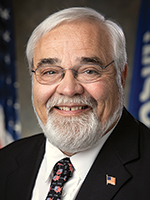
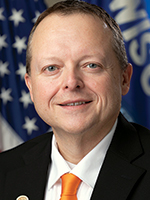
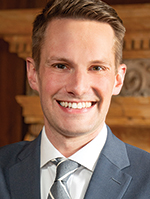
Jeff Mursau
70% support rate
Top opponent
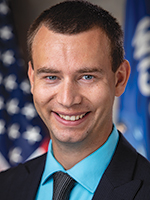
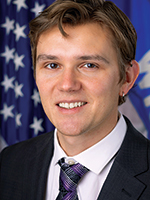
Ryan Clancy
32% support rate
Ranked legislators
10
5 support · 5 oppose
Key legislators

Who's moving criminal justice in Wisconsin

Legislators moving criminal justice in Wisconsin
Legislator Party Stance Support rate Votes
Jeff Mursau
Jeff Mursau House · District 36
R
Support
70% 54
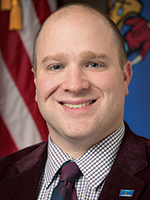
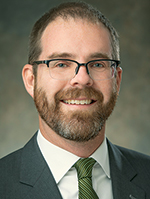
Will Penterman
Will Penterman House · District 38
R
Support
67% 48
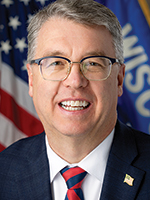
Brad Pfaff
Brad Pfaff Senate · District 32
D
Support
64% 36
Eric Wimberger
Eric Wimberger Senate · District 2
R
Support
64% 36
Scott Krug
Scott Krug House · District 72
R
Support
64% 58
Ryan Clancy
Ryan Clancy House · District 19
D
Oppose
32% 53
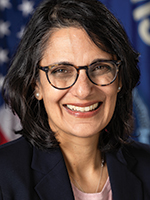
Renuka Mayadev
Renuka Mayadev House · District 77
D
Oppose
32% 58
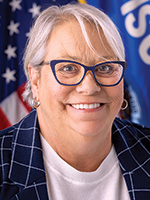
Christine Sinicki
Christine Sinicki House · District 20
D
Oppose
32% 58
Alex Joers
Alex Joers House · District 81
D
Oppose
32% 58
Christian Phelps
Christian Phelps House · District 93
D
Oppose
33% 57
Showing 191–200 of 211 bills

All criminal justice bills

failed · Wisconsin · Senate Mar 23, 2026

SB 80: Relating to: statutory recognition of specialized treatment court and commercial court dockets.

Senate Bill 80 provides statutory recognition for specialized treatment courts and commercial court dockets within the state court system. For treatment courts, the bill formally acknowledges various types, such as drug, mental health, and veterans courts, which aim to address underlying issues related to criminal behavior through treatment and multidisciplinary teams to reduce recidivism. For commercial courts, it establishes a framework for handling complex business cases. The bill mandates that certain types of disputes involving business organizations be assigned to these dockets, with specific circuit court judges selected to preside over them.
Sub-Topics Courts
failed · Wisconsin · Senate Mar 23, 2026

SB 303: Relating to: grants for technical colleges to provide mapping data to law enforcement. (FE)

SB 303 creates a grant program to fund technical colleges in developing detailed digital maps of their campus buildings for law enforcement use. These maps must include specific location details like room numbers, floors, and building layouts to help first responders during emergencies, and must work with existing public safety technology without requiring additional software purchases. The Office of School Safety will administer the grants, accepting applications from technical college leaders working with local law enforcement. The bill also requires an annual report tracking grant funding and how the maps are used.
Sub-Topics Law Enforcement Tags Public Safety
failed · Wisconsin · Assembly Mar 23, 2026

AB 510: Relating to: use of certain statements as evidence in prosecution for prostitution.

AB 510 prevents law enforcement or medical providers from using statements about prostitution as evidence in court if a person contacts them to report another crime (like theft or assault) or seek medical care. It applies directly to individuals seeking help for non-prostitution issues, including those reporting on behalf of others. The bill prohibits using any prostitution-related statements obtained during these unrelated contacts in prosecution for prostitution or attempted prostitution. This policy change ensures that people accessing emergency services or reporting other crimes cannot face additional charges based on their initial contact. The bill is currently pending in the Judiciary Committee after its October 2025 introduction.
failed · Wisconsin · Senate Mar 23, 2026

SB 538: Relating to: use of certain statements as evidence in prosecution for prostitution.

SB 538 prevents law enforcement from using statements about prostitution as evidence in prosecution if those statements were gathered while someone sought medical care or reported another crime (not prostitution). It protects individuals who contact police, medical providers, or emergency services for reasons unrelated to prostitution, as well as those reporting crimes or seeking care on behalf of others. The bill creates a clear rule that statements obtained during these unrelated interactions cannot be used to prosecute a person for prostitution. This change directly affects people interacting with authorities for medical or non-prostitution-related crime reporting, ensuring such statements remain inadmissible in prostitution cases.
failed · Wisconsin · Assembly Mar 23, 2026

AJR 94: Relating to: proclaiming January as Human Trafficking Awareness and Prevention Month in the state of Wisconsin.

AJR 94 is a symbolic resolution that would officially recognize January as "Human Trafficking Awareness and Prevention Month" across Wisconsin. It directly affects all Wisconsin residents by designating a specific month for statewide awareness efforts focused on human trafficking. The resolution has no binding legal requirements but serves as a formal declaration to encourage educational events, community outreach, and resource sharing related to human trafficking prevention during January. It does not create new laws or allocate funding.
Sub-Topics Human Trafficking
vetoed · Wisconsin · Assembly May 13, 2026

AB 73: Relating to: statutory recognition of specialized treatment court and commercial court dockets.

AB 73 creates a new statute (Chapter 798) to formally recognize two types of specialized court programs in Wisconsin: treatment courts and commercial courts. Treatment courts (e.g., drug, mental health, veterans courts) address underlying issues like addiction to reduce recidivism through treatment and supervision, while commercial courts handle business disputes more efficiently. The bill establishes these dockets within the existing court system, requiring judges to receive specialized training and operate using graduated sanctions and rewards. It directly affects courts handling these case types, aiming to improve outcomes for participants and streamline dispute resolution.
failed · Wisconsin · Assembly Mar 23, 2026

AB 116: Relating to: transportation of minors for emergency detention.

AB 116 creates a new reimbursement program for county governments to cover transportation costs when moving minors into emergency detention for safety reasons. It directly affects counties handling youth detention, minors receiving medical assistance, and third-party transportation providers (like ambulances or contracted vendors) who transport minors. The bill requires counties to use the least restrictive transportation method possible (like non-law enforcement vendors when feasible) and establishes that state reimbursement through the Medical Assistance program will only occur if federal approval is secured. This is a procedural change to clarify funding mechanisms, not a policy shift on detention standards.
signed · Wisconsin · Senate Mar 13, 2026

SB 620: Relating to: tracking a person who is registered as a sex offender but unable to provide an address.

SB 620 requires sex offenders on parole or extended supervision who cannot provide an address to notify the department within 24 hours of becoming unable to do so. It also mandates that the department use location tracking technology (passive positioning systems) for these individuals if they fail to provide an address as required under existing registration rules. The bill directly affects sex offenders subject to registration who lose the ability to provide a stable address. Key mechanisms include the 24-hour notification deadline and automatic departmental implementation of tracking when address information is unavailable. The policy change ensures continuous monitoring of this specific group to maintain public safety oversight.
Sub-Topics Probation & Parole
failed · Wisconsin · Senate Mar 23, 2026

SB 650: Relating to: penalty enhancer for crimes committed by a person acting as an agent of a foreign government or terrorist organization with the intent to silence or punish persons for their political view, criminalizing the enforcement of foreign laws without federal or state approval, and providing a penalty. (FE)

SB 650 defines "transnational repression" as actions by foreign agents targeting individuals (like activists or journalists) to silence them due to political views. It creates three key provisions: (1) requires Wisconsin's Department of Justice to develop law enforcement training, public awareness campaigns, and a reporting portal for transnational repression cases; (2) increases penalties for crimes committed as transnational repression (e.g., raising a Class B felony to a Class A felony); and (3) criminalizes enforcing foreign laws without federal or state approval, punishable as a Class E felony with a minimum 3-year prison term. The bill directly affects foreign government agents, law enforcement, and individuals targeted by transnational repression. It focuses on prevention, awareness, and stricter penalties for specific foreign interference tactics.
failed · Wisconsin · Assembly Mar 23, 2026

AB 573: Relating to: sexual assault forensic examination compensation.

AB 573 clarifies which costs related to sexual assault forensic examinations are covered under compensation programs for victims. It specifically defines "examination costs" to include evidence-gathering procedures, STI testing/prevention, HIV prophylaxis (medication to prevent HIV exposure), and STI treatment medications provided during the exam. The bill explicitly excludes administrative fees, attorney costs, and other non-medical expenses from coverage. Additionally, it requires applicants to submit only medical records directly related to the covered services, such as examinations, treatments, or preventive medications, and prohibits submitting unrelated documentation. This bill adjusts eligibility criteria for compensation without creating new benefits or funding.
Showing 191 to 200 of 211 bills
Previous 1 19 20 21 22 Next