Issue · Criminal Justice

Criminal Justice (Corrections)

Every criminal justice bill, vote, and legislator stance in Wisconsin, automatically classified by Maddy, our AI policy reader.

Total bills
67
2025-2026 Regular Session
Top supporter
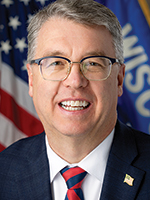
Brad Pfaff
100% support rate
Top opponent
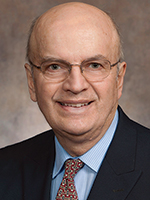
Steve Doyle
0% support rate
Ranked legislators
10
5 support · 5 oppose
Key legislators

Who's moving corrections in Wisconsin

Legislators moving corrections in Wisconsin
Legislator Party Stance Support rate Votes
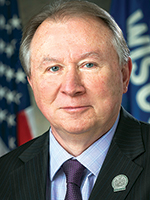
Brad Pfaff
Brad Pfaff Senate · District 32
D
Strong +
100% 4
Bob Wirch
Bob Wirch Senate · District 22
D
Support
75% 4
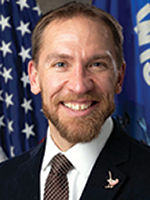
Chris Larson
Chris Larson Senate · District 7
D
Support
75% 4
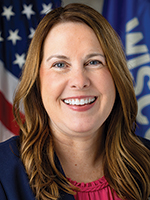
Dianne Hesselbein
Dianne Hesselbein Senate · District 27
D
Support
75% 4
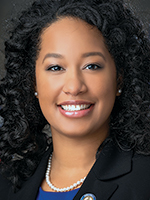
Dora Drake
Dora Drake Senate · District 4
D
Support
75% 4
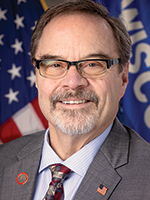
Steve Doyle
Steve Doyle House · District 94
D
Strong −
0% 6
Paul Tittl
Paul Tittl House · District 25
R
Strong −
0% 3
Jill Billings
Jill Billings House · District 95
D
Strong −
17% 6
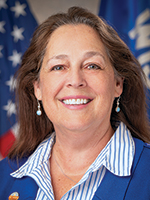
Jodi Emerson
Jodi Emerson House · District 91
D
Strong −
17% 6
AJ
André Jacque Senate · District 1
R
Oppose
25% 4
Showing 11–20 of 67 bills

All criminal justice bills

failed · Wisconsin · Assembly Mar 23, 2026

AB 1039: Relating to: penalty for the terrorist crimes against the occupants of a church and providing a penalty.

This bill increases penalties for individuals convicted of felony crimes targeting church occupants with intent to terrorize or intimidate them. It mandates a minimum one-year prison sentence (with no probation allowed) for such offenses and requires prosecutors to seek court approval before dismissing or amending charges. Additionally, it prohibits deferred prosecution programs for these cases and directs courts to verify the specific intent element during trials. The law applies to any felony where the defendant intended to terrorize two or more people inside a church.
failed · Wisconsin · Assembly Mar 23, 2026

AB 904: Relating to: immunity for certain controlled substances offenses for aiders and aided persons.

AB 904 creates immunity from prosecution and parole/probation revocation for people who seek help during a suspected overdose (aiders) and offers treatment-based alternatives instead of jail for the person experiencing the overdose (aided persons). Specifically, aiders who get help immediately after seeing someone overdose cannot lose parole or face charges for drug possession under certain circumstances. Aided persons can avoid prosecution by completing a treatment program or serving 15 days in jail if treatment isn't available, with prosecutors required to offer deferred prosecution tied to treatment. The bill applies to offenses involving controlled substances, paraphernalia, or masking agents directly related to overdose assistance.
failed · Wisconsin · Senate Apr 15, 2026

SB 837: Relating to: grants for alternatives to prosecution and incarceration programs for persons with mental illness and making an appropriation. (FE)

SB 837 creates a new state grant program providing $1.6 million annually to counties and tribes for mental health treatment alternatives to prosecution and incarceration. It directly affects low-to-medium risk individuals with mental illness who interact with the criminal justice system, excluding violent offenders as defined by law. Key provisions require grantees to establish programs using restorative justice principles, integrate mental health services, and meet evidence-based treatment standards while tracking outcomes like reduced jail populations and recidivism. Grantees must submit annual reports on program impact to the Department of Justice and an oversight committee, with data shared monthly for state evaluation. The bill mandates collaboration between courts, prosecutors, public defenders, and health agencies to coordinate care and services.
failed · Wisconsin · Assembly Mar 23, 2026

AB 837: Relating to: placement of sexually violent persons on supervised release.

AB 837 modifies Wisconsin law to require that serious child sex offenders placed on supervised release must reside in housing not adjacent to properties where children primarily live. Specifically, it prohibits placement within 1,500 feet of a child’s primary residence, defining "adjacent" as properties sharing a boundary line without a road or alley. The bill also mandates that counties assess proposed residences for compliance with this rule before court approval and report findings to the court. Courts must then review this assessment and reject plans that fail to meet the safety standard, requiring revised housing options if needed. This directly affects serious child sex offenders on supervised release, the Department of Corrections, counties, and courts.
failed · Wisconsin · Assembly Mar 23, 2026

AB 860: Relating to: written resource guides informing inmates and juveniles in custody of their rights and making an appropriation. (FE)

AB 860 requires state and county correctional facilities to provide written guides detailing inmates' and juveniles' rights, updated annually or after legal changes. These guides must account for individual circumstances like confinement status and location, and be posted throughout facilities, provided upon entry or transfer, and explained by staff to all affected individuals. The bill appropriates $200,000 for the Department of Administration to contract with legal organizations - including formerly incarcerated individuals - to develop these guides by June 2027. The law takes effect July 1, 2027, directly affecting all inmates in state prisons, county jails, and juveniles in youth facilities across Wisconsin.
failed · Wisconsin · Senate Mar 23, 2026

SB 847: Relating to: written resource guides informing inmates and juveniles in custody of their rights and making an appropriation. (FE)

SB 847 requires state correctional institutions and juvenile facilities to create and maintain written "Know Your Rights" resource guides for inmates and juveniles. These guides must explain rights based on legal status, confinement type, and facility, and be updated annually or after legal changes. The guides must be posted in facilities, provided to new entrants or upon request, and explained by trained staff during intake or transfers. The bill appropriates $200,000 for developing these guides, with requirements to involve formerly incarcerated people in the process, and takes effect July 1, 2027.
failed · Wisconsin · Assembly Apr 14, 2026

AB 847: Relating to: grants for alternatives to prosecution and incarceration programs for persons with mental illness and making an appropriation. (FE)

AB 847 creates a state grant program providing $1.6 million annually to counties and tribes for mental health diversion programs. These programs offer alternatives to prosecution and incarceration for low-to-medium risk individuals with mental illness who interact with the criminal justice system, including deferred prosecution and restorative justice services. Eligible programs must provide holistic treatment (mental health care, housing, employment support), avoid including violent offenders, and collaborate with courts, prosecutors, and mental health providers. Counties receiving grants must submit annual reports on program impact, including effects on jail populations and participant outcomes, and comply with state audits. The bill aims to reduce incarceration costs, improve public safety, and address mental health needs through evidence-based approaches.
failed · Wisconsin · Assembly Mar 23, 2026

AB 727: Relating to: inmate access to the outdoors. (FE)

AB 727 requires state prison leaders and county jail officials to provide inmates with 3 hours of outdoor access weekly, starting after specific waiting periods. For state prisons, this applies to most inmates after 91 days (except those in certain facilities under Section 302.01(1)(i)), while county jails must provide access after 31 days. Exceptions include inmates in lockdowns or solitary confinement. The law takes effect for the Milwaukee Secure Detention Facility on January 1, 2028, with broader implementation following. This policy directly affects incarcerated individuals in state and county correctional facilities across the state.
failed · Wisconsin · Senate Mar 23, 2026

SB 713: Relating to: access to prisons and jails for oversight purposes. (FE)

SB 713 requires state correctional facilities and county jails to provide immediate access (within 24 hours) to certain oversight personnel for facility tours. It directly affects legislators on committees related to corrections and county employees responsible for overseeing county jails, granting them access to residential areas, cells, meal spaces, and prisoner discussions. Key provisions include a limit of 12 facility tours per year per person and restrictions on visits between 9 p.m. and 6 a.m., with access required during daylight hours instead. The bill does not change prison operations but establishes a structured process for oversight access.
Sub-Topics Corrections
failed · Wisconsin · Senate Mar 23, 2026

SB 725: Relating to: in-person visiting periods for inmates of state correctional institutions and county jails or houses of correction. (FE)

SB 725 requires state correctional facilities and county jails to provide inmates with at least two in-person visiting periods per week, with exceptions during lockdowns or solitary confinement (up to 10 days). The bill mandates that inmates may physically embrace visitors for 20 seconds at the start and end of each visit, and facilities must provide paper, pens, and art supplies upon request, allowing inmates to keep original visitor-made artwork. It directly affects all inmates in state prisons and county jails, as well as correctional staff (state department or sheriff’s office) responsible for implementing these visiting rules. The law also establishes a formal process for inmates or visitors to appeal unauthorized removal from a visitor registry.
Showing 11 to 20 of 67 bills
Previous 1 2 3 7 Next