Issue · Criminal Justice

Criminal Justice (Courts)

Every criminal justice bill, vote, and legislator stance in Wisconsin, automatically classified by Maddy, our AI policy reader.

Total bills
34
2025-2026 Regular Session
Top supporter
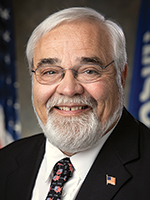
Jeff Mursau
100% support rate
Top opponent
Robyn Vining
0% support rate
Ranked legislators
10
5 support · 5 oppose
Key legislators

Who's moving courts in Wisconsin

Legislators moving courts in Wisconsin
Legislator Party Stance Support rate Votes
Jeff Mursau
Jeff Mursau House · District 36
R
Strong +
100% 4
Eric Wimberger
Eric Wimberger Senate · District 2
R
Support
75% 4
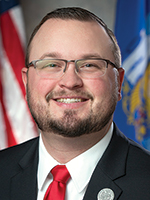
Adam Neylon
Adam Neylon House · District 15
R
Support
67% 6
Alex Dallman
Alex Dallman House · District 39
R
Support
67% 6
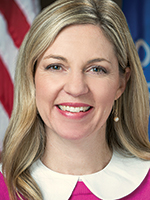
Amanda Nedweski
Amanda Nedweski House · District 32
R
Support
67% 6
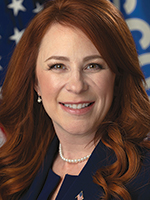
Robyn Vining
Robyn Vining House · District 13
D
Strong −
0% 4
Ryan Clancy
Ryan Clancy House · District 19
D
Strong −
0% 3
Kristin Dassler-Alfheim
Kristin Dassler-Alfheim Senate · District 18
D
Oppose
25% 4
Sarah Keyeski
Sarah Keyeski Senate · District 14
D
Oppose
25% 4
Alex Joers
Alex Joers House · District 81
D
Oppose
33% 6
Showing 11–20 of 34 bills

All criminal justice bills

signed · Wisconsin · Assembly Mar 27, 2026

AB 938: Relating to: an optional final hearing by affidavit for the dissolution of a marriage (suggested as remedial legislation by the Office of the Director of State Courts).

AB 938 amends Wisconsin law to require divorcing couples to disclose in their dissolution affidavits whether they were involved in any past domestic abuse cases. Specifically, the affidavit must state if either party was part of pending or completed court cases involving interspousal battery, domestic abuse, or related criminal charges under statutes like 940.60 or 940.61. This change directly affects individuals filing for divorce in Wisconsin who may have prior domestic violence history. The bill adds this disclosure requirement to the affidavit process, aiming to improve court awareness of potential safety risks during divorce proceedings. It does not alter divorce eligibility or timelines but mandates this specific information be included.
signed · Wisconsin · Assembly Apr 9, 2026

AB 964: Relating to: Internet crimes against children administrative subpoenas for the crime of sexual extortion when the crime victim is a child. (FE)

AB 964 clarifies that online sexual extortion targeting children falls under existing law by specifying it as a violation of Section 942.095 when the victim is a child (as defined in Section 948.01). This bill directly affects law enforcement agencies investigating internet crimes against children, enabling them to issue administrative subpoenas to internet companies for relevant data without a court order. The key provision streamlines the process for obtaining evidence from online platforms in cases where children are victims of sexual extortion. It does not create new penalties but ensures these cases are explicitly covered under current statutes for investigative efficiency.
failed · Wisconsin · Assembly Mar 23, 2026

AB 837: Relating to: placement of sexually violent persons on supervised release.

AB 837 modifies Wisconsin law to require that serious child sex offenders placed on supervised release must reside in housing not adjacent to properties where children primarily live. Specifically, it prohibits placement within 1,500 feet of a child’s primary residence, defining "adjacent" as properties sharing a boundary line without a road or alley. The bill also mandates that counties assess proposed residences for compliance with this rule before court approval and report findings to the court. Courts must then review this assessment and reject plans that fail to meet the safety standard, requiring revised housing options if needed. This directly affects serious child sex offenders on supervised release, the Department of Corrections, counties, and courts.
failed · Wisconsin · Senate Mar 23, 2026

SB 864: Relating to: courtroom supports for and sealing the identifying information of child victims and child witnesses of human trafficking crimes. (FE)

SB 864 requires courts to seal the identifying information of child victims and witnesses in human trafficking cases, preventing public disclosure unless a judge holds a hearing and determines disclosure is necessary for justice after considering the child's safety and well-being. The bill also mandates that courts provide necessary courtroom supports - such as testimony accommodations - to protect the health, safety, and liberty of child victims or witnesses during legal proceedings. It directly affects minors involved in human trafficking prosecutions by ensuring their privacy and reducing trauma during court processes. The law applies specifically to cases under statutes addressing human trafficking crimes (940.302 and 948.051).
failed · Wisconsin · Assembly Mar 23, 2026

AB 834: Relating to: courtroom supports for and sealing the identifying information of child victims and child witnesses of human trafficking crimes. (FE)

This bill requires courts to automatically seal personal details (like names or photos) of child victims and witnesses in human trafficking cases. It prohibits public disclosure of this information unless a court holds a hearing considering the child's safety and decides disclosure serves justice. Courts must also provide necessary support services - such as private testimony rooms or emotional support - to protect the child's well-being during proceedings. These changes directly protect children involved in trafficking cases from potential harm while ensuring fair legal processes.
passed · Wisconsin · Senate Mar 23, 2026

SB 147: Relating to: interpreter action by telephone or live audiovisual means in civil or criminal proceedings.

SB 147 allows courts to permit interpreters to participate in civil and criminal trials via telephone or video, rather than requiring in-person attendance. This directly affects parties in court cases who need language assistance, including non-English speakers and their legal representatives. The key provision requires the court to grant permission only upon a party's request and with the consent of all other parties involved. The bill amends existing court procedures to formally enable this remote interpretation option.
Sub-Topics Courts
passed · Wisconsin · Assembly Mar 23, 2026

AB 66: Relating to: dismissing or amending certain criminal charges and deferred prosecution agreements for certain crimes.

AB 66 restricts prosecutors from dismissing or amending certain criminal charges without court approval. It applies to specific "covered crimes," including domestic abuse violations, certain violent offenses (like those under s. 940.198 or 941.29), and crimes listed in Chapter 948. Prosecutors must seek court approval for any dismissal or amendment, and courts can only approve if the action aligns with deterring these crimes. The bill also prohibits deferred prosecution agreements for individuals charged with covered crimes. This policy change directly affects prosecutors, courts, and defendants facing charges for the listed offenses.
failed · Wisconsin · Senate Mar 23, 2026

SB 329: Relating to: extreme risk protection temporary restraining orders and injunctions, making an appropriation, and providing a penalty. (FE)

SB 329 creates a $700,000 annual grant program to train law enforcement on filing extreme risk protection orders (ERPOs), which temporarily restrict firearm access for individuals deemed a risk to themselves or others. The bill amends background check requirements to include searches for active ERPOs under Section 813.124, ensuring courts and law enforcement verify if applicants are subject to such orders before firearm purchases. It also clarifies court procedures for ERPO cases, including venue rules and extensions of temporary orders when judges are reassigned. This bill directly affects law enforcement agencies (through training grants), courts (via updated procedures), and individuals subject to ERPOs.
failed · Wisconsin · Senate Mar 23, 2026

SB 679: Relating to: prohibiting a law enforcement agency from accessing personal data in exchange for payment without a warrant.

SB 679 prohibits law enforcement agencies from obtaining personal data from third parties (like tech companies or data brokers) in exchange for payment without a court warrant. It covers data such as location history, health records, financial details, browsing habits, and biometric information. Exceptions allow access if police have a warrant, face an emergency involving immediate danger, the data is publicly available, or the individual consented. This directly affects how police can legally acquire personal information from private entities.
failed · Wisconsin · Assembly Mar 23, 2026

AB 370: Relating to: crime victim notification cards. (FE)

AB 370 creates standardized crime victim notification cards to help victims stay informed about court proceedings involving offenders. The bill directs the Director of State Courts to design these free cards, which victims can fill out with their contact information and details about the inmate or probationer. County courts and victim-witness offices must provide the cards to victims, who can then send completed cards to the relevant court to receive updates. The bill also protects victims' mailing addresses in court records from public inspection under state law.
Showing 11 to 20 of 34 bills
Previous 1 2 3 4 Next