Issue · Criminal Justice

Criminal Justice

Every criminal justice bill, vote, and legislator stance in Wisconsin, automatically classified by Maddy, our AI policy reader.

Total bills
211
2025-2026 Regular Session
Top supporter
Jeff Mursau
70% support rate
Top opponent
Ryan Clancy
32% support rate
Ranked legislators
10
5 support · 5 oppose
Key legislators

Who's moving criminal justice in Wisconsin

Legislators moving criminal justice in Wisconsin
Legislator Party Stance Support rate Votes
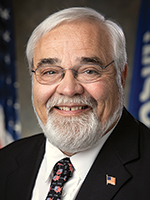
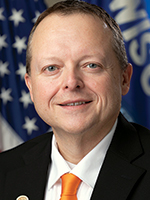
Jeff Mursau
Jeff Mursau House · District 36
R
Support
70% 54
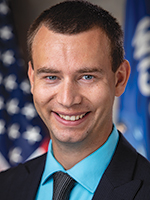
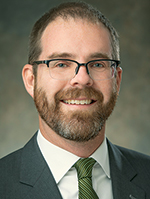
Will Penterman
Will Penterman House · District 38
R
Support
67% 48
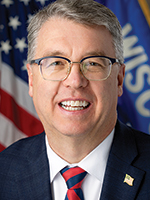
Brad Pfaff
Brad Pfaff Senate · District 32
D
Support
64% 36
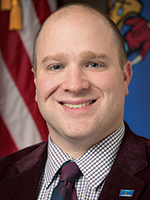
Eric Wimberger
Eric Wimberger Senate · District 2
R
Support
64% 36
Scott Krug
Scott Krug House · District 72
R
Support
64% 58
Ryan Clancy
Ryan Clancy House · District 19
D
Oppose
32% 53
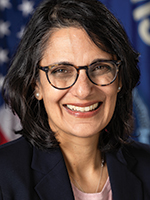
Renuka Mayadev
Renuka Mayadev House · District 77
D
Oppose
32% 58
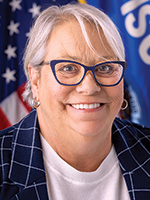
Christine Sinicki
Christine Sinicki House · District 20
D
Oppose
32% 58
Alex Joers
Alex Joers House · District 81
D
Oppose
32% 58
Christian Phelps
Christian Phelps House · District 93
D
Oppose
33% 57
Showing 11–20 of 211 bills

All criminal justice bills

failed · Wisconsin · Assembly Mar 23, 2026

AB 1132: Relating to: creating the penalty of death or life imprisonment for persons who are convicted of certain child sex offenses, providing an exemption from emergency rule procedures, and providing a penalty. (FE)

This bill proposes to establish the death penalty or life imprisonment without parole for individuals convicted of specific child sex offenses, including certain violations of Wisconsin's child sexual abuse statutes. The legislation directly affects people charged with these crimes by expanding the range of penalties available to courts and restricting parole eligibility for those sentenced under the new provisions. Key mechanisms include creating new statutory sections that define crimes punishable by death, eliminating mandatory parole release for certain inmates, and preventing work release or extended supervision for those serving life sentences under the new sentencing framework. The bill also includes administrative provisions to allow controlled substance permits for executions and clarifies definitions related to crimes punishable by death or life imprisonment.
failed · Wisconsin · Senate Mar 23, 2026

SB 1133: Relating to: the maximum term of extended supervision or probation.

This bill proposes to cap the maximum length of extended supervision or probation at five years for most felony and misdemeanor convictions in Wisconsin. It directly affects judges, prosecutors, and individuals sentenced to probation or extended supervision by limiting how long they can be required to report to a supervising agency. The legislation establishes a minimum supervision period of 25 percent of the prison sentence or five years, whichever is less, and sets a hard five-year ceiling for combined probation terms regardless of how many charges are involved. It also removes previous distinctions based on specific felony classes and ensures that even when probation is extended due to new convictions, the total supervision period cannot exceed five years.
failed · Wisconsin · Senate Mar 23, 2026

SB 1135: Relating to: revocation of probation, parole, or extended supervision and sanctions for violation of a condition or rule or probation, parole, or extended supervision. (FE)

This bill outlines specific circumstances under which parole or extended supervision can be revoked and individuals returned to prison. It directly affects people currently on parole or extended supervision in Wisconsin by defining when their release can be ended. The key provision establishes that officials cannot return a person to prison for any violation unless certain serious conditions are met, such as committing three or more violations that endanger others, violating a no-contact order, failing to register as a sex offender when required, or committing a new crime while on release. Additionally, the bill requires that victims be notified when parole or extended supervision is revoked if the victim can be located.
failed · Wisconsin · Senate Mar 23, 2026

SB 1094: Relating to: creating the penalty of death or life imprisonment for persons who are convicted of certain child sex offenses, providing an exemption from emergency rule procedures, and providing a penalty. (FE)

This bill establishes the death penalty or life imprisonment without parole for individuals convicted of specific child sex offenses, including sexual abuse of a child and sexual exploitation of a child. It creates new statutory provisions that remove these offenders from eligibility for parole, work release, and extended supervision programs, ensuring they remain incarcerated for the duration of their sentences. The legislation also defines crimes punishable by death and adjusts sentencing guidelines for repeat offenders of serious violent crimes, while including administrative provisions for emergency rule procedures and controlled substance permits for executions.
failed · Wisconsin · Assembly Mar 23, 2026

AB 1171: Relating to: sexual contact by a law enforcement officer with certain persons and providing a penalty.

This bill amends Wisconsin statutes to clarify that law enforcement officers cannot have sexual contact with specific individuals they encounter during their duties. It directly affects law enforcement officers and the people they detain, investigate, or interact with in an official capacity. The law removes consent as a defense in cases where an officer has sexual contact with someone they are detaining, investigating, or contacting while performing official duties. These provisions apply regardless of whether the detention or contact is lawful or actual or constructive. The bill creates specific criminal penalties for officers who violate these new restrictions.
Sub-Topics Law Enforcement
failed · Wisconsin · Assembly Mar 30, 2026

AB 1223: Relating to: a tuition program for higher education students seeking careers in teaching, firefighting, or law enforcement, granting rule-making authority, and making an appropriation. (FE)

This bill establishes a tuition loan program for Wisconsin residents enrolled in higher education who commit to working full-time in teaching, firefighting, or law enforcement for at least 10 years after completing their training. The program provides loans covering total tuition costs for up to four years of undergraduate study at University of Wisconsin System institutions or two years at technical colleges, with funds allocated equally among the three career fields. Eligible students must maintain satisfactory academic progress, apply annually, and repay loans at a 5 percent annual interest rate, though repayment is deferred while they work in their chosen profession and 50 to 100 percent of the loan is forgiven if they remain in the state and profession for seven or ten years respectively. The bill also grants the Higher Educational Aids Board authority to create rules for administering the program and includes a $1.5 million appropriation for the 2025-26 and 2026-27 fiscal years.
failed · Wisconsin · Assembly Mar 23, 2026

AB 1237: Relating to: restoring private individual authority to bring a qui tam claim against a person for making a false claim for medical assistance, actions by the attorney general against a person for making a false claim for medical assistance, and providing a penalty. (FE)

This bill allows private individuals to file lawsuits against people who knowingly submit false claims for medical assistance, such as Medicaid. It establishes penalties requiring violators to pay three times the amount of damages caused to the state, plus additional fines. The law gives private citizens the right to bring these claims in the name of the state, while the attorney general decides whether to join the lawsuit or let the private individual proceed. If the attorney general chooses to intervene, they take primary responsibility for handling the case, though the private individual can remain a party to the action.
failed · Wisconsin · Senate Mar 23, 2026

SB 1110: Relating to: allocation of building trust funds to develop preliminary plans and specification for expansion of the mother-young child care program under the Department of Corrections. (FE)

This bill directs the building commission to allocate $1,000,000 from building trust funds to create preliminary plans for expanding mother-young child care facilities within the state women's correctional system. The funding is intended to evaluate infrastructure needs and develop specifications for a prison nursery program that would allow eligible inmates and their children to reside together in correctional institutions. The proposed expansion aims to support infant development and provide comprehensive postpartum care for incarcerated mothers. The legislation also requires the development of plans to enable bonding, breastfeeding, and nurturing between mothers and their children while in custody.
Sub-Topics Corrections
failed · Wisconsin · Senate Mar 23, 2026

SB 1166: Relating to: use of autonomous devices equipped with weapons by law enforcement agencies.

This bill prohibits law enforcement agencies from using autonomous devices equipped with weapons. It defines an autonomous device as one that can operate without active human control and uses the existing legal definition of a dangerous weapon. The law enforcement restriction is the main policy change, while the definitions clarify what types of technology and weapons are covered. The bill was introduced in March 2026 but failed to pass the Senate.
Sub-Topics Law Enforcement
failed · Wisconsin · Senate Mar 23, 2026

SB 1111: Relating to: penalties for certain offenses related to operating a motor vehicle while intoxicated, restrictions related to ignition interlock devices, and providing a penalty. (FE)

This bill proposes stricter penalties for repeat drunk driving offenses by increasing license revocation periods and fines for individuals with two or more qualifying convictions within a 10-year window. It directly affects drivers convicted of operating a motor vehicle while intoxicated, particularly those with prior convictions, suspensions, or revocations that count toward the two-conviction threshold. The legislation establishes specific revocation durations ranging from one to two years, allows for occupational licenses after a waiting period if the driver completes required assessments and safety plans, and sets minimum fines between $350 and $1,100 with mandatory jail time of at least five days. Additionally, the bill includes provisions for tribal court revocations to align with state penalties and outlines conditions under which reduced jail sentences may apply if probation with treatment is successfully completed.
Showing 11 to 20 of 211 bills