Issue · Criminal Justice

Criminal Justice

Every criminal justice bill, vote, and legislator stance in Wisconsin, automatically classified by Maddy, our AI policy reader.

Total bills
39
2025-2026 Regular Session
Top supporter
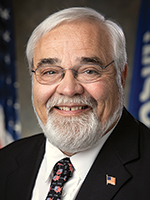
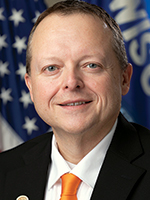
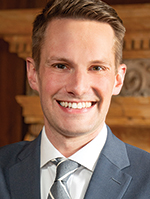
Jeff Mursau
70% support rate
Top opponent
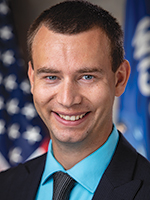
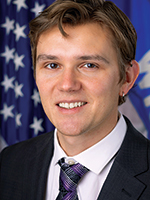
Ryan Clancy
32% support rate
Ranked legislators
10
5 support · 5 oppose
Key legislators

Who's moving criminal justice in Wisconsin

Legislators moving criminal justice in Wisconsin
Legislator Party Stance Support rate Votes
Jeff Mursau
Jeff Mursau House · District 36
R
Support
70% 54
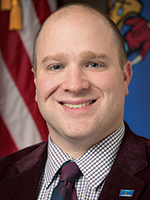
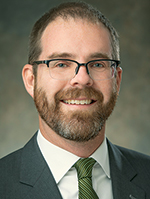
Will Penterman
Will Penterman House · District 38
R
Support
67% 48
Brad Pfaff
Brad Pfaff Senate · District 32
D
Support
64% 36
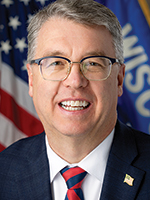
Eric Wimberger
Eric Wimberger Senate · District 2
R
Support
64% 36
Scott Krug
Scott Krug House · District 72
R
Support
64% 58
Ryan Clancy
Ryan Clancy House · District 19
D
Oppose
32% 53
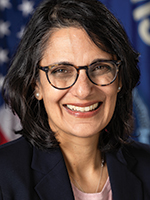
Renuka Mayadev
Renuka Mayadev House · District 77
D
Oppose
32% 58
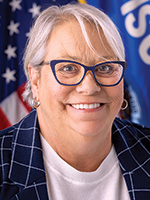
Christine Sinicki
Christine Sinicki House · District 20
D
Oppose
32% 58
Alex Joers
Alex Joers House · District 81
D
Oppose
32% 58
Christian Phelps
Christian Phelps House · District 93
D
Oppose
33% 57
Showing 11–20 of 39 bills

All criminal justice bills

failed · Wisconsin · Senate Mar 23, 2026

SB 332: Relating to: prohibition against undetectable firearms, possessing a frame or receiver of a firearm without a serial number, and providing a penalty.

SB 332 prohibits the possession, sale, or manufacture of undetectable firearms (those not detectable by standard metal detectors or security scanners) and unmarked firearm frames/receivers (the core components of a gun). It creates new felony penalties: Class G for possessing undetectable firearms, Class H for sharing manufacturing plans, and Class I for possessing unmarked frames/receivers. The law applies to the general public but includes exemptions for law enforcement officers, military personnel, and licensed manufacturers acting within their official duties. This directly affects individuals who own or attempt to build such firearms, aiming to enhance public safety through stricter firearm tracking and detection requirements.
signed · Wisconsin · Assembly Oct 31, 2025

AB 65: Relating to: entering certain places with intent to commit battery and providing a penalty.

AB 65, now Wisconsin Act 44, makes it a Class F felony to intentionally enter a place without the owner's consent when intending to commit battery (as defined in Wisconsin law), theft, or another felony. This law directly affects individuals who unlawfully enter premises with such criminal intent. The key provision increases penalties for entering buildings or properties without permission to commit specific offenses, raising the charge from a misdemeanor to a felony. The bill does not change existing battery or theft laws but specifically targets unlawful entry with those intentions. This law took effect on November 1, 2025, after Governor approval on October 31, 2025.
failed · Wisconsin · Assembly Mar 23, 2026

AB 34: Relating to: court-issued criminal complaints in officer-involved deaths.

AB 34 prevents courts from allowing criminal complaints against law enforcement officers in officer-involved deaths when a district attorney has already determined there is no basis for prosecution. The bill requires that courts and judges cannot issue complaints unless "new or unused evidence" is presented, effectively barring judicial override of a district attorney's initial decision. This directly affects law enforcement officers involved in such deaths and the legal process for pursuing criminal charges against them. The law applies to cases defined under statute 175.47 (1) (c), limiting judicial action based on a district attorney's prior assessment.
Sub-Topics Courts Law Enforcement
failed · Wisconsin · Assembly Mar 23, 2026

AB 609: Relating to: right to carry a weapon in this state, licenses to carry a concealed weapon, and providing a penalty. (FE)

AB 609 modifies firearm regulations in the state by reducing the restricted distance near schools and hospitals from 1,700 to 1,200 feet for hunting. It removes restrictions on loading firearms in vehicles and discharging weapons within 50 feet of roadways for certain individuals. The bill clarifies that law enforcement officers, qualified out-of-state officers, and former officers are exempt from specific firearm restrictions while acting in their official duties. These changes primarily affect law enforcement personnel and their operational procedures, not general public carry rights. The bill does not create new carry permits or alter concealed weapon licensing requirements.
failed · Wisconsin · Senate Mar 23, 2026

SB 93: Relating to: recommendation to revoke extended supervision, parole, or probation if a person is charged with a crime. (FE)

SB 93 requires state departments to recommend revoking extended supervision, parole, or probation when a person under those programs is charged with a crime. It directly affects individuals supervised by the department after release from incarceration. The bill mandates this recommendation as a standard step in the process, without altering the existing revocation procedures or hearing requirements. The change applies to criminal charges filed on or after the bill's effective date.
failed · Wisconsin · Senate Mar 23, 2026

SB 92: Relating to: theft crimes and providing a penalty. (FE)

SB 92 increases penalties for repeat theft offenses by creating new sentencing provisions. It allows prosecutors to charge and convict individuals with a Class I felony for certain misdemeanors if they have prior convictions for specific theft crimes under sections 943.20(3)(a)-(cm) or 943.50(4)(a)-(c). Similarly, it elevates felony charges to a higher classification when prior theft convictions exist. The bill applies to offenses committed on its effective date but permits counting prior convictions toward sentencing. It directly affects repeat offenders of specified theft offenses by imposing harsher penalties.
Sub-Topics Sentencing
vetoed · Wisconsin · Senate May 13, 2026

SB 25: Relating to: court-issued criminal complaints in officer-involved deaths.

SB 25 would require courts to defer to a district attorney's determination that there is no basis to prosecute a law enforcement officer involved in a death. Specifically, it prohibits judges from issuing criminal complaints against such officers unless new or unused evidence is presented, after the district attorney has already concluded there is no case to pursue. The bill directly affects officers in officer-involved death cases defined under Wisconsin law (s. 175.47 (1) (c)). This change shifts authority from courts to district attorneys in determining whether charges proceed, streamlining the process for cases where prosecutors have already declined to file.
Sub-Topics Courts Law Enforcement
failed · Wisconsin · Assembly Mar 23, 2026

AB 88: Relating to: civil action for injury or damages resulting from riot or vandalism, participation in a riot, prohibiting certain limitations or restrictions on law enforcement responses to riot or vandalism activity, and providing a penalty.

AB 88 addresses civil actions and law enforcement responses related to riot and vandalism activities. The bill prohibits government officials from limiting or restricting law enforcement's authority to arrest individuals or quell such disturbances. It also creates a new civil cause of action, allowing individuals who suffer injury or property damage from riot or vandalism to sue those who committed the acts or provided material support. Victims may seek compensatory damages, an order for property repair, and legal fees, regardless of whether criminal charges are filed. The bill also defines "rioting" and "incite" for these purposes.
Sub-Topics Law Enforcement
failed · Wisconsin · Senate Mar 23, 2026

SB 621: Relating to: use of public lands to provide temporary residence for the homeless and providing a penalty. (FE)

SB 621 creates designated "structured camping facilities" on public lands (excluding parks and fairgrounds) for temporary homeless housing, directly affecting homeless individuals and local governments managing public property. It requires state or local approval to designate sites, mandates mental health/substance use evaluations for residency, and establishes waiting lists when facilities are full. Unauthorized camping on public lands not designated as such becomes a Class C misdemeanor (with a warning for first offenses), while those on waiting lists or using approved facilities cannot be penalized. The bill also requires tracking occupancy and service referrals at each facility.
Sub-Topics Homelessness
failed · Wisconsin · Assembly Mar 23, 2026

AB 624: Relating to: increasing the maximum penalty for certain controlled substances offenses if the violation occurs near a homeless shelter and providing a penalty.

AB 624 increases penalties for distributing methamphetamine or similar drugs near homeless shelters. If someone distributes these substances within 1,000 feet of a homeless shelter (and knows or should know the location), the maximum prison sentence for that offense rises by 5 years. The bill defines "near a homeless shelter" as being on or within 1,000 feet of the shelter premises, including when the shelter is readily recognizable. This directly affects individuals convicted of drug distribution offenses in these specific locations. The policy change modifies existing sentencing rules without altering the core definition of drug offenses.
Showing 11 to 20 of 39 bills
Previous 1 2 3 4 Next