Issue · Criminal Justice

Criminal Justice

Every criminal justice bill, vote, and legislator stance in Wisconsin, automatically classified by Maddy, our AI policy reader.

Total bills
211
2025-2026 Regular Session
Top supporter
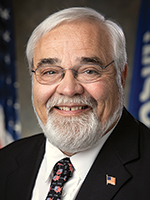
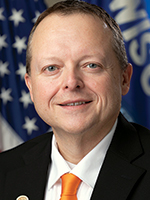
Jeff Mursau
70% support rate
Top opponent
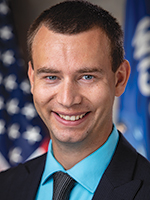
Ryan Clancy
32% support rate
Ranked legislators
10
5 support · 5 oppose
Key legislators

Who's moving criminal justice in Wisconsin

Legislators moving criminal justice in Wisconsin
Legislator Party Stance Support rate Votes
Jeff Mursau
Jeff Mursau House · District 36
R
Support
70% 54
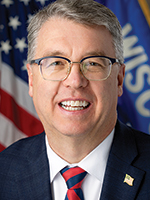
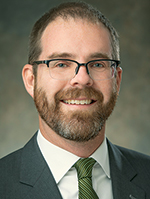
Will Penterman
Will Penterman House · District 38
R
Support
67% 48
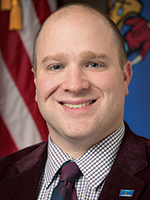
Brad Pfaff
Brad Pfaff Senate · District 32
D
Support
64% 36
Eric Wimberger
Eric Wimberger Senate · District 2
R
Support
64% 36
Scott Krug
Scott Krug House · District 72
R
Support
64% 58
Ryan Clancy
Ryan Clancy House · District 19
D
Oppose
32% 53
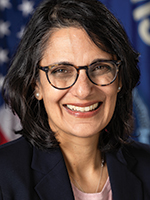
Renuka Mayadev
Renuka Mayadev House · District 77
D
Oppose
32% 58
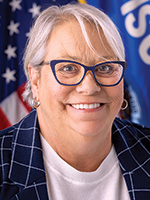
Christine Sinicki
Christine Sinicki House · District 20
D
Oppose
32% 58
Alex Joers
Alex Joers House · District 81
D
Oppose
32% 58
Christian Phelps
Christian Phelps House · District 93
D
Oppose
33% 57
Showing 101–110 of 211 bills

All criminal justice bills

failed · Wisconsin · Senate Mar 23, 2026

SB 730: Relating to: decertification of law enforcement, jail, or juvenile detention officers and tactical emergency medical services professionals and the use of force by law enforcement officers. (FE)

SB 730 requires law enforcement, jail, juvenile detention, and tactical EMS officers to be decertified within 30 days if they resign to avoid termination, are terminated for just cause, or violate board rules regarding training or conduct. It also mandates decertification for officers terminated while under investigation for misconduct, barring future certification without a waiver. The bill creates a new requirement for the board to develop and update best practices for use-of-force policies, specifically addressing interactions with vulnerable populations like those with mental health conditions, disabilities, or limited English proficiency. These changes apply to all affected officers and agencies, with the decertification rules taking effect upon the bill's enactment.
failed · Wisconsin · Assembly Mar 23, 2026

AB 733: Relating to: recreational opportunities and structured programming for inmates in state correctional institutions and county jails and houses of correction. (FE)

AB 733 requires state prisons and county jails to provide inmates with minimum weekly hours of recreational activities and structured programming. State facilities must offer 21-35 hours weekly (depending on staffing levels), prioritizing education, job training, reentry planning, and wellness programs. County jails must provide at least 10 hours weekly starting 31 days into confinement, increasing to 21-35 hours after 90 days if staffing meets thresholds. Exceptions allow temporary reductions during lockdowns or solitary confinement, limited to 10 consecutive days.
failed · Wisconsin · Senate Mar 23, 2026

SB 712: Relating to: inmate access to the outdoors. (FE)

SB 712 requires state correctional institutions and county jails to provide inmates with 3 hours of outdoor access per week, beginning after a 30-day (county) or 91-day (state) period of incarceration. It applies to all inmates except those in lockdown, solitary confinement, or subject to specific state facility restrictions under Section 302.01(1)(i) during their first 90 days. The bill mandates this access for facilities like Milwaukee Secure Detention Facility starting January 1, 2028, with exceptions for safety-related restrictions. This policy directly affects incarcerated individuals in Wisconsin's state prisons and county detention centers.
Sub-Topics Corrections
failed · Wisconsin · Senate Mar 23, 2026

SB 715: Relating to: climate control in state correctional institutions and county jails and houses of correction and making an appropriation. (FE)

SB 715 requires state correctional institutions and county jails to maintain indoor temperatures between 68°F and 76°F year-round in all housing units. It mandates detailed temperature logging during extreme weather (below 10°F or above 90°F) and annual reporting of temperature data to the legislature. The bill appropriates $65 million for installing and operating HVAC systems, with phased implementation across state facilities by 2029, 2031, and 2035. It directly affects all state prisons and county correctional facilities by establishing enforceable climate control standards and funding their compliance.
failed · Wisconsin · Senate Mar 23, 2026

SB 727: Relating to: personal hygiene products for inmates of state correctional institutions and county jails and houses of correction and making an appropriation. (FE)

SB 727 requires state correctional facilities and county jails to provide inmates with access to essential personal hygiene products at capped prices and a monthly $25 stipend. It mandates commissaries to sell 18 standard hygiene items (like shampoo, toothpaste, and razors) at no more than 125% of the benchmark retailer’s price, plus culturally sensitive options (e.g., hair care for types 2-4 hair and cocoa-butter lotion) at no more than 100% of the benchmark price. Inmates in state facilities receive the stipend immediately, while those in county jails receive it after 90 days of confinement. The bill appropriates $6.45 million annually for these stipends, funded through state corrections and county jail budgets. This policy directly affects all inmates in state prisons and county detention facilities across the state.
failed · Wisconsin · Assembly Mar 23, 2026

AB 741: Relating to: personal hygiene products for inmates of state correctional institutions and county jails and houses of correction and making an appropriation. (FE)

AB 741 requires state correctional facilities and county jails to provide inmates with access to essential personal hygiene products at capped prices based on a leading retail chain's sales. It mandates commissaries to sell 18 standard items (like soap, toothpaste, and razors) at no more than 125% of retail price, plus culturally specific items (e.g., hair products for diverse hair types and cocoa-butter lotion) at no more than 100% of retail price. The bill also provides a $25 monthly stipend for state inmates immediately and for county jail inmates after 91 days of confinement to purchase these products. This legislation, funded by a $6.45 million annual appropriation, directly affects all inmates in state prisons and county detention facilities.
failed · Wisconsin · Senate Mar 23, 2026

SB 728: Relating to: free menstrual products for inmates of state correctional institutions or county jails or houses of correction. (FE)

SB 728 requires state correctional institutions and county jails to provide free menstrual products that are free from harmful chemicals to inmates experiencing menstruation. It mandates at least three brands of tampons (including one with a plastic applicator) and three brands of pads, plus one brand of reusable menstrual cup, all selected from a list of verified products. Facilities must also ensure they can sanitize reusable cups as needed, with verification procedures developed by the department and sheriffs. The bill focuses on ensuring access to safe, affordable menstrual products without specifying funding mechanisms.
Sub-Topics Corrections
failed · Wisconsin · Senate Mar 23, 2026

SB 784: Relating to: warrior-style training of law enforcement officers. (FE)

SB 784 bans state law enforcement agencies from providing, arranging, or reimbursing "warrior-style training" for officers. This type of training is defined as instruction that dehumanizes people, encourages aggressive conduct, or de-emphasizes human life or constitutional rights, potentially increasing the likelihood of deadly force use. The bill prohibits state agencies from contracting with organizations offering such training and denies certification or reimbursement for any training involving warrior-style methods. However, it explicitly allows training in aikido (a specific martial art) to continue without restriction.
Sub-Topics Law Enforcement
failed · Wisconsin · Assembly Mar 23, 2026

AB 726: Relating to: minimum wage for all inmates and residents of state correctional institutions and county jails and making an appropriation. (FE)

AB 726 requires all inmates in state correctional institutions and county jails to be paid a minimum wage of at least the hourly rate specified in statute 104.035(3)(a)1, with an immediate $2.33 per hour increase effective upon enactment. The bill mandates that wages must be based on productivity but cannot fall below this minimum rate, applies to all labor performed by inmates, and prohibits wage reductions without board approval. It also appropriates $58.9 million for 2025-26 and $88.4 million for 2026-27 to cover the increased inmate wages in state facilities, plus smaller sums for correctional enterprises. The law directly affects incarcerated individuals by guaranteeing a minimum wage for their labor, while ensuring funds are allocated to cover these new payment obligations.
failed · Wisconsin · Assembly Mar 23, 2026

AB 738: Relating to: decertification of law enforcement, jail, or juvenile detention officers and tactical emergency medical services professionals and the use of force by law enforcement officers. (FE)

AB 738 requires the decertification (removal of professional certification) of law enforcement, jail, juvenile detention, and tactical emergency medical services officers within 30 days for specific actions, including resigning to avoid termination for cause or violating training rules. It also mandates that officers terminated while under investigation for misconduct cannot be recertified without a waiver from a police commission or local governing body. The bill directs the licensing board to develop and update biennially model "best practices" use-of-force policies, emphasizing de-escalation, limiting force against vulnerable populations (like those with disabilities or mental health conditions), and requiring officers to use the least force necessary. This applies directly to certified officers in law enforcement, jail, and juvenile detention roles across the state.
Showing 101 to 110 of 211 bills
Previous 1 10 11 12 22 Next