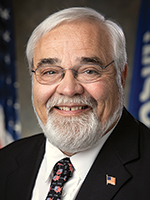
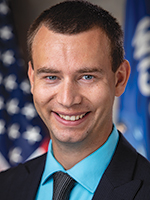
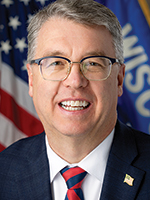
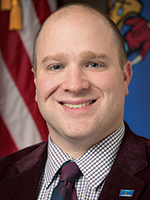
Key legislators
Who's moving criminal justice in Wisconsin
Showing 6 of 6
bills
All criminal justice bills
SB 146 prohibits individuals convicted of a violent felony from legally changing their name. It amends existing law to clarify that the prohibition applies specifically to violent crimes classified as felonies, not all violent offenses. This directly affects people with violent felony convictions who seek to change their legal name. The bill establishes a clear legal barrier to name changes for this group, with penalties for violations.
AB 85 requires Wisconsin's Department of Corrections to recommend revoking parole, probation, or extended supervision whenever a person under supervision is charged with a new crime. This applies directly to individuals on community supervision who face new criminal charges. The bill mandates that the department submit this recommendation to the appropriate administrative body, triggering a hearing process unless the person waives it. The law changes existing statutes to make this recommendation automatic upon a new charge, without requiring proof of violation first.
SB 610 increases the maximum prison sentence for distributing methamphetamine or similar drugs near homeless shelters. If someone distributes these drugs within 1,000 feet of a homeless shelter - knowing or reasonably aware the shelter is nearby - their maximum prison term rises by 5 years. The bill specifically targets violations of drug distribution laws (Section 961.65) occurring in these proximity circumstances. This policy change directly affects individuals convicted of such drug distribution offenses near shelters, without altering existing penalties for other drug offenses.
AB 957 increases funding by $400,000 for each of the 2025-26 and 2026-27 fiscal years to support internet crimes against children law enforcement within the Department of Justice. This is a budget adjustment that directly affects the Department of Justice's resources for investigating and prosecuting online crimes targeting minors. The bill does not create new laws or change existing legal standards - it solely allocates additional state funds for enforcement efforts.
SB 782 amends Wisconsin statute 256.35(10)(a) to penalize intentionally sending false text messages to 911 reporting a non-existent emergency. It imposes fines of $100-$600 or up to 90 days in jail for a first offense, and classifies subsequent offenses within four years as a Class H felony. The law directly affects individuals who deliberately mislead emergency services via text, such as falsely reporting crimes or medical crises. Key provisions clarify that the penalty applies specifically when the sender knows the reported emergency is fabricated. This bill creates concrete legal consequences for misuse of 911 text services, aiming to deter non-emergency false reports.
AB 91 requires first-class city school districts to maintain at least 25 school resource officers (SROs) during school hours, before/after school, and at events starting January 2024, with mandatory 40-hour training for SROs. It mandates a cost-sharing agreement where school districts cover 75% and cities cover 25% of SRO-related expenses. School districts and cities must formally agree on implementation and provide certifications to avoid state funding withholdings of up to 20% for non-compliance. The bill directly affects first-class cities and their school districts, creating specific administrative and financial obligations tied to SRO staffing.