

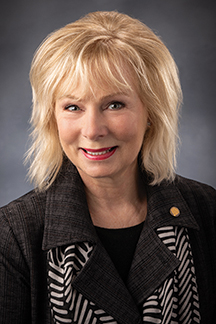
Photo of Margitta Mazzocchi
R West Virginia House · District 31 On the 2026 ballot

Rep. Margitta Mazzocchi

Compare
Total votes
2,380
all sessions
Attendance
98%
53 missed
Higher than 85% of chamber peers
With party
96%
of cast votes
Near the chamber average
Bipartisan score
2%
crosses aisle rarely
Near the chamber average
Sponsored
510
bills & resolutions
Higher than 84% of chamber peers
Committees
5
assignments
510 bills and resolutions

Sponsored bills

Total
510
Primary
37
Co-sponsor
473
This page
510
matching current filters
Co-sponsor HB 5691
Signed into law · West Virginia House · Co-sponsor
Supplemental appropriation, Department of Health

Maddy summaryThis bill moves approximately $2.98 million from the Attorney General's Consumer Protection Recovery Fund to the Department of Health's general revenue account for fiscal year 2026. The transfer is intended to support the Department of Health's Tobacco Education Program, which is designated under fund 0407 and organization 0506. The legislation expires the surplus funds in the original account and creates a new appropriation line item to allocate the money to the health department. This action is part of the state's regular budget process for managing unappropriated surplus balances within the State Fund, General Revenue.

Signed into law Aug 13, 2026 1 co-sponsor
Co-sponsor HB 5690
Signed into law · West Virginia House · Co-sponsor
Supplemental appropriation, Adjutant General

Maddy summaryThis bill directs the West Virginia General Assembly to transfer $4,025,000 from the state's unappropriated surplus funds to the Adjutant General's budget for fiscal year 2026. The money is specifically designated for the Armory Board Transfer, which supports the state militia's operations and facility management. This supplemental appropriation increases the existing budget allocation for the Adjutant General's office without creating new spending categories. The legislation takes effect immediately upon passage and uses general revenue funds already available in the state treasury.

Signed into law Aug 13, 2026 1 co-sponsor
Co-sponsor HB 5692
Signed into law · West Virginia House · Co-sponsor
Supplemental appropriation, State Road Fund

Maddy summaryThis bill provides additional funding from the State Road Fund to the West Virginia Department of Transportation's Division of Highways for the 2026 fiscal year. It authorizes the use of unappropriated money already available in the state treasury to supplement existing budget allocations for road maintenance and construction projects. The legislation does not create new spending categories but rather increases the amount of money designated for the department's current operational fund. Once passed, the additional funds become available for the department to allocate toward its approved highway and infrastructure initiatives during the fiscal year ending June 30, 2026.

Signed into law Aug 13, 2026 1 co-sponsor
Co-sponsor HB 5693
Signed into law · West Virginia House · Co-sponsor
Supplemental appropriation, Department of Tourism Revenue

Maddy summaryThis bill directs the West Virginia Legislature to move approximately $4.5 million in unspent funds from the Department of Tourism's 2021 budget into the state's general surplus account, where the money becomes available for future use. The legislation then allocates that same amount to the Department of Tourism's Division of Culture and History for the 2026 fiscal year, specifically for capital projects and maintenance needs. The bill affects the state's budget management by reassigning leftover money from one tourism-related fund to another within the same department, ensuring the funds remain available for approved government spending.

Signed into law Aug 13, 2026 1 co-sponsor
Co-sponsor HB 5689
Signed into law · West Virginia House · Co-sponsor
Supplemental appropriation, Department of Homeland Security

Maddy summaryThis bill directs the West Virginia Legislature to allocate surplus state funds to the Department of Homeland Security for fiscal year 2026. The appropriation specifically supports the Division of Corrections and Rehabilitation within the department, funding information technology services and special services for correctional units. The legislation uses existing unappropriated surplus money from the State Fund's General Revenue rather than creating new revenue sources. This action increases the available budget for these specific correctional facility operations during the fiscal year ending June 30, 2026.

Signed into law Aug 13, 2026 1 co-sponsor
Co-sponsor HB 5685
Signed into law · West Virginia House · Co-sponsor
Relating to authorizing bonds for improvements to the West Virginia Science and Culture Center

Maddy summaryHB 5685 authorizes up to $150 million in bonds to fund improvements at the West Virginia Science and Culture Center and other state historical sites acquired for preserving West Virginia history. The bill creates a dedicated "Cultural Center Improvements Revenue Debt Service Fund" to be financed annually by $12 million from the State Excess Lottery Revenue Fund (starting fiscal year 2026), with bonds maturing within 20 years. The Economic Development Authority must issue these bonds to cover capital improvements, and the fund will prioritize debt service payments. This directly affects the Science and Culture Center, other historical sites, and taxpayers through lottery revenue allocations.

Signed into law Aug 13, 2026 1 co-sponsor
Co-sponsor HB 4354
Signed into law · West Virginia House · Co-sponsor
Relating to necessity allowance

Maddy summaryHB 4354 establishes requirements for clothing and essential item allowances for children in foster care in West Virginia. It mandates that foster care providers assess a child's clothing and necessity needs at placement, with the state providing an initial allowance of at least $375 if items are missing. The allowance can be paid via a reloadable card (issued within 48 hours), a child welfare worker's purchasing card, or reimbursement to the provider. The bill requires an inventory of the child's wardrobe and necessities that must be updated and follow the child through all placements. This directly affects foster children, placement providers, and the Department of Human Services.

Signed into law Aug 13, 2026 1 co-sponsor
Co-sponsor HB 5484
Signed into law · West Virginia House · Co-sponsor
Creating the crime of conspiracy to deny medical treatment to victim of sexual offense

Maddy summaryHB 5484 creates a new felony crime in West Virginia for conspiring to deny medical care to victims of sexual exploitation, assault, incest, or abuse. It directly affects individuals who work together (conspire) to block victims from accessing licensed medical treatment for injuries or conditions caused by these crimes. The bill establishes penalties of 5-10 years in prison, a $50,000 fine, or both for violations. This law specifically targets efforts to prevent victims from receiving necessary medical care following sexual offenses, without altering existing abortion laws.

Signed into law Jun 29, 2026 1 co-sponsor
Co-sponsor HB 5048
Signed into law · West Virginia House · Co-sponsor
To ensure virtual instruction for foster students while in temporary placement facilities.

Maddy summaryHB 5048 ensures foster children in temporary care facilities continue their education through virtual learning while awaiting residential placement. It requires that virtual instruction occur in the county where the child was last enrolled (or the current county if unavailable, or the nearest capable county), and mandates that virtual learning begins within three days of placement in temporary care. Foster care agencies responsible for the child must receive IT training to support this transition. Once placed with a foster family, all educational records and virtual learning details are transferred to the new county and foster family. The bill directly affects foster children in temporary care and the agencies managing their placement.

Signed into law Jun 29, 2026 1 co-sponsor
Co-sponsor HB 4965
Signed into law · West Virginia House · Co-sponsor
Relating to patient-centered treatment flexibility within the Public Employees Insurance Agency

Maddy summaryHB 4965 allows state employees and retirees covered by the Public Employees Insurance Agency (PEIA) to switch to an alternative medical treatment for the same diagnosed condition without needing new pre-approval, provided the alternative is medically appropriate and costs no more than the originally authorized treatment. The bill requires healthcare providers to document the medical necessity of the switch and ensures PEIA cannot deny coverage solely for not having separate pre-approval. It does not change existing covered benefits or affect treatments for new conditions, and PEIA may still deny claims for fraud or improper billing. This policy aims to reduce delays in care while maintaining cost control for the insurance program.

Signed into law Jun 29, 2026 1 co-sponsor
Showing 1 to 10 of 510 bills
1 2 3 51 Next