Issue · Criminal Justice

Criminal Justice (Sentencing)

Every criminal justice bill, vote, and legislator stance in Virginia, automatically classified by Maddy, our AI policy reader.

Total bills
9
2026 Regular Session
Top supporter
Delores McQuinn
100% support rate
Top opponent
Bill DeSteph
0% support rate
Ranked legislators
10
5 support · 5 oppose
Key legislators

Who's moving sentencing in Virginia

Legislators moving sentencing in Virginia
Legislator Party Stance Support rate Votes
Delores McQuinn
Delores McQuinn House · District 81
D
Strong +
100% 11
Angelia Graves
Angelia Graves Senate · District 21
D
Strong +
100% 5
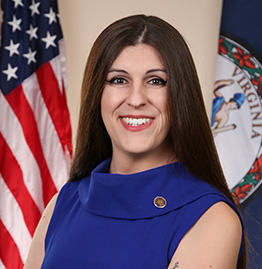
Danica Roem
Danica Roem Senate · District 30
D
Strong +
100% 5
Schuyler VanValkenburg
Schuyler VanValkenburg Senate · District 16
D
Strong +
100% 5
Stella Pekarsky
Stella Pekarsky Senate · District 36
D
Strong +
100% 5
Bill DeSteph
Bill DeSteph Senate · District 20
R
Strong −
0% 5
Christie Craig
Christie Craig Senate · District 19
R
Strong −
0% 5
Danny Diggs
Danny Diggs Senate · District 24
R
Strong −
0% 5
Emily Jordan
Emily Jordan Senate · District 17
R
Strong −
0% 5
Luther Cifers
Luther Cifers Senate · District 10
R
Strong −
0% 5
Showing 9 of 9 bills

All criminal justice bills

vetoed · Virginia · House of Delegates Apr 13, 2026

HB 246: Mental illness, neurocognitive disorder, etc.; affirmative defense or reduced penalty.

Affirmative defense or reduced penalty for mental illness, neurocognitive disorder, or intellectual or developmental disability. Provides an affirmative defense to prosecution of a person for assault or assault and battery against certain specified persons for which the enhanced Class 6 felony and six-month mandatory minimum apply if such person proves, by a preponderance of the evidence, that at the time of the assault or assault and battery (i) the person's behaviors were a result of (a) mental illness or (b) a neurocognitive disorder, including dementia, or an intellectual disability or a developmental disability such as autism spectrum disorder, as defined in the most recent edition of the Diagnostic and Statistical Manual of Mental Disorders of the American Psychiatric Association, or (ii) the person met the criteria for issuance of an emergency custody order.The bill requires such person or his counsel to give notice in writing to the attorney for the Commonwealth at least 60 days prior to his trial in circuit court, or at least 14 days if the trial date is set within 21 days of his last court appearance, of his intention to present such evidence. Additionally, if such notice is not given, and the person proffers such evidence at his trial as a defense, then the court may in its discretion either allow the Commonwealth a continuance or, under appropriate circumstances, bar such person from presenting such evidence; any such continuance shall not be counted for speedy trial purposes pursuant to relevant law.Lastly, the bill provides that if such person does not prove that his behaviors were a result of his mental illness, intellectual disability, developmental disability, or neurocognitive disorder but the evidence establishes that his mental illness, intellectual disability, developmental disability, or neurocognitive disorder otherwise contributed to his behaviors, the finder of fact may find such person guilty of a Class 1 misdemeanor. The bill also provides that such affirmative defense shall not be construed to allow an affirmative defense for voluntary intoxication. This bill is identical to SB 335.
vetoed · Virginia · Senate Apr 13, 2026

SB 335: Mental illness, neurocognitive disorder, etc.; affirmative defense or reduced penalty.

Affirmative defense or reduced penalty for mental illness, neurocognitive disorder, or intellectual or developmental disability. Provides an affirmative defense to prosecution of a person for assault or assault and battery against certain specified persons for which the enhanced Class 6 felony and six-month mandatory minimum apply if such person proves, by a preponderance of the evidence, that at the time of the assault or assault and battery (i) the person's behaviors were a result of (a) mental illness or (b) a neurocognitive disorder, including dementia, or an intellectual disability or a developmental disability such as autism spectrum disorder, as defined in the most recent edition of the Diagnostic and Statistical Manual of Mental Disorders of the American Psychiatric Association, or (ii) the person met the criteria for issuance of an emergency custody order.The bill requires such person or his counsel to give notice in writing to the attorney for the Commonwealth at least 60 days prior to his trial in circuit court, or at least 14 days if the trial date is set within 21 days of his last court appearance, of his intention to present such evidence. Additionally, if such notice is not given, and the person proffers such evidence at his trial as a defense, then the court may in its discretion either allow the Commonwealth a continuance or, under appropriate circumstances, bar such person from presenting such evidence; any such continuance shall not be counted for speedy trial purposes pursuant to relevant law.Lastly, the bill provides that if such person does not prove that his behaviors were a result of his mental illness, intellectual disability, developmental disability, or neurocognitive disorder but the evidence establishes that his mental illness, intellectual disability, developmental disability, or neurocognitive disorder otherwise contributed to his behaviors, the finder of fact may find such person guilty of a Class 1 misdemeanor. The bill also provides that such affirmative defense shall not be construed to allow an affirmative defense for voluntary intoxication. This bill is identical to HB 246.
signed · Virginia · House of Delegates Apr 13, 2026

HB 361: Earned sentence credits; incarceration while awaiting trial or pending an appeal, effective date.

Earned sentence credits; incarceration while awaiting trial or pending an appeal. Provides that a person's eligibility for earned sentence credits includes any period of time actually spent in any state or local correctional facility, state hospital, or juvenile detention facility awaiting trial or pending an appeal that was deducted from such person's term of incarceration or detention. The bill provides that the provisions apply retroactively to any person who is confined in any state or local correctional facility on July 1, 2028. The bill has a delayed effective date of July 1, 2028.
in committee · Virginia · House of Delegates Feb 18, 2026

HJ 21: Veterans; VSCC to propose model policy framework for treatment in criminal justice system.

Study; Virginia State Crime Commission; model policy framework; justice-involved veterans; report. Directs the Virginia State Crime Commission to study and propose recommendations for a model policy framework for the treatment and sentencing of veterans in the criminal justice system.
passed · Virginia · House of Delegates Mar 9, 2026

HB 1413: Limitation on sentence upon revocation of suspension of sentence; technical violations.

Limitation on sentence upon revocation of suspension of sentence; technical violations. Provides that the court shall consider all technical violations that are alleged to have occurred after a prior sentencing or revocation hearing as single technical violation and adjudicate the case as such, with punishment imposed pursuant to relevant law. The bill also prohibits the court from treating multiple technical violations during a single probationary period between such prior sentencing or revocation hearing as separate cases or adjudicate such violations at separate hearings. The bill requires that when a defendant has been taken into custody for an alleged violation for which the court may impose not more than 14 days of active incarceration, the court shall docket such case as soon as practicable, and any such case shall be given precedence on the docket. The bill states that if such violation is not adjudicated within 14 days of the defendant being taken into custody, the defendant shall be admitted to bail, unless (i) such defendant consents to being further detained while awaiting adjudication or sentencing or (ii) the Commonwealth has established, by clear and convincing evidence, that the defendant presents a significant risk of harm to himself or the community based on substance use disorder or serious mental illness and has been referred for residential treatment. Notwithstanding the foregoing, the bill provides that no such defendant shall be held in custody awaiting adjudication of or sentencing on such alleged technical violation for longer than 30 days. The bill also expands the list of technical violations and provides that it shall be a defense to an alleged violation if the defendant can show that he has substantially complied with his probation obligations.
signed · Virginia · House of Delegates Apr 6, 2026

HB 357: Person arrested for a felony; release of accused on secured or unsecured bond.

Release of accused on secured or unsecured bond. Removes the conditions requiring that any person arrested for a felony who (i) has previously been convicted of a felony, (ii) is presently on bond for an unrelated arrest in any jurisdiction, or (iii) is on probation or parole be released only upon a secure bond. Additionally, the bill adds to the factors a judicial officer shall consider in making a bail determination (a) the person's current bond status for an unrelated arrest in any jurisdiction and (b) whether the person is on probation or parole.
in committee · Virginia · House of Delegates Mar 6, 2026

HB 863: Offenses, certain; elimination of mandatory minimum sentences.

A BILL to amend and reenact §§ 3.2-4212, 4.1-302, 16.1-253.2, 18.2-36.1, 18.2-36.2, 18.2-46.3:3, 18.2-51.1, 18.2-53.1, 18.2-57, 18.2-60.4, 18.2-61, 18.2-67.1, 18.2-67.2, 18.2-67.5:2, 18.2-67.5:3, 18.2-154, 18.2-186.4, 18.2-248, 18.2-248.01, 18.2-248.03, 18.2-248.1, 18.2-248.5, 18.2-255, 18.2-255.2, 18.2-270, 18.2-308.1, 18.2-308.2, 18.2-308.2:2, 18.2-308.4, 18.2-374.1, 18.2-374.1:1, 18.2-374.3, 19.2-160.1, 19.2-297.1, 46.2-341.28, 46.2-391, 53.1-116, and 53.1-203 of the Code of Virginia, relating to elimination of mandatory minimum sentences for certain offenses.
Sub-Topics Drug Policy Sentencing
in committee · Virginia · House of Delegates Feb 11, 2026

HB 853: Petition for modification of a sentence; eligibility, procedures, report.

Petition for modification of a sentence; eligibility; procedures; report. Provides procedures for individuals serving a sentence for certain felony convictions or a combination of such convictions who remain incarcerated in a state or local correctional facility or secure facility and meet certain criteria to petition the circuit court that entered the original judgment or order to (i) suspend the unserved portion of such sentence or run the unserved portion of such sentence concurrently with another sentence, (ii) place such person on probation for such time as the court shall determine, or (iii) otherwise modify the sentence imposed. Depending on the type of conviction, the bill allows the court to grant a hearing on such petition after an individual has served at least 25 years for certain offenses, after 20 years for certain other offenses, and after 15 years for any other felony conviction not specified. The bill directs the Department of Corrections to convene a work group of relevant stakeholders to (a) consider and recommend best practices for implementation of the bill and (b) evaluate and recommend updates to victim notification systems. The work group shall complete its meetings by November 1, 2026, and report its findings and recommendations to the General Assembly no later than December 1, 2026.
in committee · Virginia · Senate Feb 4, 2026

SB 634: Petition for modification of a sentence; eligibility, procedures, report.

Petition for modification of a sentence; eligibility; procedures; report. Provides procedures for individuals serving a sentence for certain felony convictions or a combination of such convictions who remain incarcerated in a state or local correctional facility or secure facility and meet certain criteria to petition the circuit court that entered the original judgment or order to (i) suspend the unserved portion of such sentence or run the unserved portion of such sentence concurrently with another sentence, (ii) place such person on probation for such time as the court shall determine, or (iii) otherwise modify the sentence imposed. Depending on the type of conviction, the bill allows the court to grant a hearing on such petition after an individual has served at least 25 years for certain offenses, after 20 years for certain other offenses, and after 15 years for any other felony conviction not specified. The bill directs the Department of Corrections to convene a work group of relevant stakeholders to (a) consider and recommend best practices for implementation of the bill and (b) evaluate and recommend updates to victim notification systems. The work group shall complete its meetings by November 1, 2026, and report its findings and recommendations to the General Assembly no later than December 1, 2026.