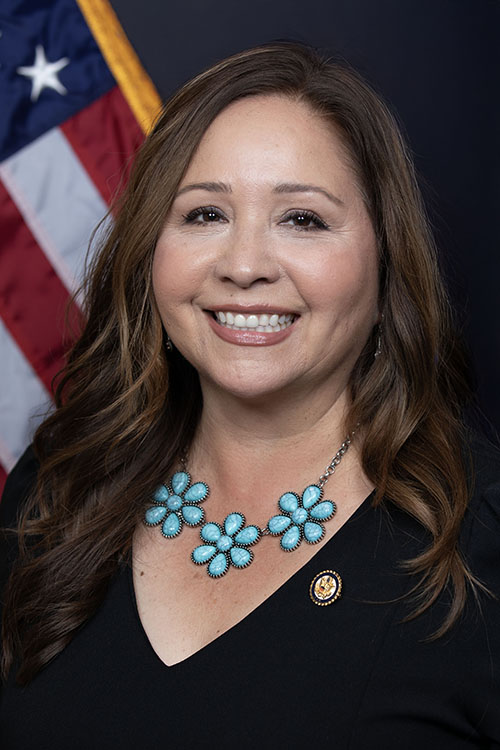
This bill directs the Department of Veterans Affairs to redraw the boundaries of Veterans Integrated Service Network 17 within 180 days of enactment. The change specifically includes Otero County and Eddy County in New Mexico, ensuring these rural areas fall under the oversight of that network. By integrating these counties into the existing network, the legislation aims to standardize how rural veterans receive health care coordination and services.
The Responsible Artificial Intelligence for Veterans Act of 2026 requires the Department of Veterans Affairs to hire an independent research center to evaluate artificial intelligence tools currently used or being developed for patient care within the Veterans Health Administration. This evaluation will focus on five specific high-risk systems to assess their safety, accuracy, fairness, and how well they integrate with existing medical workflows. The law mandates that the findings be reported to Congress within a year, followed by a detailed plan from the VA to address any identified risks or gaps in oversight. Additionally, a government auditor will review both the evaluation and the VA's response plan to ensure accountability, all without requesting new funding for the initiative.
The Preventing Crimes Against Veterans Act of 2026 adds a new federal crime specifically targeting fraud related to veterans' benefits. This law makes it a punishable offense for anyone to knowingly execute a scheme designed to defraud an individual of these benefits or to help them obtain them falsely. Directly affecting fraudsters, the bill establishes that violators could face fines, imprisonment of up to five years, or both penalties. It defines "veterans' benefits" broadly to include any federal assistance provided to veterans, their dependents, or survivors. By amending the United States Code, the legislation creates a distinct legal tool to prosecute such financial deceptions.
The Veteran's Surviving Spouse Parity Act of 2026 expands eligibility for specific mortgage tax benefits to include spouses and surviving spouses of veterans who are legally treated as veterans themselves. This change allows these individuals to qualify for the three-year ownership look-back exception when purchasing qualified mortgage bonds or using mortgage credit certificates. To support this, the Department of the Treasury will work with the Department of Veterans Affairs to issue clear guidance on how to determine veteran status for these programs, including rules regarding remarriage. The new provisions will take effect for any bonds or certificates issued after December 31, 2026.
The Veteran Acquired Brain Injury Caregiving Act establishes a five-year pilot program allowing veterans with acquired brain injuries to use existing Veteran-Directed Care funds to hire care from specific nonprofit organizations. The Department of Veterans Affairs must select at least five medical centers to administer this program and will report annually on the number of participating veterans and nonprofits, along with an evaluation of clinical outcomes and satisfaction. This legislation directly affects veterans who have been clinically assessed for acquired brain injuries and are already eligible for the Veteran-Directed Care program, expanding their options for care providers.
The AIR CARE for Vets Act of 2026 directs the Department of Veterans Affairs to run a five-year pilot program using specialized software to detect respiratory disorders and lung diseases in veterans receiving care at VA facilities. To implement this, the VA will lease FDA-approved four-dimensional functional lung imaging software from eligible developers to analyze lung function data. The program is funded with up to $25 million over five years, and the VA must submit a report to Congress two years after the pilot ends to evaluate its effectiveness.
This bill establishes the Veteran Scam Victims Foundation, a private nonprofit corporation designed to help prevent veterans and their families from falling victim to scams. The foundation will operate independently of the federal government but will work in coordination with the Department of Veterans Affairs to accept private donations and run educational programs or support services for affected individuals. A governing board will be formed with the Secretary of Veterans Affairs as chairman and six additional members appointed by various federal agency heads to oversee the organization's activities. The legislation explicitly states that the foundation cannot provide direct monetary compensation for financial losses and will not be liable for any debts or actions taken by the foundation.
This resolution provides for the consideration of the bill (H.R. 1181) to prohibit payment card networks and covered entities from requiring the use of or assigning merchant category codes that distinguish a firearms retailer from general-merchandise retailer or sporting-goods retailer, and for other purposes; providing for consideration of the bill (H.R. 9022) making appropriations for energy and water development and related agencies for the fiscal year ending September 30, 2027, and for other purposes; providing for consideration of the bill (H.R. 8595) making appropriations for national security, Department of State, and related programs for the fiscal year ending September 30, 2027, and for other purposes; and providing for consideration of the bill (H.R. 9237) to amend titles 10 and 38, United States Code, and other Federal laws, to improve benefits for veterans and the administration of the Department of Veterans Affairs.
The VHA OPEN Policies Act of 2026 requires the Veterans Health Administration to publish all its national policies, such as directives and handbooks, on a public website within 90 days of enactment. This rule also mandates that any new or revised policies be added to the site within 30 days of their creation. The legislation directly affects the VA's health administration by making internal guidance accessible to the public and ensuring consistent, up-to-date information is available online.
This bill removes the annual limit on the number of pay waivers the Secretary of Veterans Affairs can issue to critical health care workers. Currently, there is a cap on how many times these specific employees can receive temporary pay increases above the standard rate, which this legislation aims to eliminate. By deleting the relevant restriction in the U.S. Code, the measure allows the Department of Veterans Affairs to grant these salary adjustments without a numerical ceiling. The change directly affects VA medical staff and administrators who manage compensation for essential healthcare roles.