Issue · Transportation

Transportation (Traffic Safety)

Every transportation bill, vote, and legislator stance in United States, automatically classified by Maddy, our AI policy reader.

Total bills
71
119th Congress
Top supporter
Rand Paul
64% support rate
Top opponent
Ted Budd
33% support rate
Ranked legislators
10
5 support · 5 oppose
Key legislators

Who's moving traffic safety in United States

Legislators moving traffic safety in United States
Legislator Party Stance Support rate Votes
Rand Paul
Rand Paul Senate
R
Support
64% 11
Ashley Moody
Ashley Moody Senate
R
Mixed
58% 12
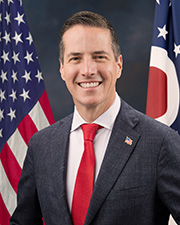
Bernie Moreno
Bernie Moreno Senate
R
Mixed
58% 12
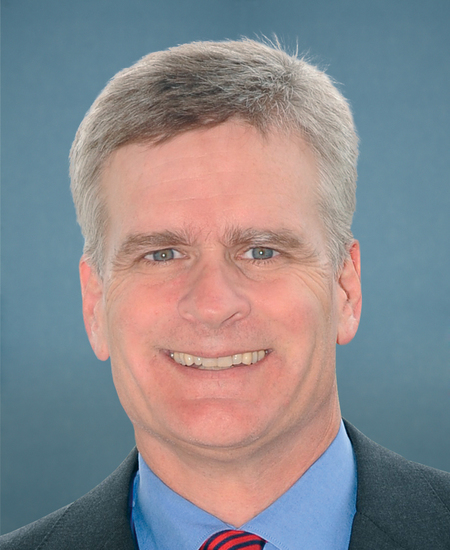
Bill Cassidy
Bill Cassidy Senate
R
Mixed
58% 12
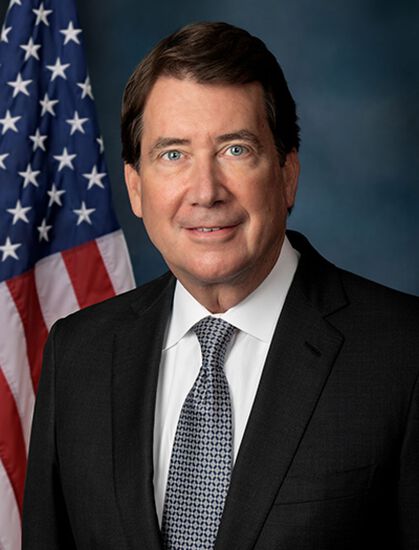
Bill Hagerty
Bill Hagerty Senate
R
Mixed
58% 12
Ted Budd
Ted Budd Senate
R
Oppose
33% 3
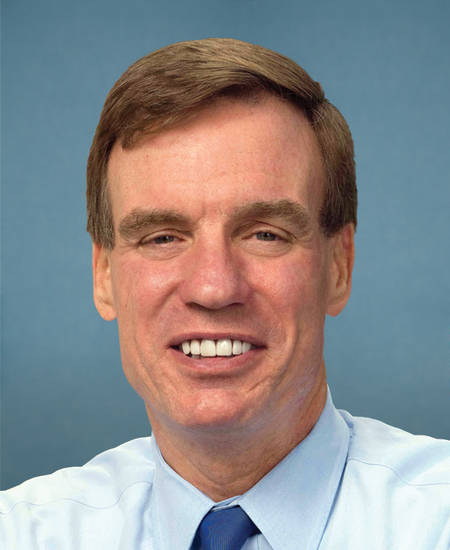
Mark R. Warner
Mark R. Warner Senate
D
Oppose
36% 11
Adam B. Schiff
Adam B. Schiff Senate
D
Mixed −
42% 12
Alex Padilla
Alex Padilla Senate
D
Mixed −
42% 12
Amy Klobuchar
Amy Klobuchar Senate
D
Mixed −
42% 12
Showing 61–70 of 71 bills

All transportation bills

passed · United States · Senate Dec 2, 2025

SRES 512: A resolution designating November 30, 2025, as "Drive Safer Sunday".

SRES 512 is a non-binding Senate resolution designating November 30, 2025, as "Drive Safer Sunday" to promote highway safety awareness. It encourages schools, trucking companies, clergy, law enforcement, and the public to participate in educational efforts - such as campus campaigns, driver safety reminders via CB radios, and community outreach - focusing on seat belt use and safe driving habits. The resolution specifically highlights the Sunday after Thanksgiving as a high-traffic period and references the National Highway Traffic Safety Administration's data on seat belts saving over 15,000 lives annually. As a symbolic gesture, it does not create new laws or requirements but aims to foster voluntary safety practices across communities.
in committee · United States · House Feb 10, 2026

HR 7428: SECURES Act of 2026

The SECURES Act of 2026 requires the U.S. Department of Transportation to propose new federal safety standards for seat belts on all new school buses within 180 days of the bill becoming law. The proposed rule must consider evidence showing lap/shoulder belts provide the highest passenger safety benefit, including findings from the National Transportation Safety Board and past guidance from the National Highway Traffic Safety Administration. It specifically directs the rulemaking to evaluate seat belt detection systems and existing state requirements for school bus seat belts. This bill affects all manufacturers of new school buses and school districts purchasing new vehicles, setting the stage for potential future federal seat belt mandates.
in committee · United States · House May 15, 2025

HR 3440: Traffic Safety Enhancement Act of 2025

The Traffic Safety Enhancement Act of 2025 amends the Surface Transportation Block Grant Program to allow states to use federal funds for constructing roundabouts. This change directly affects state transportation departments and local agencies administering federal highway grants. The key provision adds "Construction of roundabouts" as an eligible activity under the program, expanding existing funding options without increasing overall resources. It enables states to allocate block grant funds toward roundabout projects as part of their transportation infrastructure planning.
in committee · United States · Senate Sep 18, 2025

S 2911: Streamlining State Highway Safety Submissions Act

This bill streamlines reporting requirements for state highway safety programs. It directs the Transportation Secretary to revise rules so that a triennial management review by the National Highway Traffic Safety Administration (NHTSA) can satisfy all documentation needs for a state's triennial highway safety plan submission during the same review period. This eliminates duplicate paperwork for states, as they will no longer need to submit separate reports for the same safety plan cycle. The change directly affects all states that submit highway safety plans under federal law.
in committee · United States · House Feb 2, 2026

HR 6821: Protect Our Students Act

HR 6821, the Protect Our Students Act, redirects federal highway safety funds to improve school zone safety. It increases the required allocation of these funds for school zone improvements from 40% to 50% and authorizes specific safety measures including crossing guards, flashing lights, visible signage, crosswalks, traffic calming, and automated enforcement. The bill directly affects students walking to school, local schools, and communities by mandating that federal highway safety programs fund these targeted school zone upgrades. This changes how existing federal transportation funds can be used, focusing resources on proven safety infrastructure.
in committee · United States · House Aug 6, 2025

HR 4897: Blue Envelope Act of 2025

This bill amends the Highway Safety Improvement Program to include a specific project type: a "blue envelope program" designed to improve communication between motor vehicle operators who have difficulty speaking and law enforcement officers during traffic stops. It directly affects drivers with speech impairments and police officers conducting routine traffic stops. The key provision adds this program as a qualifying activity under existing highway safety funding, allowing states to use federal funds for such initiatives. The change is procedural, modifying a code section to explicitly include this communication-focused program within eligible highway safety projects. The bill does not create new requirements but expands how existing safety funds can be applied.
in committee · United States · Senate Sep 18, 2025

S 2910: Work Zone Safety Enhancement Act

This bill allows states to use federal highway safety funds for specific work zone safety improvements. It authorizes states to fund law enforcement patrols, driver education modules, safety technologies (like alert systems), worker training programs, and crash data collection in work zones. States must prioritize assistance for Tribal governments and rural areas when implementing these measures. The bill also requires a GAO study within two years to evaluate the effectiveness of work zone safety programs, including those funded under this law.
in committee · United States · House May 21, 2026

HR 7389: Motor Vehicle Modernization Act of 2026

The Motor Vehicle Modernization Act of 2026 establishes new requirements for the National Highway Traffic Safety Administration (NHTSA) to develop and update a comprehensive safety rulemaking and research priority plan every two years. The bill reforms the New Car Assessment Program (NCAP) by creating an NCAP Office led by an Associate Administrator and establishing an NCAP Advisory Committee with diverse stakeholders including manufacturers, safety organizations, and consumer advocates. It also mandates that NHTSA review motor vehicle safety standards every four years and creates a working group to improve consumer education about vehicle automation technologies. The legislation aims to modernize safety processes, enhance transparency about vehicle safety features, and better inform consumers about motor vehicle safety technologies.
in committee · United States · Senate Aug 1, 2025

S 2660: Modern Risk Detection Act of 2025

This bill amends Title 49, U.S. Code, to require transportation safety standards to incorporate risk-based approaches "to the maximum extent practicable." It directs the Secretary to ensure compliance with these standards allows for risk-based methods, without specifying new requirements or affected entities. The provision applies to existing transportation safety regulations but does not detail how risk-based approaches would be implemented or who would be directly impacted. The bill is a procedural update to regulatory frameworks, not a new policy with defined beneficiaries or obligations.
in committee · United States · House Nov 26, 2025

HR 6298: Safe and Affordable Transit Act

This bill provides $50 million annually from 2026 through 2030 to fund security measures for public transit systems in urbanized areas, removing previous population requirements that limited access. It allows transit agencies to use these funds for hiring additional officers, contracting with local police, and making physical safety upgrades like monitoring devices and operator shields. Additionally, it mandates a study by the National Academies (with input from transit workers) to evaluate crime prevention tactics, including successful and unsuccessful approaches used by transit agencies. The bill directly affects transit agencies and passengers by prioritizing safety infrastructure and data-driven crime reduction strategies.
Showing 61 to 70 of 71 bills
Previous 1 6 7 8 Next