Issue · Transportation

Transportation

Every transportation bill, vote, and legislator stance in United States, automatically classified by Maddy, our AI policy reader.

Total bills
728
119th Congress
Top supporter
Matt Van Epps
86% support rate
Top opponent
Adelita S. Grijalva
14% support rate
Ranked legislators
10
5 support · 5 oppose
Key legislators

Who's moving transportation in United States

Legislators moving transportation in United States
Legislator Party Stance Support rate Votes
Matt Van Epps
Matt Van Epps House · District 7
R
Strong +
86% 67
Martin Heinrich
Martin Heinrich Senate
D
Support
78% 133
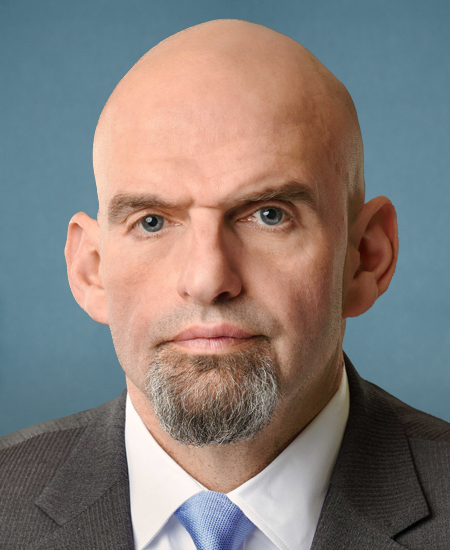
John Fetterman
John Fetterman Senate
D
Support
70% 150
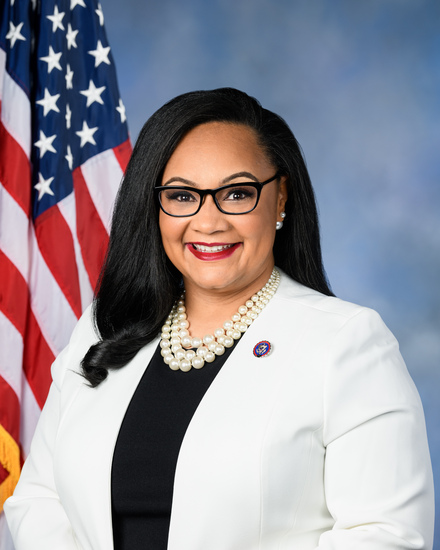
Nikema Williams
Nikema Williams House · District 5
D
Support
70% 113
Greg Casar
Greg Casar House · District 35
D
Support
70% 105
Adelita S. Grijalva
Adelita S. Grijalva House · District 7
D
Strong −
14% 72
James R. Walkinshaw
James R. Walkinshaw House · District 11
D
Strong −
14% 80
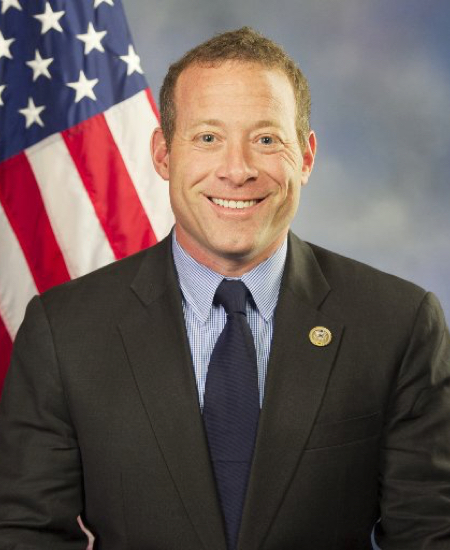
Josh Gottheimer
Josh Gottheimer House · District 5
D
Strong −
14% 109
Marsha Blackburn
Marsha Blackburn Senate
R
Oppose
22% 128
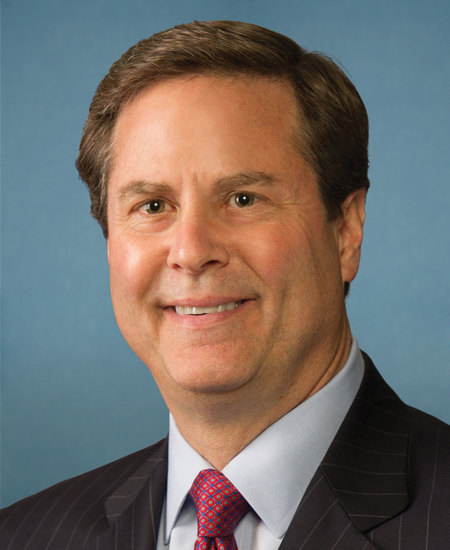
Donald Norcross
Donald Norcross House · District 1
D
Oppose
25% 107
Showing 601–610 of 728 bills

All transportation bills

in committee · United States · House Jun 7, 2025

HR 3796: SAT Act

The SAT Act (Safety from Aerial Technology Act) requires the U.S. Department of Transportation to permit pipeline companies to use drones and satellites for inspecting land along their pipeline routes. This directly affects pipeline operators who must conduct these inspections and the federal agency overseeing pipeline safety. The bill explicitly allows these technologies as acceptable inspection methods without altering existing rules for drone or satellite operations. It creates a concrete policy change by expanding approved inspection tools while maintaining current regulatory requirements for aerial technology use.
Sub-Topics Bridges
in committee · United States · House Jan 8, 2025

HR 234: HOV Lanes for Heroes Act

This bill allows disabled veterans with qualifying service-connected disabilities to use HOV lanes as single-occupant vehicles. It requires a special license plate, transponder, or other identification approved by the transportation authority. Disabled veterans meeting VA disability rating thresholds (defined in the bill) can use HOV lanes without paying tolls, bypassing standard occupancy rules. The law amends federal transportation code to add this exception for disabled veterans under specific identification and disability criteria.
in committee · United States · House Nov 5, 2025

HR 5922: Improving Accessibility Through Microtransit Act

This bill establishes a 5-year federal grant program to improve accessible microtransit services for people with disabilities or mobility impairments, particularly wheelchair users. It provides up to $3 million per grant to eligible state/local governments, tribes, or transit agencies to fund wheelchair-accessible vehicles, driver training, technology, and services in areas lacking accessible transportation. Priority is given to projects addressing accessibility gaps, creating economic benefits (like job access), and ensuring low-income users can access services without smartphones or credit cards. The program requires interior camera systems on vehicles for safety and applies standard labor rules to funded projects, with $20 million authorized for the pilot.
Sub-Topics Autonomous Vehicles Tags People with Disabilities
in committee · United States · House Jul 24, 2025

HR 4643: Business Uninterrupted Monetary Program Act of 2025

This bill requires transportation project sponsors (like cities or transit agencies) to establish "BUMP Funds" for projects over $50 million funded through federal grants. The funds, partially funded by the sponsor's local contribution (up to 25% of their share), reimburse affected private businesses or nonprofits for specific costs like rent, payroll, utilities, or lost income during construction disruptions. Sponsors must detail eligibility, impact assessment, and distribution processes in grant applications. Unused funds can be reused for project enhancements or other eligible work, with oversight by the Secretary of Transportation. The program applies to highway and transit projects under federal grant programs.
in committee · United States · Senate Oct 28, 2025

SJRES 92: A joint resolution providing for congressional disapproval under chapter 8 of title 5, United States Code, of the rule submitted by the Federal Highway Administration relating to "Rescinding Regulations Regarding Management Systems Pertaining to the Fish and Wildlife Service and the Refuge Roads Program"".

Senate Joint Resolution 92 seeks congressional disapproval of a Federal Highway Administration rule that would have removed regulations governing management systems for the Fish and Wildlife Service and the Refuge Roads Program (which oversees roads in national wildlife refuges). The rule, published in the Federal Register on September 19, 2025, aimed to rescind existing guidelines for managing refuge roads and related operations. If passed, this resolution would block the rule from taking effect, preserving the current regulatory framework. The measure uses a statutory disapproval process under title 5 of the U.S. Code, requiring congressional action to halt agency rules.
in committee · United States · Senate Nov 20, 2025

S 3278: SMART Infrastructure Act of 2025

The SMART Infrastructure Act of 2025 requires federal agencies to modernize infrastructure permitting by using 3D digital models (digital twins) and a centralized electronic platform (e-NEPA portal). It directly affects transportation agencies, project developers, and communities involved in federal infrastructure projects, such as roads and bridges under the Department of Transportation. Key provisions mandate that digital twins integrate real-time data for environmental and operational planning, while the e-NEPA portal streamlines document sharing, public access, and interagency coordination. The bill sets a goal to reduce environmental review timelines by at least 25% for eligible projects through these digital tools.
in committee · United States · House Jan 28, 2026

HR 7263: Safe Intersections for Buses and Pedestrians Act

HR 7263, the Safe Intersections for Buses and Pedestrians Act, requires new motorcoaches (buses) sold in the U.S. to have a minimally obstructed forward view for drivers. The bill mandates the National Highway Traffic Safety Administration (NHTSA) to establish safety standards within one year of enactment, ensuring drivers can clearly see ahead without obstructions. Manufacturers may use camera systems meeting Federal Motor Vehicle Safety Standard 101 as an alternative to physical visibility improvements. This directly affects new bus manufacturers and NHTSA, aiming to improve driver visibility and safety for bus passengers and pedestrians.
in committee · United States · House May 30, 2025

HR 3634: Interactive Federal Review Act

HR 3634, the Interactive Federal Review Act, requires the U.S. Department of Transportation to encourage highway projects receiving federal grants (like INFRA, RAISE, or Mega program funds) to use digital platforms and 3D models for environmental reviews under the National Environmental Policy Act (NEPA). It mandates the DOT to publish guidance within 90 days, select at least 10 projects to test these tools, and prioritize grant applications that plan to use them for public engagement and environmental analysis. The bill also requires reports to Congress within 180 days detailing efficiency metrics and examples of digital workflows, plus public examples of digital environmental documents within a year. This aims to speed up reviews and improve public understanding of project impacts, directly affecting federally funded highway projects.
in committee · United States · House Feb 10, 2026

HR 7353: Magnus White and Safe Streets for Everyone Act of 2026

This bill requires automatic emergency braking systems in new passenger vehicles to detect and respond to vulnerable road users - including pedestrians, cyclists, motorcyclists, and wheelchair users - in all daylight and low-light conditions across the full speed range specified by existing standards. It mandates that vehicle manufacturers update these systems by September 1, 2029, with the rulemaking process starting within 180 days of the bill's enactment. The law specifically prohibits altering the maximum operating speed of these systems as defined in the 2024 rule. This directly affects all U.S. vehicle manufacturers selling new passenger cars and light trucks.
in committee · United States · House Feb 10, 2026

HR 7390: SELF DRIVE Act of 2026

The SELF DRIVE Act of 2026 establishes federal safety standards for vehicles with automated driving systems (ADS), requiring manufacturers to develop detailed "safety cases" demonstrating their systems won't present unreasonable risks to road users. It creates a National Automated Vehicle Safety Data Repository to collect crash data from ADS-equipped vehicles, including information about vulnerable road users (pedestrians, bicyclists, etc.) and crash circumstances. The bill preempts state laws that conflict with these federal standards while allowing states to enforce identical requirements, and defines key terms related to automation levels (Level 3-5) and operational design domains. Manufacturers must demonstrate ADS capabilities for handling various driving scenarios, including detecting vulnerable road users and achieving minimal risk conditions during emergencies. The bill also establishes requirements for cybersecurity protections and reporting of crash data to the National Highway Traffic Safety Administration.
Showing 601 to 610 of 728 bills
Previous 1 60 61 62 73 Next