Issue · Transportation

Transportation

Every transportation bill, vote, and legislator stance in United States, automatically classified by Maddy, our AI policy reader.

Total bills
730
119th Congress
Top supporter
Martin Heinrich
78% support rate
Top opponent
Marsha Blackburn
22% support rate
Ranked legislators
10
5 support · 5 oppose
Key legislators

Who's moving transportation in United States

Legislators moving transportation in United States
Legislator Party Stance Support rate Decisive votes
Martin Heinrich
Martin Heinrich Senate
D
Support
78% 9
Matt Van Epps
Matt Van Epps House · District 7
R
Support
78% 9
Greg Casar
Greg Casar House · District 35
D
Support
75% 12
Joe Courtney
Joe Courtney House · District 2
D
Support
75% 12
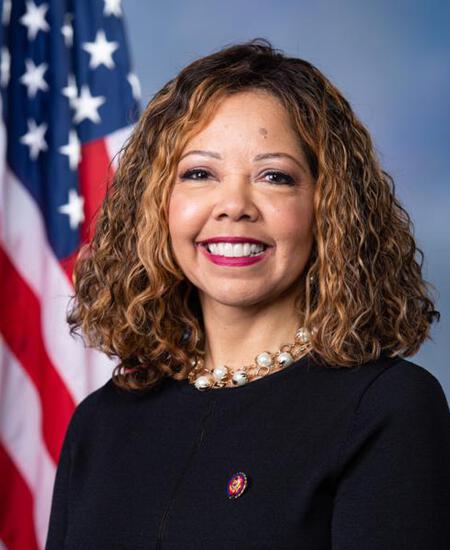
Lucy McBath
Lucy McBath House · District 6
D
Support
75% 12
Marsha Blackburn
Marsha Blackburn Senate
R
Oppose
22% 9
Ted Budd
Ted Budd Senate
R
Oppose
25% 12
Mary E. Miller
Mary E. Miller House · District 15
R
Oppose
29% 14
Wesley Hunt
Wesley Hunt House · District 38
R
Oppose
30% 10
Joni Ernst
Joni Ernst Senate
R
Oppose
31% 26
Showing 491–500 of 730 bills

All transportation bills

in committee · United States · House Jul 17, 2025

HR 4447: Transit Bus Affordability Act

This bill requires a nonpartisan review of rising costs for transit buses in the U.S. The Comptroller General will analyze factors driving high manufacturing and procurement costs, compare U.S. prices to other countries, and examine how supplier challenges affect federal transit programs like the Low/No Emission Grant Program. The review will assess strategies such as joint state procurement that might reduce costs and speed up delivery. The findings will be reported to Congress within 18 months, but the bill itself does not change funding or directly alter bus procurement processes.
in committee · United States · House Jan 16, 2025

HR 516: To amend the Internal Revenue Code of 1986 to modify the railroad track maintenance credit.

This bill increases the annual limit on the tax credit for qualified railroad track maintenance expenses (also referred to as the short line railroad tax credit) and expands eligibility for claiming the credit. Under current law, the tax credit is limited each tax year to $3,500 multiplied by the sum of the number of miles of railroad track owned or leased by the taxpayer (miles owned or leased) and the number of railroad track miles assigned to the taxpayer by a Class II or III railroad (miles assigned). This bill increases the annual limit to $6,100 multiplied by the sum of miles owned or leased and miles assigned. The $6,100 amount used in the calculation of the tax credit limit is adjusted for inflation for tax years beginning after 2025. The bill also expands eligibility for the tax credit to include gross expenses for maintaining railroad tracks owned or leased as of January 1, 2024. Under current law, the tax credit is limited to gross expenses for maintaining railroad tracks owned or leased as of January 1, 2015.
Sub-Topics Tax Credits Rail
in committee · United States · House Mar 31, 2025

HR 2526: Bus Parity and Clarity Act

HR 2526, the Bus Parity and Clarity Act, clarifies that over-the-road buses operating in scheduled or charter service must pay the same tolls and access terms as public transit buses at toll roads, bridges, tunnels, and HOV lanes. It updates federal definitions to explicitly include "charter service" under existing equal access rules and requires toll facilities to offer these buses identical rates. The bill mandates the Federal Highway Administration to publish a public database of toll rates and terms within 180 days of enactment. This directly affects commercial bus operators using toll infrastructure, ensuring they receive equitable treatment compared to public transit vehicles.
in committee · United States · House Mar 25, 2025

HR 2348: Brake for Kids Act of 2025

Brake for Kids Act of 2025 This bill directs the Department of Transportation (DOT) to produce and distribute a national public safety campaign on the dangers of illegally passing stopped school buses. Specifically, the campaign must increase awareness and education about the issue through a variety of media, including television, radio, and social media advertising.  DOT must use Infrastructure Investment and Jobs Act funds to produce and distribute the campaign.
in committee · United States · Senate Feb 24, 2026

S 3901: HOME Expansion Act

The HOME Expansion Act allows jurisdictions that don't receive other federal housing funds to use HOME program money for infrastructure like water lines, roads, and sidewalks directly tied to affordable housing projects. It raises the income eligibility limit for affordable homeownership from 95% to 110% of area median income and requires new long-term affordability measures, such as shared equity ownership models or community land trusts. The bill also creates exceptions for military members (waiving income rules during deployment) and heirs of deceased homeowners to maintain housing affordability. These changes apply to housing assisted under the HOME program and related tax credit programs.
in committee · United States · Senate Jun 18, 2025

S 2105: Dyess Air Base Access Infrastructure Design Act

This bill authorizes the Air Force to plan and design infrastructure improvements for two gates at Dyess Air Force Base in Texas: the Tye Gate (up to $17 million total, with design costs capped at 7%) and the Arnold Gate (up to $12.065 million total, with design costs capped at 8%). The design requirements for each gate address specific site conditions, such as minimal utility crossings for Tye Gate and site congestion for Arnold Gate. The project will use existing military construction funds without requiring new appropriations. The bill directly affects Dyess Air Force Base operations and access infrastructure planning.
in committee · United States · Senate Jul 29, 2025

S 2520: All Aboard Act of 2025

The All Aboard Act of 2025 provides $83.5 billion over five years to accelerate rail electrification and transition to zero-emission rail systems. It establishes new funding programs for states, Amtrak, and rail carriers to electrify rail corridors, improve rail infrastructure, and support workforce transition plans. The bill sets specific targets including achieving zero emissions for 50% of trains by 2030 and all locomotives by 2047, with priority for projects in environmental justice communities. It requires applicants for rail electrification funding to include community engagement plans, environmental protection measures, and detailed workforce transition plans. The legislation aims to modernize rail infrastructure while addressing environmental justice concerns and supporting rail workers through training and job transition programs.
in committee · United States · Senate Apr 10, 2025

S 1430: Interactive Federal Review Act

S 1430, the Interactive Federal Review Act, requires the Transportation Secretary to encourage highway projects receiving specific federal grants (like INFRA, RAISE, or Mega grants) to use digital platforms and 3D "digital twin" models during environmental reviews under the National Environmental Policy Act (NEPA). It mandates the Secretary to publish guidance within 90 days, select at least 10 projects to demonstrate these tools, and prioritize grant applications that plan to use them. The bill also requires a report on the efficiency and community engagement benefits within 180 days, plus 5 published examples of digital workflows by the Department of Transportation. This directly affects highway project sponsors seeking federal funding under the specified grant programs.
Sub-Topics Roads & Highways
in committee · United States · House Nov 21, 2025

HR 6233: Commercial Motor Vehicle English Proficiency Act

This bill requires commercial motor vehicle drivers to demonstrate English proficiency to pass knowledge tests or receive certification. Starting two years after enactment, drivers must understand English traffic signs, communicate with safety officers (like border patrol), and exchange directions in English while operating vehicles. It bans administering these tests in any language other than English and mandates the Transportation Secretary to update related regulations within two years. The law directly affects commercial drivers seeking certification or renewing licenses under federal rules.
in committee · United States · House Sep 19, 2025

HR 5479: MAP Roads Act

The MAP Roads Act establishes a federal pilot program to fund states in digitizing county road records and creating publicly accessible digital maps. It directly affects rural counties and state transportation departments by providing grants to convert paper maps into standardized digital formats, ensuring datasets distinguish public vs. private roads and work with mapping platforms. States must use funds for digitization, training, and building centralized repositories updated annually, with $20 million authorized yearly from 2026-2031. The program aims to improve rural commerce, safety, and navigation without altering road jurisdiction or ownership under existing law.
Sub-Topics Roads & Highways Tags Rural Communities
Showing 491 to 500 of 730 bills
Previous 1 49 50 51 73 Next