Issue · Transportation

Transportation (Roads & Highways)

Every transportation bill, vote, and legislator stance in United States, automatically classified by Maddy, our AI policy reader.

Total bills
201
119th Congress
Top supporter
Rand Paul
69% support rate
Top opponent
Mark R. Warner
31% support rate
Ranked legislators
10
5 support · 5 oppose
Key legislators

Who's moving roads & highways in United States

Legislators moving roads & highways in United States
Legislator Party Stance Support rate Votes
Rand Paul
Rand Paul Senate
R
Support
69% 13
Marsha Blackburn
Marsha Blackburn Senate
R
Support
67% 3
Ashley Moody
Ashley Moody Senate
R
Support
64% 14
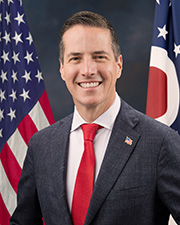
Bernie Moreno
Bernie Moreno Senate
R
Support
64% 14
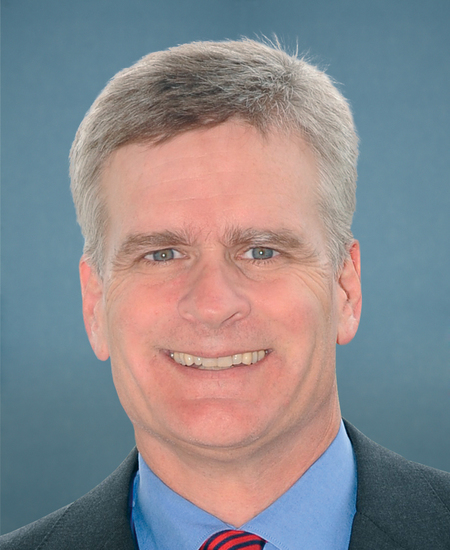
Bill Cassidy
Bill Cassidy Senate
R
Support
64% 14
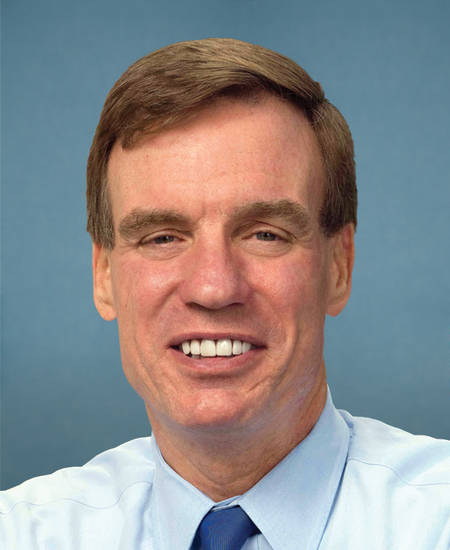
Mark R. Warner
Mark R. Warner Senate
D
Oppose
31% 13
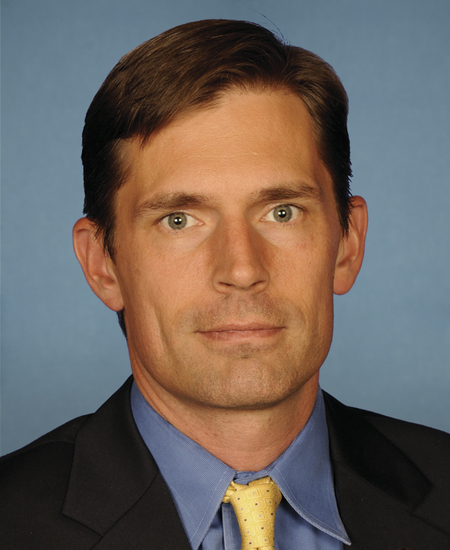
Martin Heinrich
Martin Heinrich Senate
D
Oppose
33% 3
Adam B. Schiff
Adam B. Schiff Senate
D
Oppose
36% 14
Alex Padilla
Alex Padilla Senate
D
Oppose
36% 14
Amy Klobuchar
Amy Klobuchar Senate
D
Oppose
36% 14
Showing 91–100 of 201 bills

All transportation bills

in committee · United States · House Feb 10, 2026

HR 7442: National Bridge Funding Reform Act

HR 7442 establishes a new National Bridge Program under federal highway law to allocate funding for bridge replacement, rehabilitation, and construction. It changes how funds are distributed: 75% based on the total deck area of bridges on federal-aid highways in each state, and 25% based on the deck area of bridges in poor condition. This directly affects state transportation departments managing federal-aid highway bridges, requiring them to prioritize projects using this updated formula starting after December 31, 2024. The bill eliminates prior programs (Carbon Reduction and PROTECT) and revises related funding mechanisms.
in committee · United States · Senate Jan 27, 2026

S 3694: Maximizing Transportation Efficiency Act

S 3694, the Maximizing Transportation Efficiency Act, allocates $20 million annually in dedicated grants to fund transportation demand management (TDM) strategies in rural communities. It directly affects rural residents - particularly elderly, disabled, and low-income households - who face limited transit access, high transportation costs, and barriers to jobs/services. The bill modifies existing transportation grant programs to include TDM projects like carpool/vanpool systems, real-time travel apps, rural mobility hubs, and employer incentive programs. Funds must support activities such as developing TDM plans, marketing shared transit options, and deploying technology to reduce congestion. The legislation aims to improve rural mobility by expanding affordable, efficient transportation alternatives beyond car dependency.
Sub-Topics Electric Vehicles Rail Roads & Highways Tags Rural Communities
in committee · United States · Senate Mar 13, 2025

S 1017: Safe and Secure Transportation of American Energy Act

This bill amends Section 60123(b) of Title 49, U.S. Code, to expand criminal penalties for interfering with energy infrastructure. It broadens the prohibited actions from "damaging or destroying" to include vandalizing, tampering with, disrupting operations or construction, or preventing operations of energy facilities like pipelines. The change directly affects individuals who interfere with energy transportation infrastructure, increasing legal consequences for a wider range of disruptive acts. The bill focuses on strengthening existing penalties without creating new programs or funding.
in committee · United States · Senate Feb 4, 2026

S 3775: Stop Underrides Act 2.0

The Stop Underrides Act 2.0 requires new safety standards for side underride guards on commercial trucks and trailers to prevent passenger vehicles from sliding under them during collisions. The bill mandates that the Secretary of Transportation finalize regulations requiring these guards within 18 months, with full compliance required within two years. The regulations must meet specific performance standards to prevent intrusion into passenger vehicle occupant space during side collisions at speeds up to 40 mph. This law directly affects commercial truck manufacturers, trucking companies, and all road users, particularly vulnerable road users like cyclists and pedestrians who are at higher risk in underride crashes. The bill also establishes a public website for underride crash resources and requires studies to better understand and prevent these crashes.
in committee · United States · Senate Jun 18, 2025

S 2108: VARIANCE Act

S 2108 (VARIANCE Act) allows commercial trucks transporting specific dry bulk goods to exceed standard axle weight limits by up to 10% (110% of the maximum). It directly affects trucking companies hauling homogeneous, unpackaged dry bulk cargo (like grain or sand) in trailers designed for that purpose. The bill amends federal law to permit this weight variance for dry bulk goods only, while still requiring compliance with the overall gross vehicle weight limit. This change applies solely to vehicles carrying defined dry bulk goods in purpose-built trailers, not to other cargo or vehicles.
in committee · United States · House Jan 17, 2025

HR 502: Protecting Infrastructure Investments for Rural America Act

HR 502, the Protecting Infrastructure Investments for Rural America Act, modifies the rural surface transportation grant program under Title 23, U.S. Code. It redefines "small community" as areas outside urbanized zones with populations of 5,000 or less (down from 200,000), and requires that 5% of annual program funds support projects in these communities. The bill increases the federal share for eligible projects in small communities to 90% and mandates that projects must benefit economic development or quality of life in the community. These changes directly affect rural areas and small towns by prioritizing infrastructure funding for the smallest communities.
Sub-Topics Bridges Roads & Highways Transportation Funding Tags Rural Communities
in committee · United States · House Sep 12, 2025

HR 5337: Motor Carrier Safety Selection Standard Act of 2024

HR 5337 establishes a new standard for businesses (called "covered entities") that contract with motor carriers to ship goods. It requires these businesses to verify 45 days before shipment that a carrier is properly registered, has required insurance, and is confirmed by the Federal Motor Carrier Safety Administration (FMCSA) as meeting safety standards. Individual shippers (like personal movers) are exempt from these verification requirements. The standard expires once the FMCSA issues new safety fitness regulations within one year of the bill's enactment. The bill also creates a public FMCSA confirmation system showing whether carriers meet safety requirements.
in committee · United States · House Jul 24, 2025

HR 4661: AMERICA DRIVES Act

The AMERICA DRIVES Act (HR 4661) allows commercial trucks equipped with Level 4 or Level 5 automated driving systems (ADS) to operate interstate without a human driver onboard or a remote operator. It directly affects commercial trucking companies and autonomous vehicle manufacturers by preempting state laws requiring human drivers and mandating the Department of Transportation (DOT) to update regulations by 2027. Key provisions include revising rules around hours of service, drug testing, and driver licensing to apply to driverless vehicles, while defining ADS based on industry standards (SAE J3016). The bill ensures regulatory parity for ADS-equipped trucks and excludes automated technologies from width calculations under safety standards.
in committee · United States · House Mar 31, 2025

HR 2526: Bus Parity and Clarity Act

HR 2526, the Bus Parity and Clarity Act, clarifies that over-the-road buses operating in scheduled or charter service must pay the same tolls and access terms as public transit buses at toll roads, bridges, tunnels, and HOV lanes. It updates federal definitions to explicitly include "charter service" under existing equal access rules and requires toll facilities to offer these buses identical rates. The bill mandates the Federal Highway Administration to publish a public database of toll rates and terms within 180 days of enactment. This directly affects commercial bus operators using toll infrastructure, ensuring they receive equitable treatment compared to public transit vehicles.
in committee · United States · Senate Apr 10, 2025

S 1430: Interactive Federal Review Act

S 1430, the Interactive Federal Review Act, requires the Transportation Secretary to encourage highway projects receiving specific federal grants (like INFRA, RAISE, or Mega grants) to use digital platforms and 3D "digital twin" models during environmental reviews under the National Environmental Policy Act (NEPA). It mandates the Secretary to publish guidance within 90 days, select at least 10 projects to demonstrate these tools, and prioritize grant applications that plan to use them. The bill also requires a report on the efficiency and community engagement benefits within 180 days, plus 5 published examples of digital workflows by the Department of Transportation. This directly affects highway project sponsors seeking federal funding under the specified grant programs.
Sub-Topics Roads & Highways
Showing 91 to 100 of 201 bills
Previous 1 9 10 11 21 Next