Issue · Technology

Technology

Every technology bill, vote, and legislator stance in United States, automatically classified by Maddy, our AI policy reader.

Total bills
1,461
119th Congress
Top supporter
Ami Bera
86% support rate
Top opponent
Scott Perry
14% support rate
Ranked legislators
10
5 support · 5 oppose
Key legislators

Who's moving technology in United States

Legislators moving technology in United States
Legislator Party Stance Support rate Decisive votes
Ami Bera
Ami Bera House · District 6
D
Strong +
86% 22
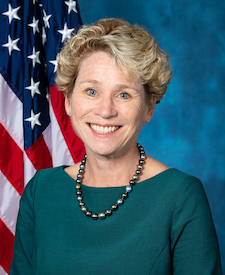
Chrissy Houlahan
Chrissy Houlahan House · District 6
D
Strong +
86% 22
Kim Schrier
Kim Schrier House · District 8
D
Strong +
86% 22
Mike Thompson
Mike Thompson House · District 4
D
Strong +
86% 22
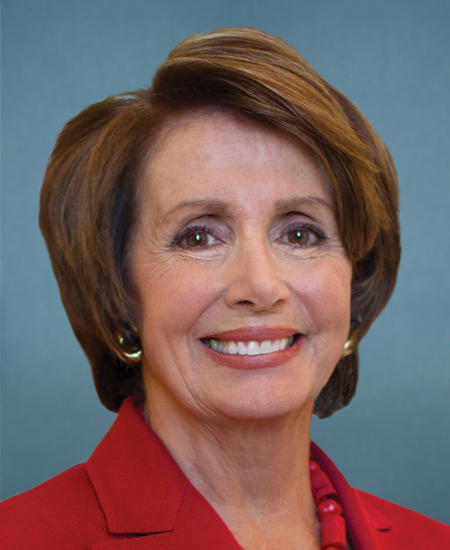
Nancy Pelosi
Nancy Pelosi House · District 11
D
Strong +
86% 22
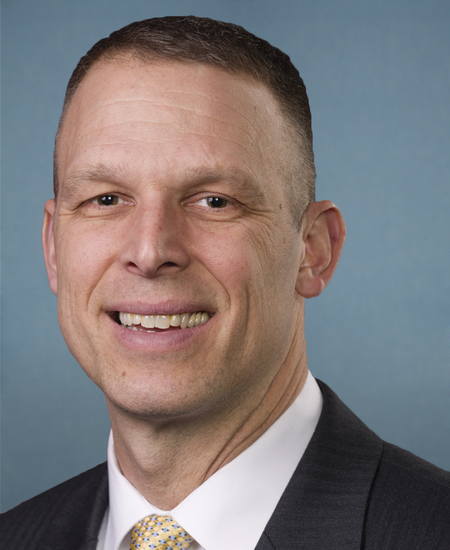
Scott Perry
Scott Perry House · District 10
R
Strong −
14% 21
AA
Alan Armstrong Senate
R
Strong −
17% 29
Rand Paul
Rand Paul Senate
R
Strong −
17% 46
Josh Hawley
Josh Hawley Senate
R
Strong −
18% 45
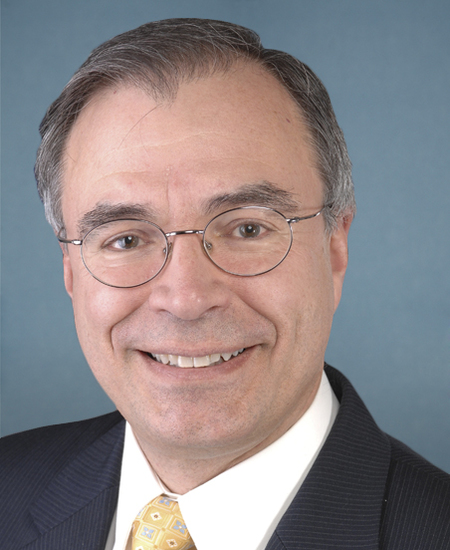
Andy Harris
Andy Harris House · District 1
R
Strong −
18% 22
Showing 921–930 of 1,461 bills

All technology bills

in committee · United States · House Jan 23, 2025

HR 651: Spectrum Pipeline Act of 2025

The Spectrum Pipeline Act of 2025 requires the federal government to reallocate at least 2,500 megahertz of spectrum (between 1.3 and 13.2 gigahertz) from federal use to commercial and unlicensed purposes. It mandates that 1,250 megahertz be identified for commercial use within two years of enactment and auctioned within three years, with the remaining spectrum identified by five years and auctioned by six years. The bill also requires the FCC to make 125 megahertz available for unlicensed use (like Wi-Fi) within two years and any remaining spectrum for licensed or unlicensed use within eight years. This process will require federal agencies to relocate from the reallocated spectrum and enable commercial companies to bid for spectrum to provide mobile broadband services.
in committee · United States · Senate Jan 15, 2026

S 3659: SECURE Minerals Act of 2026

The SECURE Minerals Act of 2026 establishes a new Strategic Resilience Reserve Corporation to secure U.S. supply chains for critical minerals and materials essential to technology, defense, and energy sectors. The Reserve will finance domestic and partner country production, acquire critical minerals for strategic stockpiling, and develop market data to support responsible production practices. With $2.5 billion in initial funding, the Reserve aims to reduce U.S. dependence on foreign sources, particularly China, by developing alternative supply chains and ensuring production rates meet specific targets. The legislation includes provisions for transparency, oversight, and annual reporting to Congress, with the Reserve prioritizing domestic projects, recycling, and repurposing of critical minerals.
in committee · United States · Senate Apr 2, 2025

S 1250: SHIELD U Act

Stopping Harmful Incidents to Enforce Lawful Drone Use Act or the SHIELD U Act This bill authorizes and expands counter-drone activities by state, local, and airport law enforcement, and federal agencies. Specifically, the bill authorizes the Department of Homeland Security (DHS) and state, local, and airport law enforcement to carry out Counter-Unmanned Aircraft System (Counter-UAS) activities on commercial service airport property to detect, identify, and mitigate threats posed by unmanned aircraft (i.e., drones). Further, the bill authorizes state and local law enforcement to carry out Counter-UAS activities off commercial airport property; the Federal Aviation Administration (FAA) must establish a process that allows for collaboration and coordination with these entities. In addition, each commercial airport must convene a task force to establish or modify the airport's tactical response plan for drone threats. The FAA and Transportation Security Administration must also publish (and update annually) best practices guidance on Counter-UAS activities at commercial service airports. The bill also allows DHS and the Departments of Defense, Justice, and Energy to contract with other entities to carry out authorized Counter-UAS activities. Further, the bill amends restrictions on the use of radio frequency jamming technology to allow state, local, and airport law enforcement to use the technology to detect, identify, or mitigate a drone threat. Finally, the Federal Law Enforcement Training Centers must develop and implement training curricula on the use of Counter-UAS activities. The training must be available to state, local, tribal, and territorial law enforcement, as well as private sector security agencies.
Sub-Topics Emerging Technology
passed · United States · Senate Mar 3, 2026

S 1070: National STEM Week Act

National STEM Week Act This bill requires the National Science and Technology Council's Committee on STEM to designate a week each calendar year as National STEM Week. (STEM refers to science, technology, engineering, and mathematics.) During this established week, the committee must encourage educational institutions (i.e., elementary schools, secondary schools, and institutions of higher education) to participate in the week and also encourage families of students attending these educational institutions to participate in STEM activities. Additionally, the committee must encourage STEM industries to (1) engage with students enrolled in educational institutions by providing mentorship programs, site visits, and guest lectures; and (2) support STEM education initiatives at these educational institutions through funding, resources, and expertise. The committee must annually report to Congress on the activities conducted during the established week.
passed · United States · House Apr 29, 2025

HR 2482: NTIA Reauthorization Act of 2025

The NTIA Reauthorization Act of 2025 reauthorizes the National Telecommunications and Information Administration (NTIA) through fiscal years 2025-2026 with $57 million annually. It changes the title of the Assistant Secretary of Commerce for Communications and Information to Under Secretary and establishes two new offices within NTIA: the Office of Spectrum Management and the Office of International Affairs. The bill makes technical amendments to numerous federal laws to update references from "Assistant Secretary" to "Under Secretary" and consolidates certain reporting requirements to streamline NTIA operations. This legislation directly affects the organizational structure and operational procedures of the NTIA, which coordinates telecommunications policy across the federal government and represents U.S. interests internationally on spectrum management and telecommunications policy.
in committee · United States · House Feb 11, 2025

HR 1203: Stop VOYEURS Act of 2025

HR 1203, the Stop VOYEURS Act of 2025, strengthens federal criminal penalties for secret recording of people in private settings without consent. It increases maximum prison sentences for video voyeurism from one year to five years and expands federal jurisdiction by defining specific circumstances where such acts become federal crimes. These include using interstate commerce for payments, transmitting recordings via computer/email, using equipment that crossed state lines, or conducting the act in federal territories. The law directly affects individuals who secretly record others without consent in private situations, making these acts federal offenses when connected to interstate activity. This change aims to address the growing prevalence of non-consensual recordings by broadening enforcement scope.
Sub-Topics Corrections
in committee · United States · Senate Mar 12, 2025

S 1007: 9–8–8 Lifeline Cybersecurity Responsibility Act

This bill strengthens cybersecurity protections for the 9-8-8 National Suicide Prevention Lifeline program. It requires the program’s network administrator (receiving federal funding) and participating local crisis centers to report cybersecurity vulnerabilities or incidents within 24 hours. The program must coordinate with the Department of Health and Human Services’ Chief Information Security Officer to eliminate vulnerabilities. Additionally, the bill mandates a study by the Comptroller General on the hotline’s cybersecurity risks, to be completed within 180 days of enactment.
in committee · United States · Senate May 8, 2025

S 1691: Traveler Privacy Protection Act of 2025

Traveler Privacy Protection Act of 2025 This bill limits the use of facial recognition or matching technology (e.g., matching and identification software) in airports for passenger screening. In general, the bill restricts the Transportation Security Administration’s (TSA’s) use of the technology to performing passenger identity verification at airport screening locations. The TSA must notify passengers prior to each use of the technology and receive affirmative express consent. If a passenger opts out of the use of the technology, then the TSA must perform identity verification using an approved identification document (e.g., a state driver's license) without collecting biometric information (e.g., fingerprints). For a passenger using a trusted traveler program (e.g., Global Entry), the TSA must provide notice on the use of the technology at the time of program enrollment and renewal and as the passenger approaches the point of identity verification. The passenger must have the option to opt out. The bill prohibits the TSA from (1) subjecting a passenger who opts out of the screening to discriminatory treatment or less favorable screening conditions; (2) using the technology to track or identify passengers outside of the screening location or to enable systemic, indiscriminate, or wide-scale monitoring, surveillance, or tracking; and (3) sharing biometric information collected through the use of the technology. The bill also limits the amount of time that the TSA may store the information collected. Further, these restrictions and requirements apply to the TSA's use of the technology in other specified circumstances (e.g., employee screenings).
Sub-Topics Emerging Technology
in committee · United States · House Nov 13, 2025

HR 6042: LANDED Act

The LANDED Act establishes a federal framework for state and local law enforcement to use counter-drone technology to address unauthorized drone operations that threaten public safety, national security, or critical infrastructure. It creates a process for states to apply for authorization to deploy approved counter-UAS systems, with requirements for reporting after use, coordination with federal agencies, and safety protocols. The bill also creates a grant program to help states acquire counter-drone equipment and mandates a reporting system for drone operations to prevent conflicts between agencies. It specifies that law enforcement can use counter-drone technology to detect, track, and disrupt drones, but must verify threats before use and report after any action.
Sub-Topics Emerging Technology
in committee · United States · Senate Apr 8, 2025

S 1343: Advancing Quantum Manufacturing Act of 2025

The Advancing Quantum Manufacturing Act of 2025 requires the Department of Energy and National Science Foundation to coordinate their quantum research through a dedicated liaison and cover a broad range of quantum technologies, including computing, sensing, and enabling tools like lasers and cryogenics. It directs the Commerce Department to establish a new Manufacturing USA institute focused on scaling up quantum manufacturing - providing end-to-end capabilities for design, fabrication, testing, and workforce development in quantum computing, sensing, and communication systems. The bill also mandates two studies: one by the National Academies to assess progress in the National Quantum Initiative Program, and another to identify collaboration barriers between research centers, industry, and academia. These provisions aim to accelerate domestic quantum technology production for national security and economic competitiveness.
Sub-Topics Emerging Technology
Showing 921 to 930 of 1,461 bills
Previous 1 … 92 93 94 … 147 Next