Issue · Technology

Technology

Every technology bill, vote, and legislator stance in United States, automatically classified by Maddy, our AI policy reader.

Total bills
210
119th Congress
Top supporter
Suzan K. DelBene
86% support rate
Top opponent
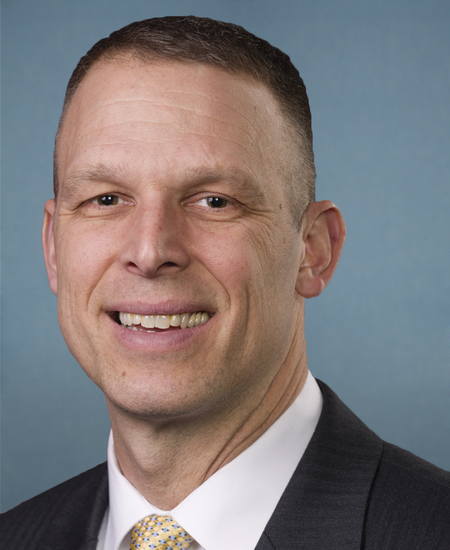
Scott Perry
14% support rate
Ranked legislators
10
5 support · 5 oppose
Key legislators

Who's moving technology in United States

Legislators moving technology in United States
Legislator Party Stance Support rate Votes
Suzan K. DelBene
Suzan K. DelBene House · District 1
D
Strong +
86% 259
Mike Thompson
Mike Thompson House · District 4
D
Strong +
86% 261
Chrissy Houlahan
Chrissy Houlahan House · District 6
D
Strong +
86% 259
Nancy Pelosi
Nancy Pelosi House · District 11
D
Strong +
86% 246
Kim Schrier
Kim Schrier House · District 8
D
Strong +
86% 261
Scott Perry
Scott Perry House · District 10
R
Strong −
14% 252
AA
Alan Armstrong Senate
R
Strong −
14% 46
Rand Paul
Rand Paul Senate
R
Strong −
16% 223
Andy Harris
Andy Harris House · District 1
R
Strong −
18% 257
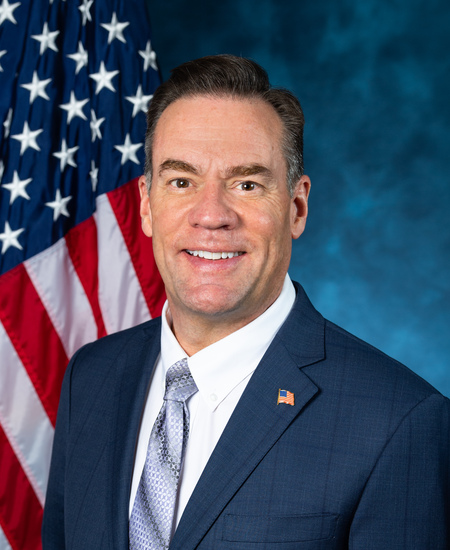
Russ Fulcher
Russ Fulcher House · District 1
R
Strong −
18% 262
Showing 71–80 of 210 bills

All technology bills

in committee · United States · House Mar 20, 2026

HR 8031: GUARDRAILS Act

The GUARDRAILS Act (HR 8031) repeals the December 11, 2025 Executive Order on Artificial Intelligence, which previously established a national policy framework for AI development. By removing this executive order, the bill prevents the federal government from using funds to implement, enforce, or administer the policies outlined in that directive. This change directly affects federal agencies and any organizations that were relying on the executive order's framework for AI regulation. The legislation does not create new AI rules but instead eliminates the existing executive mandate that had been in place.
in committee · United States · House Apr 2, 2026

HR 8189: American Security Robotics Act of 2026

The American Security Robotics Act of 2026 prohibits federal agencies from purchasing or operating unmanned ground vehicles made by foreign entities from certain countries. This ban applies to mechanical devices that move on land, such as autonomous patrol robots or surveillance vehicles, and extends to contracts where these systems are used by federal agencies. The law allows exceptions for specific national security purposes like counter-terrorism, research, or when the foreign technology is modified to remove data transfer capabilities and cybersecurity risks. Four federal departments - Homeland Security, Defense, State, and Justice - are authorized to request exemptions from these restrictions if they demonstrate a national interest.
in committee · United States · House Mar 24, 2026

HR 8059: Unserialized Firearm Harm Oversight and Serialization Act of 2026

This bill requires licensed firearm dealers to add serial numbers to unserialized guns they receive and to those they manufacture using 3D printing or similar non-traditional methods. It defines additive manufacturing as layer-by-layer processes like 3D printing and mandates that dealers engrave or cast serial numbers on frames and receivers, then report this information to the Attorney General. Dealers who fail to comply face civil fines up to $10,000 for first offenses and criminal penalties including up to $100,000 in fines and one year in prison for subsequent violations. The bill also creates a tax credit for dealers who spend money on serialization equipment and limits how the Attorney General can use the collected serial number data to only active criminal investigations. State laws regarding firearm serialization remain unaffected by these federal requirements.
Sub-Topics Corrections Firearms
in committee · United States · Senate Mar 17, 2026

S 4113: AI Guardrails Act of 2026

This bill, titled the AI Guardrails Act of 2026, establishes specific restrictions on how the Department of Defense can use artificial intelligence. It prohibits the military from using AI to launch or detonate nuclear weapons, to monitor or target individuals within the United States without a legal basis, and to employ lethal force through autonomous weapon systems without human oversight. The legislation also creates a waiver process that allows the Secretary of Defense to temporarily permit certain autonomous weapon uses under strict conditions, requiring written certification to Congress and detailed notifications about the system's safeguards and testing results.
in committee · United States · Senate Mar 12, 2026

S 4092: No Crypto in Social Security Act

This bill would prohibit the Social Security Trust Funds from investing in cryptocurrency or any crypto-related investments. It directly affects the Social Security system by amending the Social Security Act to ban digital assets and related financial products from the fund's investment portfolio. The legislation defines "digital asset" using the existing definition from the GENIUS Act and includes various crypto-related investments such as funds tied to digital asset futures, stocks of companies deriving value from digital assets, and other assets whose value depends on cryptocurrency. This change would remove cryptocurrency from the list of allowable investments for Social Security's trust funds.
Sub-Topics Emerging Technology
in committee · United States · Senate Mar 5, 2026

S 4000: Securing Infrastructure from Adversaries Act of 2026

This bill, titled the Securing Infrastructure from Adversaries Act of 2026, restricts the U.S. Department of Transportation from contracting with or providing grants to companies that use or source LiDAR technology from specific foreign countries or entities. It requires companies seeking transportation contracts to certify that they will not use prohibited LiDAR technology, while allowing the Secretary of Transportation to grant waivers on a case-by-case basis if the activity serves the national interest. The restrictions apply to contracts and funding obligations made on or after June 30, 2026, but exclude certain safety-related research, testing, and regulatory exemptions.
in committee · United States · Senate Mar 20, 2026

S 4158: A bill to temporarily suspend the clean electricity production credit to support the Strategic Petroleum Reserve.

This bill proposes to pause the clean electricity production tax credit for two years, from October 1, 2025, through September 30, 2027. The change would affect electricity generators who currently receive tax benefits for producing clean energy during this period. Money that would have gone to the Treasury from these suspended credits would instead be transferred to the Strategic Petroleum Reserve's funding account. The legislation aims to redirect federal tax revenue to support petroleum stockpiles while temporarily reducing incentives for clean electricity production.
passed · United States · House May 8, 2025

HR 881: DHS Restrictions on Confucius Institutes and Chinese Entities of Concern Act

HR 881, the DHS Restrictions on Confucius Institutes and Chinese Entities of Concern Act, restricts Department of Homeland Security (DHS) funding for colleges and universities that maintain relationships with China-funded Confucius Institutes or specific Chinese entities deemed "of concern." It prohibits DHS funding for institutions with ties to Confucius Institutes, the Thousand Talents Program, or Chinese universities involved in military-civil fusion, defense work, Uyghur persecution, election interference, or other activities listed in the bill. Institutions must terminate such relationships within one year of enactment to regain eligibility for DHS funds. The bill requires the DHS Secretary to report to Congress on any institutions violating this funding restriction. (3 sentences)
Sub-Topics Higher Education
in committee · United States · House Mar 2, 2026

HR 7752: Kelsey Smith Act

This bill, known as the Kelsey Smith Act, would require telecommunications service providers to share location data with law enforcement or public safety answering points during emergency situations. It directly affects phone and internet service providers, law enforcement officers, and individuals whose location information might be disclosed. The key provision allows officers to request location data without delay if the device was used to contact emergency services in the past 48 hours or if there is reasonable suspicion of an emergency involving risk of death or serious physical harm. The bill also establishes requirements for obtaining consent from subscribers or their next of kin, with a defined priority order for determining next of kin when consent is needed. Additionally, law enforcement agencies must maintain records of these requests, and the bill does not exempt providers from complying with applicable state laws regarding location information disclosure.
Sub-Topics Law Enforcement Telecommunications Tags Public Safety
in committee · United States · Senate Apr 2, 2025

S 1263: Operational Security Act of 2025

S 1263, the Operational Security Act of 2025, creates a new Office of Security Training and Counterintelligence within the Executive Office of the President. The office, led by a presidentially appointed Director with Top Secret clearance, will provide security training, counterintelligence support, and guidance on protecting classified information - including restrictions on using consumer messaging apps for official communications. It also establishes a bipartisan Security Training and Counterintelligence Advisory Board (appointed by congressional leaders) to recommend improvements, which must submit annual reports to congressional intelligence committees. The bill directly affects Executive Office of the President staff and their security protocols, focusing on concrete operational changes without altering existing classified information handling laws.
Showing 71 to 80 of 210 bills
Previous 1 7 8 9 21 Next