Issue · Technology

Technology

Every technology bill, vote, and legislator stance in United States, automatically classified by Maddy, our AI policy reader.

Total bills
210
119th Congress
Top supporter
Suzan K. DelBene
86% support rate
Top opponent
Scott Perry
14% support rate
Ranked legislators
10
5 support · 5 oppose
Key legislators

Who's moving technology in United States

Legislators moving technology in United States
Legislator Party Stance Support rate Votes
Suzan K. DelBene
Suzan K. DelBene House · District 1
D
Strong +
86% 259
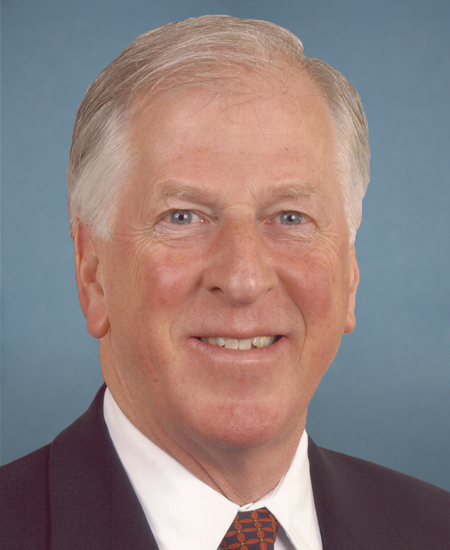
Mike Thompson
Mike Thompson House · District 4
D
Strong +
86% 261
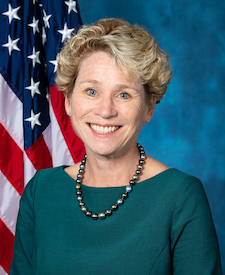
Chrissy Houlahan
Chrissy Houlahan House · District 6
D
Strong +
86% 259
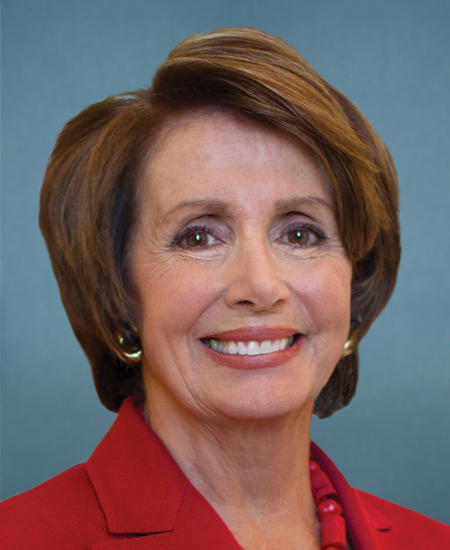
Nancy Pelosi
Nancy Pelosi House · District 11
D
Strong +
86% 246
Kim Schrier
Kim Schrier House · District 8
D
Strong +
86% 261
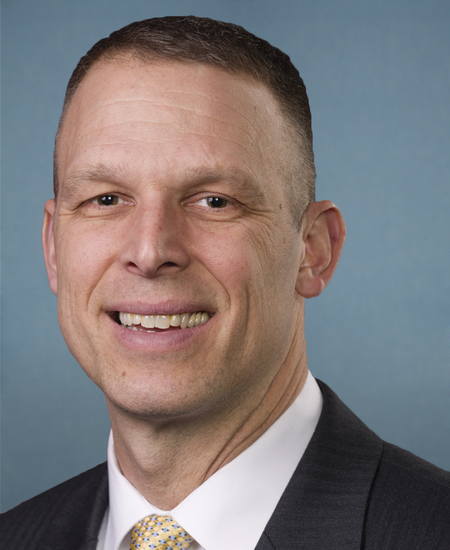
Scott Perry
Scott Perry House · District 10
R
Strong −
14% 252
AA
Alan Armstrong Senate
R
Strong −
14% 46
Rand Paul
Rand Paul Senate
R
Strong −
16% 223
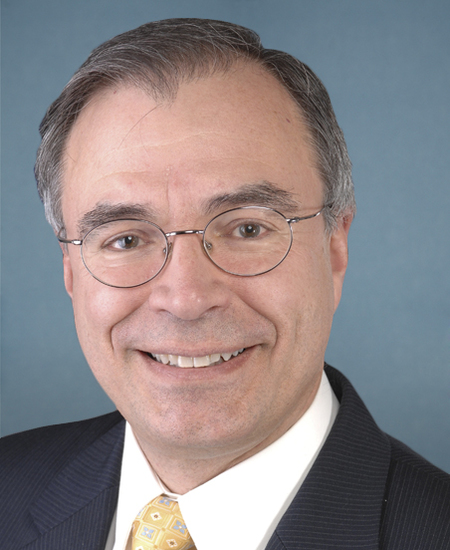
Andy Harris
Andy Harris House · District 1
R
Strong −
18% 257
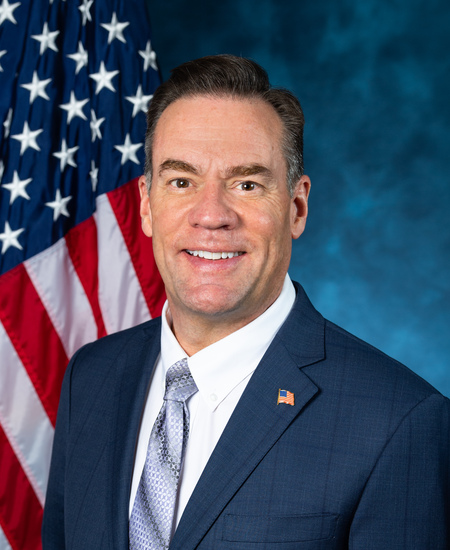
Russ Fulcher
Russ Fulcher House · District 1
R
Strong −
18% 262
Showing 61–70 of 210 bills

All technology bills

in committee · United States · Senate Apr 13, 2026

S 4281: Multilateral Alignment of Technology Controls on Hardware (MATCH) Act

The Multilateral Alignment of Technology Controls on Hardware (MATCH) Act seeks to prevent countries of concern, such as China, from obtaining advanced semiconductor manufacturing equipment. It directs U.S. agencies to identify critical semiconductor manufacturing technology and facilities in these countries and immediately engage allied nations to adopt equivalent export controls, including denying licenses for exports and servicing to targeted facilities. The bill mandates the U.S. to implement its own countrywide controls on relevant U.S.-produced equipment and comprehensive restrictions on identified foreign facilities within 150 days. If an allied country fails to implement comparable controls after diplomatic efforts are exhausted, the U.S. will extend its jurisdiction to control the export and servicing of covered equipment originating from that allied nation. This legislation primarily affects U.S. and allied semiconductor manufacturing equipment producers, as well as specific foreign entities and facilities in countries of concern.
in committee · United States · House Apr 15, 2026

HR 8306: SCALE Act

The SCALE Act aims to limit the ability of foreign adversaries, such as China and Russia, to acquire advanced artificial intelligence (AI) hardware. It requires the U.S. government to establish metrics for assessing the AI hardware capabilities of these countries and their associated entities. Based on these assessments, the Commerce Department must set annual export limits for AI hardware, generally denying licenses that exceed these thresholds or would allow adversaries to accumulate more than 5% of the U.S.'s total AI hardware capacity. The bill also imposes strict conditions on any approved exports, including independent verification of hardware capabilities and prohibitions against military or unauthorized remote access.
in committee · United States · House Apr 21, 2026

HR 8382: To prohibit the manufacture and conveyance of certain products for children that incorporate an artificial intelligence chatbot, and for other purposes.

This bill proposes to prohibit the manufacture, import, sale, or distribution of children's toys and child care articles that incorporate an artificial intelligence (AI) chatbot. This prohibition would apply to manufacturers, importers, sellers, and distributors, taking effect 180 days after the bill's enactment. A "chatbot" is defined as technology using AI or machine learning to engage in interactive conversations, and "child care articles" include items like those used for a child's sleep, feeding, or hygiene. Violations of this prohibition would be treated as violations under the existing Consumer Product Safety Act.
in committee · United States · House Apr 16, 2026

HR 8323: SOUL Act of 2026

The SOUL Act of 2026 establishes a new federal intellectual property right for U.S. citizens over their "unique likeness," broadly defined to include their name, image, voice, biometric data, and AI-generated digital replicas. This bill grants individuals exclusive control over the reproduction, distribution, and creation of derivative works based on their likeness for their lifetime plus 50 years after death. Owners can seek civil remedies in federal court, including injunctions, content takedown orders, and statutory damages, with harm presumed, while platforms can be held liable for failing to remove unauthorized content after notification. The act includes exceptions for fair use, government activities, and First Amendment protections, and it preempts similar state laws to create a uniform national standard.
in committee · United States · House Apr 13, 2026

HR 8250: Parents Decide Act

The Parents Decide Act requires operating system providers to collect users' dates of birth when setting up accounts and using the system, with parental verification needed for anyone under 18. The bill mandates that app developers be able to access this information to verify user ages and gives parents control over what their minor children can access on their devices. The Federal Trade Commission is tasked with creating specific regulations within 180 days on how to verify parental consent, protect collected data, and implement these requirements, with enforcement through existing FTC unfair practices laws. The provisions take effect one year after enactment, and the FTC must report to Congress on implementation within 18 months.
in committee · United States · House Feb 5, 2026

HR 7399: Kids Off Social Media Act

This bill, known as the Kids Off Social Media Act, restricts social media platforms from allowing users under 13 to create accounts and requires them to delete existing accounts for children they identify. It also limits how platforms use personal data to recommend content to children and teens, prohibiting personalized algorithms except for basic factors like device type and location. The second part of the bill updates existing federal rules to require schools receiving discounted internet subsidies to block student access to social media platforms and submit annual compliance certifications. The Federal Trade Commission and state attorneys general are authorized to enforce these provisions through civil actions and penalties.
in committee · United States · House Apr 22, 2026

HR 8170: MATCH Act

The MATCH Act requires U.S. agencies to align export controls on semiconductor manufacturing equipment with allied nations to prevent adversaries from accessing critical technology. It mandates a 150-day period for diplomatic efforts to secure countrywide denial policies from allied suppliers, after which U.S. jurisdiction would extend to equipment exported from countries not complying with these controls. The bill specifically targets semiconductor manufacturing equipment that the U.S. cannot currently produce in high volume and includes a list of Chinese companies deemed to warrant comprehensive restrictions. If allies fail to implement matching controls, the Act would allow the U.S. to regulate equipment exported from non-compliant allied countries and restrict servicing of restricted items at facilities in adversary nations. The legislation includes a sunset provision that expires five years after enactment, with annual reporting requirements to Congress on progress and compliance.
in committee · United States · Senate Mar 25, 2026

S 4214: Artificial Intelligence Data Center Moratorium Act

This bill establishes a moratorium on constructing or upgrading new artificial intelligence data centers until specific federal laws are enacted to ensure AI safety, protect workers from job displacement, and prevent environmental harm. It defines AI data centers as facilities with significant power capacity or advanced cooling systems used for large-scale AI model development. The legislation requires the Secretary of Energy to submit quarterly public reports on data center operations, including details on energy use, emissions, water consumption, and labor practices. Additionally, it prohibits the export of computing infrastructure hardware to countries that lack comparable AI safety regulations or to entities using such hardware for large-scale AI training and deployment.
in committee · United States · Senate Mar 26, 2026

S 4235: American Security Robotics Act of 2026

The American Security Robotics Act of 2026 prohibits federal agencies from buying or using unmanned ground vehicles made by foreign entities linked to certain nations. It defines these vehicles as mechanical devices that move on the ground and operate without direct human control, including autonomous robots and remote surveillance systems. The ban takes effect one year after the law is passed and applies to both direct purchases and contracts for these services. Exceptions allow use for national security missions, research, or if the system is modified to remove foreign data connections and cybersecurity risks.
Sub-Topics Cybersecurity
in committee · United States · Senate Mar 26, 2026

S 4216: GUARDRAILS Act

The GUARDRAILS Act repeals a December 2025 executive order on artificial intelligence policy and prohibits federal funding for its implementation. This legislation directly affects federal agencies by removing their authority to enforce the previous executive order's framework. The bill does not create new AI regulations but instead eliminates the existing executive order that established a national policy framework for artificial intelligence.
Showing 61 to 70 of 210 bills
Previous 1 6 7 8 21 Next