Issue · Technology

Technology

Every technology bill, vote, and legislator stance in United States, automatically classified by Maddy, our AI policy reader.

Total bills
1,461
119th Congress
Top supporter
Ami Bera
86% support rate
Top opponent
Scott Perry
14% support rate
Ranked legislators
10
5 support · 5 oppose
Key legislators

Who's moving technology in United States

Legislators moving technology in United States
Legislator Party Stance Support rate Decisive votes
Ami Bera
Ami Bera House · District 6
D
Strong +
86% 22
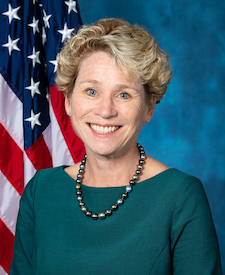
Chrissy Houlahan
Chrissy Houlahan House · District 6
D
Strong +
86% 22
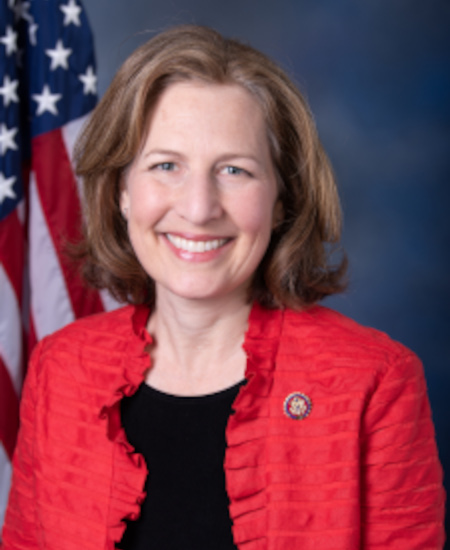
Kim Schrier
Kim Schrier House · District 8
D
Strong +
86% 22
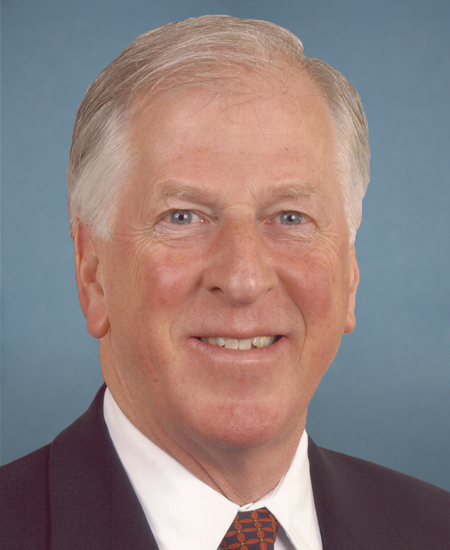
Mike Thompson
Mike Thompson House · District 4
D
Strong +
86% 22
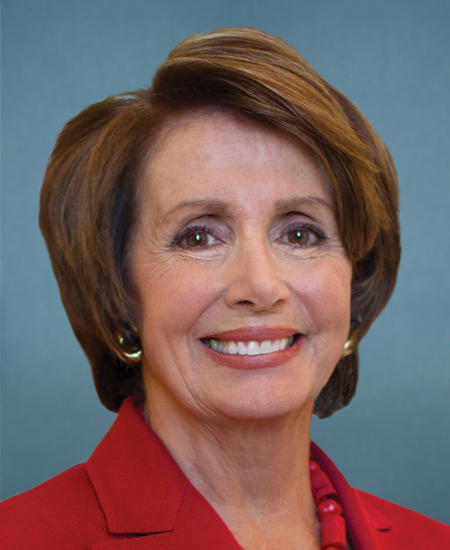
Nancy Pelosi
Nancy Pelosi House · District 11
D
Strong +
86% 22
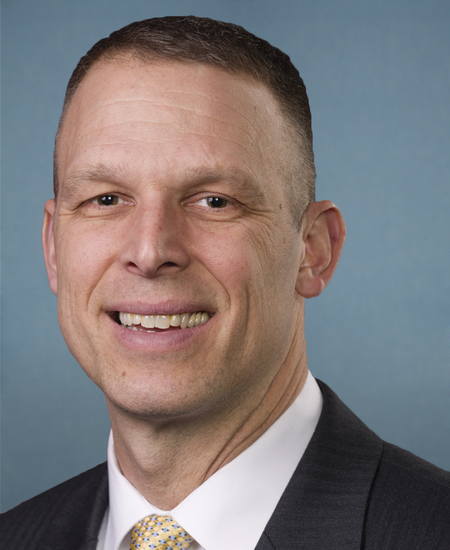
Scott Perry
Scott Perry House · District 10
R
Strong −
14% 21
AA
Alan Armstrong Senate
R
Strong −
17% 29
Rand Paul
Rand Paul Senate
R
Strong −
17% 46
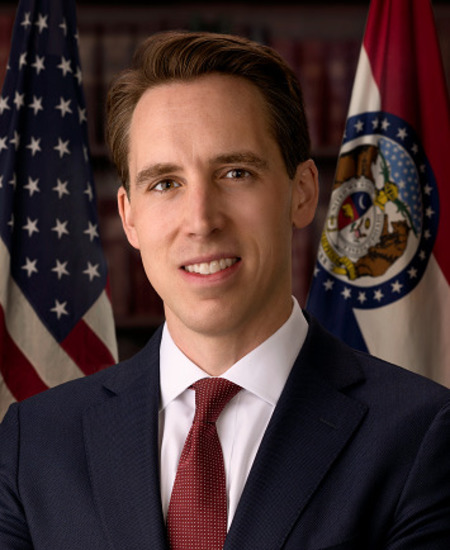
Josh Hawley
Josh Hawley Senate
R
Strong −
18% 45
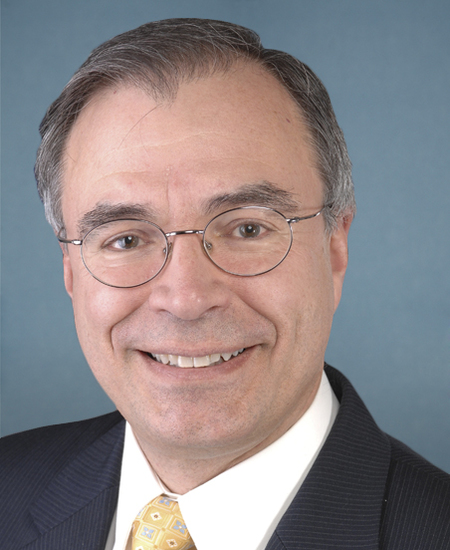
Andy Harris
Andy Harris House · District 1
R
Strong −
18% 22
Showing 541–550 of 1,461 bills

All technology bills

passed · United States · House Mar 25, 2026

HR 6460: Recreational Drone Empowerment Act

The Recreational Drone Empowerment Act clarifies that recreational drone operators may fly in specific controlled airspace without needing additional permission. It amends federal aviation law to explicitly include Class E airspace above uncontrolled Class G airspace and Class E airspace extensions around airports (such as near airports with Class B, C, D, or E surface areas). This change directly affects hobbyist drone users by removing ambiguity about where they can legally operate their devices. The bill makes existing rules clearer but does not alter overall flight restrictions or create new requirements.
Sub-Topics Emerging Technology
in committee · United States · House Mar 20, 2026

HR 7514: Rural Health Care Facilities Revitalization Act

This bill creates new funding opportunities for rural health facilities (like hospitals, clinics, and long-term care centers) in areas with populations under 50,000. It allows these facilities to use existing Rural Development Agency funds to refinance debt, update telehealth/equipment, or cover operating costs - provided the assistance preserves health access and improves the facility’s financial health. Eligibility requires the facility to be in a rural area or a persistent poverty area (defined as a 20%+ poverty rate for 30 years), and the Secretary may waive certain requirements for insolvent facilities in distressed communities. The law amends existing farm and rural development programs to directly support rural health infrastructure without creating new funding streams.
Sub-Topics Hospitals Long-Term Care Telehealth Tags Rural Communities
in committee · United States · Senate Jul 17, 2025

S 2325: Restore and Modernize Our National Laboratories Act of 2025

This bill authorizes $5 billion annually (2026-2030) for the Secretary of Energy to fund deferred maintenance, critical infrastructure upgrades, and modernization projects at U.S. national laboratories. It directly affects Department of Energy national laboratories, including facilities for research, computing, utilities, and administrative buildings. Key provisions require the Secretary to submit annual project lists to Congress and develop a 10-year strategy report detailing facility priorities, funding needs, and operational plans. The funding must allocate at least one-third yearly to the Office of Science. The bill mandates specific reporting to congressional committees on project descriptions and funding profiles.
in committee · United States · House Jun 26, 2025

HR 4165: To amend the Public Health Service Act to provide for the inclusion of a biological attribution strategy, and an early warning strategy and implementation plan, in the National Health Security Strategy, and for other purposes.

This bill requires federal health agencies to develop two new strategies within the National Health Security Strategy. First, a "biological attribution strategy" to clarify which agencies handle identifying the source of biological threats (like disease outbreaks) and how they coordinate, including using new technologies for detection. Second, an "early warning strategy" focused on rapidly spotting emerging health threats (biological, chemical, or radiological) through tools like wastewater testing and airport screenings, while avoiding duplicated efforts. It mandates coordination with state health departments, private labs, and intelligence agencies to streamline response capabilities. The bill directly affects federal agencies (like CDC and National Intelligence) and their coordination with state/local partners, without creating new funding or altering existing laws.
Sub-Topics Public Health
in committee · United States · House Jan 3, 2025

HR 117: Fourth Amendment Restoration Act

HR 117, the Fourth Amendment Restoration Act, requires U.S. government agencies to obtain a court-issued warrant before surveilling U.S. citizens for any purpose. It repeals the Foreign Intelligence Surveillance Act (FISA) and prohibits warrantless electronic surveillance, physical searches of citizens' property, or collection of phone records (pen/trap devices) targeting U.S. citizens. The bill also bans using information gathered under Executive Order 12333 or during surveillance of non-citizens against U.S. citizens in court proceedings. It applies directly to U.S. citizens by mandating judicial oversight for all surveillance activities involving them. Violations could result in fines up to $10,000 or up to five years in prison.
Sub-Topics Corrections Courts
in committee · United States · House Jan 22, 2026

HR 7224: Secure Revenue Clearance Channel Act of 2026

HR 7224 creates a simplified customs entry process for express carriers shipping low-value merchandise (under $600) by allowing electronic manifest submissions to U.S. Customs and Border Protection (CBP) instead of full documentation. It directly affects eligible express carriers (like major package delivery companies) operating under "closely integrated administrative control," requiring CBP approval of their electronic systems. The bill mandates a fee (20% of value, the applicable tariff rate, or other fixed duty) collected by carriers, which replaces specific fees and duties like those under 19 U.S.C. 58c(a) and most-favored nation tariffs. Exceptions apply for items like alcohol, tobacco, or merchandise subject to antidumping duties or tariff-rate quotas.
in committee · United States · Senate Feb 5, 2025

S 430: TICKET Act

The TICKET Act requires ticket sellers (both primary issuers and secondary markets) to clearly display the total price of event tickets - including all fees - before purchase. It mandates that sellers show the base ticket price and itemize every fee (like service or delivery charges) in advertisements, during the buying process, and on the final purchase screen. This applies to events with over 200 seats advertised across state lines, such as concerts or sports games. Violations would be enforced by the FTC as deceptive practices under existing law.
in committee · United States · House Nov 20, 2025

HR 6221: Fostering the Future for American Children and Families Act

This bill directs the Health and Human Services Secretary to study federal, state, and private programs supporting job training and apprenticeships for current and former foster youth, evaluating effectiveness, gaps, and barriers. It then establishes the "Fostering the Future Pipeline Program" to provide competitive grants to states, schools, employers, and nonprofits for expanding industry-aligned training in high-demand fields like healthcare and IT, with a $50 million annual funding limit. The bill also amends existing foster care funding to allow education vouchers to cover short-term career programs, such as registered apprenticeships and certificate courses. These changes directly affect foster youth transitioning to adulthood by improving access to career pathways and workforce opportunities.
in committee · United States · Senate Apr 7, 2025

S 1315: A bill to amend the Internal Revenue Code of 1986 to provide a refundable credit for certain home accessibility improvements.

This bill creates a refundable 35% tax credit for homeowners making specific accessibility modifications to their primary residence. It directly affects individuals who are blind, disabled (meeting Social Security or VA benefit criteria), or aged 60+, including their spouses or dependents living in the same home. Qualifying improvements include installing ramps, grab bars, widened doorways, accessible bathrooms, non-slip flooring, and adaptive technologies like remote health monitors. The credit is limited to $10,000 annually ($30,000 lifetime) and phases out for higher-income taxpayers (e.g., $400,000 joint filer threshold).
Sub-Topics Tax Credits Military Families Veteran Benefits Tags People with Disabilities
in committee · United States · House Jun 3, 2025

HR 3684: Save America’s Rural Hospitals Act

This bill aims to stabilize rural hospitals by modifying Medicare payment policies. It eliminates sequestration for rural hospitals, reverses bad debt reimbursement cuts for critical access hospitals, and permanently extends payment levels for low-volume and Medicare-dependent hospitals. The bill also makes permanent telehealth enhancements for rural health clinics, restores state authority to waive the 35-mile rule for hospital designations, and creates flexibility grants for rural hospitals to transform services. These changes directly affect rural hospitals, critical access hospitals, and Medicare beneficiaries who face significant barriers to accessing care in rural areas. The bill addresses the closure of 151 rural hospitals since 2010 and the vulnerability of 432 more hospitals, aiming to prevent further loss of critical health care access.
Sub-Topics Hospitals Medicare Telehealth Tags Rural Communities
Showing 541 to 550 of 1,461 bills
Previous 1 … 54 55 56 … 147 Next