Issue · Technology

Technology

Every technology bill, vote, and legislator stance in United States, automatically classified by Maddy, our AI policy reader.

Total bills
1,447
119th Congress
Top supporter
Ami Bera
86% support rate
Top opponent
Scott Perry
14% support rate
Ranked legislators
10
5 support · 5 oppose
Key legislators

Who's moving technology in United States

Legislators moving technology in United States
Legislator Party Stance Support rate Decisive votes
Ami Bera
Ami Bera House · District 6
D
Strong +
86% 22
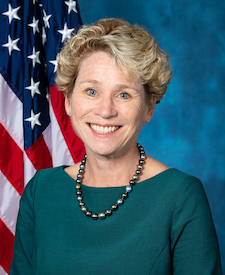
Chrissy Houlahan
Chrissy Houlahan House · District 6
D
Strong +
86% 22
Kim Schrier
Kim Schrier House · District 8
D
Strong +
86% 22
Mike Thompson
Mike Thompson House · District 4
D
Strong +
86% 22
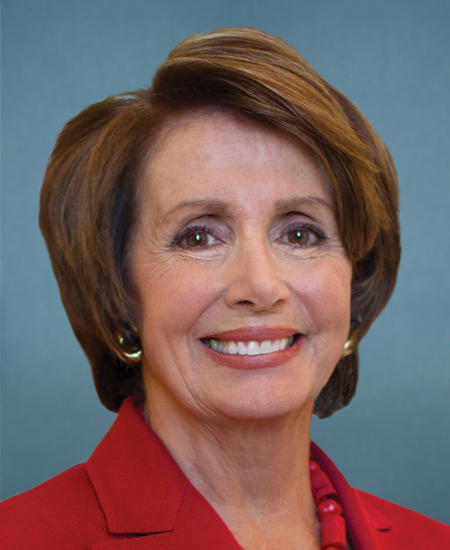
Nancy Pelosi
Nancy Pelosi House · District 11
D
Strong +
86% 22
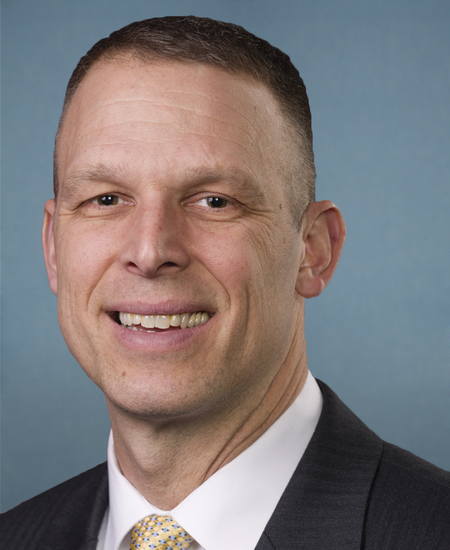
Scott Perry
Scott Perry House · District 10
R
Strong −
14% 21
AA
Alan Armstrong Senate
R
Strong −
17% 29
Rand Paul
Rand Paul Senate
R
Strong −
17% 46
Josh Hawley
Josh Hawley Senate
R
Strong −
18% 45
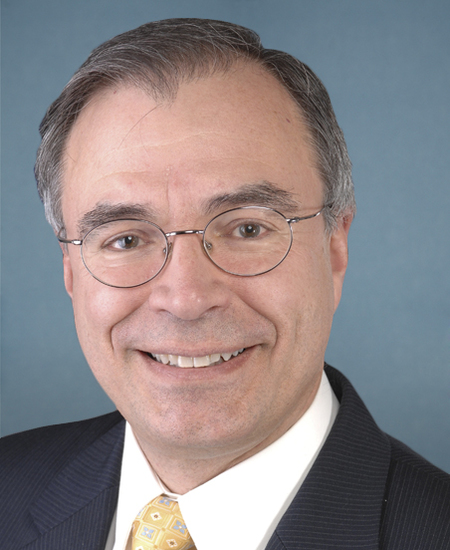
Andy Harris
Andy Harris House · District 1
R
Strong −
18% 22
Showing 451–460 of 1,447 bills

All technology bills

in committee · United States · House Mar 26, 2026

HR 8120: Veterans Benefits Information Protection Act

This bill, known as the Veterans Benefits Information Protection Act, amends the Communications Act to strengthen protections against automated robocalls targeting government agencies. It specifically prohibits the use of automated telephone equipment that can make repeated calls to federal numbers and exchange information without human intervention when operated by someone other than the intended recipient. The primary effect is to prevent third parties from using automated systems to access or interact with federal departments and agencies, including those handling veterans benefits. This measure aims to reduce unwanted automated communications directed at government institutions while maintaining existing protections for individual consumers.
in committee · United States · Senate Mar 25, 2026

S 4211: Consumer Data Privacy and Security Act of 2026

This bill establishes a comprehensive federal framework for consumer data privacy and security, creating a uniform set of rules that would preempt most state privacy laws. It requires businesses that collect personal data to obtain consent from individuals before gathering or processing their information, with stricter requirements for sensitive data like health records and financial details. Covered entities must provide clear privacy policies, allow individuals to access, correct, or delete their data, and implement security programs to protect information from unauthorized access. The Federal Trade Commission would enforce these rules and has authority to impose civil penalties on violators, while also receiving additional funding to carry out enforcement duties.
in committee · United States · House Mar 27, 2026

HR 8147: Prioritizing Rural Broadband Affordability Act

This bill modifies the Rural Electrification Act to require the Secretary of Agriculture to consider broadband affordability when determining which rural households and service areas are unserved. The changes directly affect rural communities by ensuring that high costs are factored into eligibility assessments for federal broadband funding programs. Under the new provisions, officials must evaluate whether existing broadband services are affordable before designating an area as unserved. The amendments will take effect one year after the bill is enacted, allowing time for agencies to update their evaluation criteria.
Sub-Topics Broadband Access Telecommunications Tags Agriculture Rural Communities
in committee · United States · House Dec 15, 2025

HR 6721: MAP for Care Act

This bill establishes a Medicare Advance Directive Certification Program to help Medicare beneficiaries create and manage legally recognized advance directives that outline their medical care preferences. The program would require participating vendors to meet strict accreditation standards for security, privacy, and accessibility while allowing beneficiaries to voluntarily enroll and update their documents online. Key provisions include mandatory notifications to Medicare enrollees, federal oversight of vendor compliance, and the availability of state-compliant advance directive forms on the Centers for Medicare & Medicaid Services website. The legislation does not preempt state laws and ensures that certified directives remain accessible to healthcare providers and designated family members when needed.
Sub-Topics Medicaid Medicare
in committee · United States · Senate Jul 27, 2026

S 4259: Blue Skies for Taiwan Act of 2026

The Blue Skies for Taiwan Act of 2026 establishes a framework to strengthen Taiwan's unmanned aerial system (UAS) capabilities and integrate them into U.S. defense supply chains. The bill creates a working group to assess Taiwan's drone production capacity, identify barriers to U.S. certification, and explore public-private partnerships for co-developing secure, PRC-independent drone components. It also mandates a cooperative framework with regional allies to promote Taiwan's participation in secure UAS programs and establishes a fast-track certification process for Taiwanese manufacturers to expedite export controls and security reviews. The legislation authorizes funding for these initiatives while explicitly stating it does not change U.S. policy on Taiwan's international status.
Sub-Topics Emerging Technology
in committee · United States · House Apr 9, 2026

HR 8217: Next Gen Road Safety Act

The Next Gen Road Safety Act amends federal funding provisions to allow law enforcement agencies to purchase specialized equipment for managing high-speed vehicle pursuits. This legislation specifically authorizes the procurement of technologies such as vehicle-disabling systems, police bumper systems, and drones to help prevent and de-escalate dangerous chase situations. The changes apply to federal crime control grants under the Omnibus Crime Control and Safe Streets Act of 1968, enabling agencies to use these funds for the specified safety equipment. The bill focuses on updating existing grant categories to include modern tools that support officer safety and public safety during vehicular pursuits.
in committee · United States · House Apr 9, 2026

HR 8212: Tech Diplomacy Training Act

The Tech Diplomacy Training Act requires all U.S. Foreign Service officers to complete mandatory training on science, technology, engineering, and mathematics topics, including artificial intelligence and emerging communications technologies. This training will be administered through the George P. Shultz National Foreign Affairs Training Center and must cover how these technologies impact diplomacy, how adversaries use them, and how the United States can leverage them as diplomatic tools. New officers must complete the full curriculum during their initial training, while existing officers have 18 months to finish the comprehensive program or 270 days to complete a condensed version. The requirement applies to all Foreign Service officers and operates alongside existing training requirements without replacing them.
in committee · United States · House Apr 6, 2026

HR 8206: Homeland Security and Further Additional Continuing Appropriations Act, 2026

This bill, titled the Homeland Security and Further Additional Continuing Appropriations Act, 2026, provides funding for the Department of Homeland Security and extends certain continuing appropriations for fiscal year 2026. It allocates money for various DHS components including border security, immigration enforcement, cybersecurity, disaster relief, and law enforcement training. The bill also includes the SAVE America Act, which requires states to verify voter citizenship through documentary proof and mandates photo identification for voting in federal elections. Additionally, it establishes reporting requirements for DHS budgeting and oversight, and prohibits certain border crossing fees.
in committee · United States · House Mar 2, 2026

HR 7749: Quantum in Practice Act

This bill, known as the Quantum in Practice Act, amends the National Quantum Initiative Act to formally include quantum modeling and simulation as a core area of research. It directly affects federal agencies and researchers involved in quantum information science by updating the legal definition and adding specific funding priorities for quantum molecular modeling. The legislation aims to support scientific work that could lead to breakthroughs in areas like fertilizer production, drug development, battery technology, and new materials. By making these changes, the bill ensures that federal quantum research programs explicitly cover the development and study of quantum simulations for practical applications.
Sub-Topics Emerging Technology
in committee · United States · Senate Apr 15, 2026

S 3947: REWIRE Act

This bill, known as the REWIRE Act, would streamline the process for upgrading power lines by exempting certain transmission upgrades from detailed environmental reviews when they occur within existing rights-of-way. It specifically allows utilities to replace or upgrade conductors and install new grid technologies without preparing environmental impact statements, provided the work stays within previously disturbed land or current corridors. The legislation also directs the Federal Energy Regulatory Commission to create rules that improve financial returns for companies investing in advanced transmission materials like carbon fiber cables. Additionally, the bill establishes a federal modeling program to better predict grid performance and creates a technical assistance clearinghouse to help utilities implement these new technologies.
Showing 451 to 460 of 1,447 bills
Previous 1 … 45 46 47 … 145 Next