Issue · Technology

Technology

Every technology bill, vote, and legislator stance in United States, automatically classified by Maddy, our AI policy reader.

Total bills
1,447
119th Congress
Top supporter
Ami Bera
86% support rate
Top opponent
Scott Perry
14% support rate
Ranked legislators
10
5 support · 5 oppose
Key legislators

Who's moving technology in United States

Legislators moving technology in United States
Legislator Party Stance Support rate Decisive votes
Ami Bera
Ami Bera House · District 6
D
Strong +
86% 22
Chrissy Houlahan
Chrissy Houlahan House · District 6
D
Strong +
86% 22
Kim Schrier
Kim Schrier House · District 8
D
Strong +
86% 22
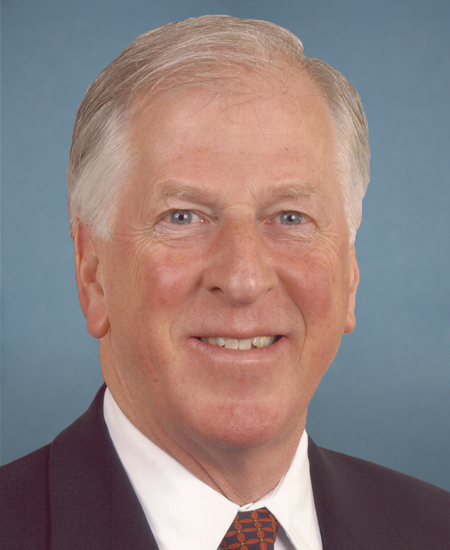
Mike Thompson
Mike Thompson House · District 4
D
Strong +
86% 22
Nancy Pelosi
Nancy Pelosi House · District 11
D
Strong +
86% 22
Scott Perry
Scott Perry House · District 10
R
Strong −
14% 21
AA
Alan Armstrong Senate
R
Strong −
17% 29
Rand Paul
Rand Paul Senate
R
Strong −
17% 46
Josh Hawley
Josh Hawley Senate
R
Strong −
18% 45
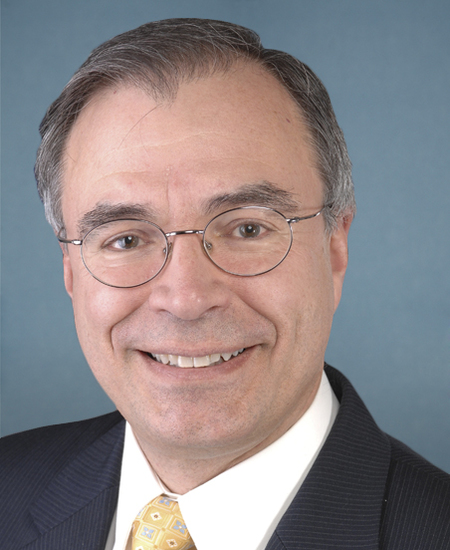
Andy Harris
Andy Harris House · District 1
R
Strong −
18% 22
Showing 401–410 of 1,447 bills

All technology bills

in committee · United States · House Apr 6, 2026

HR 8198: OUTPACE in Space Act

This bill, known as the OUTPACE in Space Act, aims to expand and regulate commercial space and hypersonic operations in the United States while addressing national security concerns. It requires the Federal Aviation Administration to brief Congress on plans to increase airspace access for commercial space and hypersonic industries, update regulations to support overland launch and reentry operations, and hire specialized aerospace engineers more quickly. The legislation also restricts federal research and development initiatives related to commercial space from collaborating with foreign entities or countries designated as security risks. Additionally, the bill mandates reports on resource needs and projected increases in launch and reentry cadence to improve the national airspace system's capacity.
in committee · United States · Senate Mar 26, 2026

S 4230: Protecting Stolen Encrypted Data Act of 2026

This bill directs the President, through the Department of Defense and the National Intelligence Director, to create strategies for identifying stolen sensitive data and classified information held by foreign entities. It specifically targets financial, medical, biometric data, intellectual property, and trade secrets belonging to U.S. persons. The legislation authorizes these officials to determine if destroying, manipulating, or recovering such stolen data serves U.S. economic and national security interests, and if so, permits them to attempt those actions while potentially informing the data owners. Officials must submit a report to Congress within one year outlining their strategies, actions taken, and recommendations for future legislative or administrative steps.
in committee · United States · Senate Aug 5, 2026

S 4199: Youth AI Privacy Act

The Youth AI Privacy Act requires companies that operate artificial intelligence chatbots to take specific steps to protect minors under 18 from potential harm. The law mandates that companies must clearly inform young users that they are interacting with an AI, not a human, and prohibits features designed to encourage compulsive use, such as push notifications or rewards for frequent engagement. Additionally, the bill restricts how companies can use personal data from minors, banning the use of this information for advertising, profiling, or training AI models, with limited exceptions for safety testing. The Federal Trade Commission is tasked with enforcing these rules and issuing guidance to help companies comply, while also authorizing funding for research on the effects of AI chatbots on youth mental health.
Sub-Topics Consumer Data Protection Online Safety Social Media Tags Artificial Intelligence Children
in committee · United States · Senate Mar 25, 2026

S 4193: Wildfire and Grid Reliability Act

The Wildfire and Grid Reliability Act creates a new grant program administered by the Department of Energy to help electric utilities improve power grid safety and reduce wildfire risks. Eligible entities, including public, municipal, cooperative, and investor-owned utilities, can apply for funding to implement projects like undergrounding power lines, installing fire-resistant equipment, and deploying early detection technology. The bill requires recipients to match federal funds with their own contributions and mandates that at least 40% of grants go toward wildfire risk reduction, while 20% is reserved for smaller utilities serving fewer than 4 million megawatt-hours annually.
in committee · United States · Senate Mar 26, 2026

S 4264: NASA UAS Detection Act

The NASA UAS Detection Act authorizes NASA to detect, identify, monitor, and track unmanned aircraft systems that pose a credible threat to its facilities and assets. This authority allows NASA personnel to intercept communications used to control drones without prior consent, subject to coordination with the Federal Aviation Administration and compliance with privacy protections. The bill requires NASA to conduct risk-based assessments of its facilities, maintain an inventory of covered assets, and provide semiannual briefings to Congress on how these powers are used. It also establishes guidelines for technology use, data retention limits of 180 days, and restrictions on sharing intercepted communications with outside entities. The authority granted by this act is set to expire on September 30, 2031.
in committee · United States · House Sep 1, 2026

HR 8141: Fair Credit Reporting Reseller Accuracy Act

This bill requires credit reporting resellers to use reasonable procedures to ensure the accuracy of consumer information they transmit to other agencies or end users. It limits reseller liability when they accurately pass on data obtained from another consumer reporting agency without making changes. The law defines resellers according to existing Fair Credit Reporting Act definitions and focuses on maintaining data integrity during the transfer process. These changes directly affect companies that sell consumer credit reports to other businesses or individuals.
in committee · United States · Senate Sep 16, 2026

S 4166: SECURE Grid Act

The SECURE Grid Act requires states to include local distribution systems, which are electric utility infrastructure operating at 100 kilovolts or less, in their state energy security plans. This bill expands the scope of state plans to address physical threats like weather and attacks on local distribution systems, as well as cybersecurity risks and supply chain vulnerabilities for electricity equipment. States must also provide risk mitigation approaches to enhance reliability and resilience, and the act mandates a Government Accountability Office report by September 2030 to evaluate how these plans have improved risk management and recovery capabilities. The provisions expire on September 30, 2031, and require states to submit their plans without needing approval from the Secretary of Energy.
in committee · United States · House Mar 26, 2026

HR 8093: Privacy Protection Updates Act

The Privacy Protection Updates Act strengthens legal protections for journalists and others by expanding restrictions on how government agencies can search for or seize their materials. The bill requires law enforcement to obtain warrants and fully disclose factual justifications and target identities when applying for permission to access covered materials, with limited exceptions for urgent situations that still require court review within 48 hours. It also clarifies that materials stored on cloud services are considered possessed by the customer or subscriber, ensuring these protections apply to digital communications. Additionally, the act establishes an exclusionary rule that prevents illegally obtained materials from being used in legal proceedings and allows affected parties to challenge searches or seizures in court. These changes directly impact government investigators, journalists, and individuals whose communications or records might be subject to search warrants.
Sub-Topics Courts Law Enforcement
in committee · United States · House Mar 24, 2026

HR 8069: Strategic Subsea Cables Act of 2026

The Strategic Subsea Cables Act of 2026 establishes a new interagency committee to coordinate federal efforts for protecting undersea cables and pipelines, which carry global data and energy supplies. The bill requires the State Department to hire additional staff focused on cable security and mandates regular reports on sabotage incidents, particularly those involving China and Russia. It authorizes the President to impose sanctions on foreign entities that sabotage or support sabotage of critical undersea infrastructure, including blocking their assets and revoking their visas. The legislation also creates formal procedures for sharing classified and unclassified information between government agencies and private cable operators to improve threat detection and response.
in committee · United States · Senate Apr 13, 2026

SJRES 176: A joint resolution providing for congressional disapproval under chapter 8 of title 5, United States Code, of the rule submitted by the Bureau of Consumer Financial Protection relating to the withdrawal of the rule relating to "Disclosure of Consumer Complaint Narrative Data".

This joint resolution expresses Congress's disapproval of a rule from the Bureau of Consumer Financial Protection that would remove a requirement for disclosing consumer complaint narrative data. The bill directly affects financial institutions and consumers by preventing the withdrawal of regulations that mandate the public sharing of detailed complaint information. If passed, the original disclosure requirement would remain in effect, ensuring continued transparency about consumer complaints against financial services. The resolution is a procedural measure that uses the Congressional Review Act to reject a specific regulatory change without creating new policy.
Showing 401 to 410 of 1,447 bills
Previous 1 … 40 41 42 … 145 Next