Issue · Technology

Technology

Every technology bill, vote, and legislator stance in United States, automatically classified by Maddy, our AI policy reader.

Total bills
1,435
119th Congress
Top supporter
Ami Bera
86% support rate
Top opponent
Scott Perry
14% support rate
Ranked legislators
10
5 support · 5 oppose
Key legislators

Who's moving technology in United States

Legislators moving technology in United States
Legislator Party Stance Support rate Decisive votes
Ami Bera
Ami Bera House · District 6
D
Strong +
86% 22
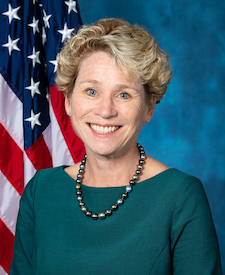
Chrissy Houlahan
Chrissy Houlahan House · District 6
D
Strong +
86% 22
Kim Schrier
Kim Schrier House · District 8
D
Strong +
86% 22
Mike Thompson
Mike Thompson House · District 4
D
Strong +
86% 22
Nancy Pelosi
Nancy Pelosi House · District 11
D
Strong +
86% 22
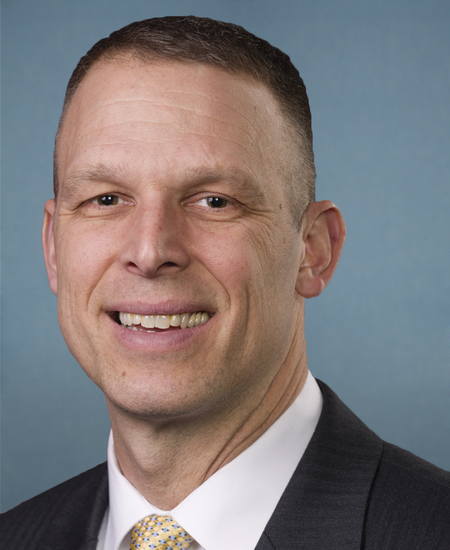
Scott Perry
Scott Perry House · District 10
R
Strong −
14% 21
AA
Alan Armstrong Senate
R
Strong −
17% 29
Rand Paul
Rand Paul Senate
R
Strong −
17% 46
Josh Hawley
Josh Hawley Senate
R
Strong −
18% 45
Andy Harris
Andy Harris House · District 1
R
Strong −
18% 22
Showing 301–310 of 1,435 bills

All technology bills

in committee · United States · Senate Apr 15, 2026

S 4302: Improving IRS Customer Service Act

The Improving IRS Customer Service Act requires the Internal Revenue Service to enhance transparency and accessibility for taxpayers by mandating real-time public dashboards that display phone wait times, call statistics, and refund processing details. The bill also directs the IRS to expand online tools, allowing individuals and authorized representatives to view tax documents, respond to notices, and track refund status through a unified website or mobile app. Additionally, the legislation establishes programs to identify taxpayers facing economic hardships and provide them with information on alternative payment options, while requiring the National Taxpayer Advocate to publish monthly performance statistics on case resolution times. These measures aim to improve communication between the IRS and the public, reduce wait times, and increase the availability of digital services for filing and account management.
Sub-Topics Digital Government
in committee · United States · Senate Apr 22, 2026

S 4380: Critical Infrastructure Airspace Defense Act

The Critical Infrastructure Airspace Defense Act grants owners and operators of high-risk facilities, such as power plants and substations, the legal authority to detect, track, and neutralize unauthorized drones threatening their safety. To use this power, personnel must complete a federally mandated training and certification program that ensures they follow specific operational standards and coordinate with aviation authorities. The legislation also provides $250 million in funding through 2031 to help these facilities purchase and install approved drone countermeasures while offering liability protection for authorized actions taken in good faith.
Sub-Topics Emerging Technology
in committee · United States · Senate May 20, 2026

S 4594: Subpoena Abuse Prevention Act

The Subpoena Abuse Prevention Act restricts how federal government agencies can use administrative subpoenas to obtain phone and app records from service providers. It requires agencies to identify a specific individual by name or account details before requesting data and explicitly bans using these subpoenas to investigate or retaliate against constitutionally protected activities like free speech or religious exercise. The law also mandates that agencies certify the subpoena's legitimate purpose and allows service providers to notify customers about the request unless a court orders otherwise. Finally, the bill requires federal agencies to publicly report annually on the number of subpoenas issued and the total accounts affected.
Sub-Topics Courts Data Privacy Tags Civil Liberties
in committee · United States · Senate Apr 16, 2026

S 4322: Communications, Video, and Technology Accessibility Act of 2026

The Communications, Video, and Technology Accessibility Act of 2026 expands accessibility requirements for video content, devices, and communication services to better serve people with disabilities. It mandates that online video programming and television shows include closed captions and audio description, while also requiring video players and customer service tools to support features like sign language interpretation and screen readers. The bill establishes an advisory committee to guide these rules and requires the Federal Communications Commission to report on accessibility progress and emerging technologies every few years.
Tags People with Disabilities
in committee · United States · Senate Apr 15, 2026

S 4309: Deescalation Drone Pilot Program Act of 2026

This bill establishes a pilot program for law enforcement agencies to test and evaluate nonlethal drones designed to help de-escalate active shooter situations. The Federal Aviation Administration will lead this initiative by reviewing weapon options, developing safety and training protocols, and assessing how these drones can safely increase the distance between officers and shooters. The program requires that all tested drones be manufactured in the United States and mandates a final report to Congress outlining a future process for official approval of such operations. Additionally, the legislation reaffirms the existing ban on drones armed with lethal weapons while defining specific criteria for what constitutes a nonlethal device in this context.
in committee · United States · House May 13, 2026

HR 8787: Servicemember Payment Data Privacy and Security Act

This bill requires the Department of Defense to review and eventually ban contracts with retailers that use payment processing systems from specific countries deemed a national security risk, such as China, Russia, Iran, and North Korea. Effective January 1, 2027, the Defense Department will be prohibited from entering into agreements for payment equipment or services if those tools rely on technology developed, owned, or controlled by entities in these nations. The law defines covered systems broadly to include hardware, software, and firmware linked to these countries, aiming to prevent potential foreign access to sensitive military financial data. Retailers wishing to continue working with the Department of Defense must replace their payment processing infrastructure with systems that do not involve these restricted technologies.
Sub-Topics Data Privacy
in committee · United States · House May 15, 2026

HR 8851: One Giant LEAP Act

The One Giant LEAP Act directs the Secretary of Transportation to create an online portal for processing commercial space launch licenses within one year of the bill's enactment. This system will allow applicants to submit and modify applications, track all communications between the government and stakeholders, and manage related documentation in one place. The portal will also display detailed timelines and status updates for each application to both the Secretary and the public, increasing transparency in the approval process.
Sub-Topics Digital Government
in committee · United States · Senate Aug 5, 2026

S 4615: Intelligence Authorization Act for Fiscal Year 2027

The Intelligence Authorization Act for Fiscal Year 2027 authorizes funding for U.S. intelligence activities and establishes new rules for how intelligence agencies operate. Key provisions include creating a new task force to monitor military threats from China regarding Taiwan, strengthening intelligence sharing with allies in the Indo-Pacific and Israel, and setting strict guidelines on the use of artificial intelligence, including prohibitions on certain models and requirements for labeling AI outputs. The bill also expands restrictions on purchasing equipment from specific foreign nations, mandates better protection for trade secrets, and outlines procedures for handling sensitive information about U.S. persons.
in committee · United States · Senate Jul 15, 2026

S 4561: CLOSE THE GAP Act

The CLOSE THE GAP Act aims to streamline the permitting process for installing and modifying communications facilities, such as cell towers, on Federal land managed by agencies like the National Park Service and the Forest Service. It requires these agencies to create standardized, technology-neutral rules that allow applications to be processed simultaneously rather than sequentially and mandates that fees charged to applicants be based solely on the actual administrative costs incurred. To improve transparency and speed, the bill establishes online portals for submitting applications, requires agencies to track and report processing times, and creates a new working group to coordinate reviews across different Federal land management agencies. Additionally, the legislation simplifies environmental reviews for projects on previously analyzed land and allows for faster approval of public safety improvements at existing sites without requiring new environmental impact statements.
in committee · United States · Senate Apr 22, 2026

S 4371: TECH Act

The TECH Act allows qualified technical schools to apply for the same federal funding as traditional two-year and four-year colleges. To make this happen, the bill requires government agencies to update their rules and application forms so these technical schools can participate in specific grant programs for student support and workforce training. A technical school must offer approved career training programs that lead to recognized credentials in high-demand fields like healthcare or manufacturing to qualify. This change aims to help these schools compete more fairly for financial resources while ensuring they prepare students for essential jobs.
Showing 301 to 310 of 1,435 bills
Previous 1 30 31 32 144 Next