Issue · Labor & Employment

Labor & Employment

Every labor & employment bill, vote, and legislator stance in United States, automatically classified by Maddy, our AI policy reader.

Total bills
1,439
119th Congress
Top supporter
Brian K. Fitzpatrick
93% support rate
Top opponent
Bernard Sanders
23% support rate
Ranked legislators
10
5 support · 5 oppose
Key legislators

Who's moving labor & employment in United States

Legislators moving labor & employment in United States
Legislator Party Stance Support rate Decisive votes
Brian K. Fitzpatrick
Brian K. Fitzpatrick House · District 1
R
Strong +
93% 14
Christopher H. Smith
Christopher H. Smith House · District 4
R
Strong +
93% 14
Jefferson Van Drew
Jefferson Van Drew House · District 2
R
Strong +
93% 14
Nick LaLota
Nick LaLota House · District 1
R
Strong +
93% 14
Robert P. Bresnahan, Jr.
Robert P. Bresnahan, Jr. House · District 8
R
Strong +
93% 14
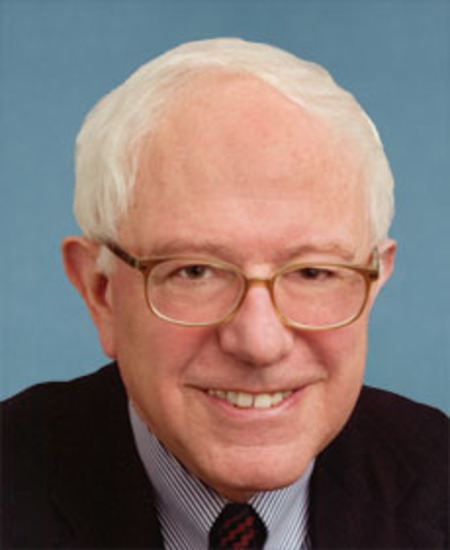
Bernard Sanders
Bernard Sanders Senate
I
Oppose
23% 13
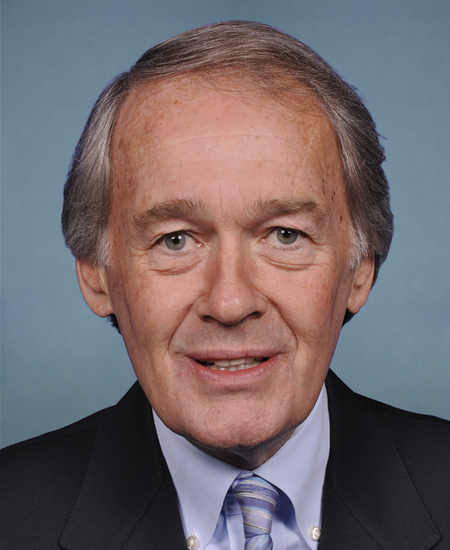
Edward J. Markey
Edward J. Markey Senate
D
Oppose
23% 13
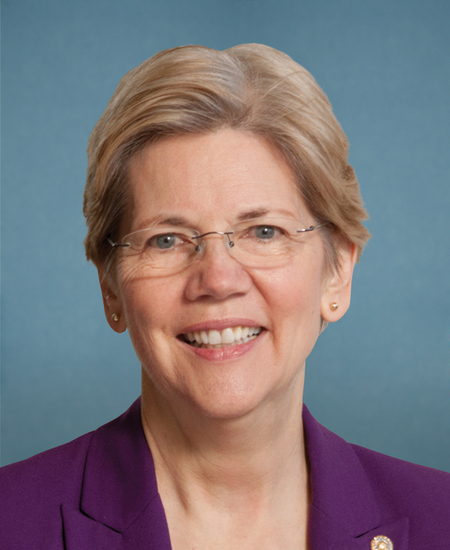
Elizabeth Warren
Elizabeth Warren Senate
D
Oppose
23% 13
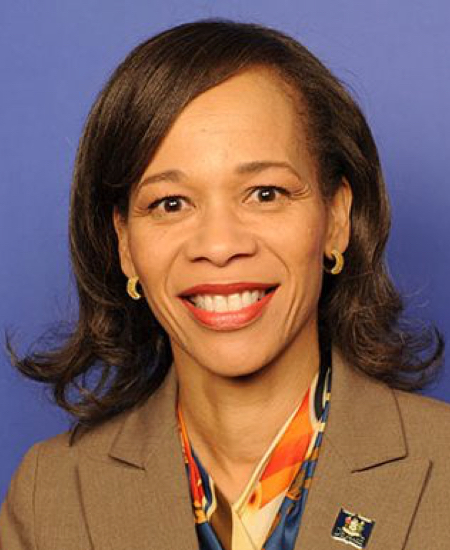
Lisa Blunt Rochester
Lisa Blunt Rochester Senate
D
Oppose
23% 13
Rand Paul
Rand Paul Senate
R
Oppose
25% 12
Showing 781–790 of 1,439 bills

All labor & employment bills

passed · United States · Senate Mar 10, 2025

S 524: Coast Guard Authorization Act of 2025

# Summary of Coast Guard Authorization Act of 2025 This comprehensive legislation contains numerous provisions addressing critical aspects of Coast Guard operations, with significant emphasis on: 1. **Sexual Assault and Harassment Response**: - Requires a comprehensive policy for retention and access to evidence related to sexual misconduct (Section 402) - Mandates 50-year retention of physical and forensic evidence related to rape or sexual assault - Establishes procedures for victim access to records after final disposition - Creates a Safe-to-Report policy for all Coast Guard members (Section 405) - Requires independent review by the Government Accountability Office of Coast Guard reforms (Section 401) 2. **Coast Guard Academy Reforms**: - Provides for timely consideration of transfer requests by cadets who are victims of sexual assault (Section 403) - Establishes new procedures for handling such requests within 72 hours - Creates a new position for officers with expertise in military justice or healthcare (Section 404) 3. **Vessel Safety and Security**: - Updates requirements for passenger vessel security (Section 245) - Adds cyber-incident training requirements (Section 246) - Clarifies authorities for deepwater port regulations (Section 243) - Establishes new requirements for abandoned vessel removal (Section 250) 4. **Uncrewed Systems**: - Establishes a National Advisory Committee on Autonomous Maritime Systems (Section 231) - Creates a pilot program for governance of small uncrewed maritime systems (Section 232) - Requires development of a training course on uncrewed systems (Section 233) - Mandates a report on uncrewed systems capabilities (Section 236) 5. **Environmental Protection**: - Enhances salvage and marine firefighting response capabilities (Section 301) - Requires development of an online incident reporting system (Section 304) - Addresses oil spill response requirements The legislation contains numerous technical amendments to existing Coast Guard authorities, with specific implementation deadlines (ranging from 30 days to 1 year after enactment) and reporting requirements to Congress. It represents a significant update to Coast Guard policies, particularly in addressing sexual assault response, vessel safety, and emerging uncrewed systems technology.
in committee · United States · Senate May 1, 2025

S 1548: Nurse Corps Tax Parity Act of 2025

The Nurse Corps Tax Parity Act of 2025 ensures that certain payments and scholarships for nurses in the National Health Service Corps (NHSC) are excluded from federal income tax, matching the tax treatment of similar benefits under existing programs. It updates two key tax code provisions to include the Nurse Corps scholarship program (under section 846 of the Public Health Service Act) in the list of qualifying programs for tax exemption. This directly affects nurses and students receiving NHSC payments or scholarships as part of their service commitments. The bill creates tax parity by removing a potential tax burden for participants, aligning their benefits with other healthcare workforce programs.
in committee · United States · House Jan 22, 2026

HR 7203: CHIPS Child Care Act

The CHIPS Child Care Act (HR 7203) creates a federal grant program to help child care providers cover costs for families participating in semiconductor workforce programs. It provides states with $10 million annually (2025-2026) to fund monthly stipends of at least $500 per dependent child for eligible individuals in semiconductor-related training, apprenticeships, or construction projects, prioritizing first-generation college students, HBCU graduates, rural residents, and veterans. States must also use funds to improve child care facilities in semiconductor investment areas, with labor standards requiring prevailing wages for construction work. The stipends are tax-exempt and cannot reduce eligibility for other federal benefits, while requiring states to report on program impact and participant outcomes.
Sub-Topics Labor Standards
in committee · United States · Senate Jan 13, 2025

S 73: EMPSA

S 73 (EMPSA) eliminates a "marriage penalty" in Supplemental Security Income (SSI) benefits for married individuals with intellectual or developmental disabilities. It creates new eligibility rules allowing disabled adults over 18 to qualify based solely on their own income and resources, without counting their spouse's income or assets. This change ensures married couples where one spouse has a qualifying disability receive full SSI benefits at the standard rate, without reductions tied to the spouse's income. The policy directly affects married disabled adults who previously faced reduced benefits due to their spouse's financial situation.
Tags People with Disabilities
in committee · United States · House Feb 4, 2026

HR 7338: Railroad Safety and Accountability Act

The Railroad Safety and Accountability Act establishes a new Railroad Safety Advisory Committee within the Federal Railroad Administration (FRA) to advise on safety regulations. The committee, composed of representatives from rail carriers, labor groups, local governments, and other stakeholders, will develop safety recommendations through collaborative processes. The FRA Administrator must meet with the committee quarterly to discuss regulatory priorities and receive input, and the committee will submit an annual report to Congress. This bill aims to improve railroad safety rulemaking by incorporating diverse stakeholder perspectives into regulatory development.
Sub-Topics Rail
in committee · United States · House Dec 16, 2025

HR 6739: Clarity in Professional Degree Act

HR 6739, the Clarity in Professional Degree Act, amends the Higher Education Act to restore federal student aid eligibility for specific professional degree programs that were excluded under a recent Department of Education rule change. It directly affects students pursuing degrees in nursing (ADN, RN, BSN), occupational therapy, physical therapy, social work, accounting, architecture, education specialties, and public health. The bill adds these 10 degree types to the official definition of "professional degree" under federal aid rules, reversing a policy expected to take effect July 1, 2026, which would have removed their aid eligibility. This change ensures students in these critical fields can continue accessing federal loans and grants.
in committee · United States · House Feb 7, 2025

HR 1151: Freedom to Invest in Tomorrow’s Workforce Act

This bill expands 529 college savings account flexibility by allowing funds to cover costs for industry-recognized postsecondary credentials, not just traditional degrees. It defines "qualified expenses" to include tuition/fees for recognized credential programs (like certifications or apprenticeships), required testing fees, and continuing education needed to maintain credentials. To qualify, programs must meet specific criteria, such as appearing on state lists under the Workforce Innovation and Opportunity Act or being listed in VA or Defense directories. The change applies to 529 distributions made after the law's enactment, giving families more options to use these accounts for job-focused training.
in committee · United States · Senate May 20, 2025

S 180: Protecting First Responders from Secondary Exposure Act of 2025

S 180, the Protecting First Responders from Secondary Exposure Act of 2025, requires the federal government to provide training and resources for first responders on using containment devices to prevent accidental exposure to fentanyl and other dangerous substances. It mandates the purchase of these containment devices for first responder use. The bill amends existing law (34 U.S.C. 10701(a)) by adding a new provision (paragraph (4)) that specifically addresses this safety measure. This directly affects police, firefighters, and emergency medical personnel who may encounter fentanyl during their duties. The key mechanism is the federal funding and requirement for both training and procurement of protective equipment.
Sub-Topics Substance Abuse Tags Public Safety
in committee · United States · Senate Mar 10, 2025

S 918: Protect Our Probationary Employees Act

This bill protects certain federal employees who were involuntarily separated between January 20, 2025, and January 20, 2029, and later rehired by their former agency. It requires that if a rehired employee is placed in a position similar to their previous role, their new probationary period is shortened by the amount of probation they already completed in their prior position. For example, if their original probation was 1 year and they served 6 months before separation, their new probation would be 6 months. The law expires on January 20, 2029, and applies only to Executive agencies.
Sub-Topics Public Employees
in committee · United States · Senate May 20, 2025

S 237: Honoring Our Fallen Heroes Act of 2025

This bill expands benefits for public safety officers (like police and firefighters) who develop certain cancers linked to their work. It creates a presumption that specific cancers - such as lung, bladder, or mesothelioma - were caused by job-related exposure to carcinogens, if the officer served at least 5 years, was diagnosed within 15 years of leaving active duty, and the cancer caused death or permanent disability. The list of covered cancers will be updated every 3 years based on medical evidence from agencies like the National Institute for Occupational Safety and Health. Claims must be filed within 3 years of the bill’s enactment, applying to cases involving deaths or disabilities occurring after January 1, 2020.
Sub-Topics Workplace Safety
Showing 781 to 790 of 1,439 bills
Previous 1 … 78 79 80 … 144 Next