Issue · Immigration

Immigration (Citizenship & Naturalization)

Every immigration bill, vote, and legislator stance in United States, automatically classified by Maddy, our AI policy reader.

Total bills
130
119th Congress
Top supporter
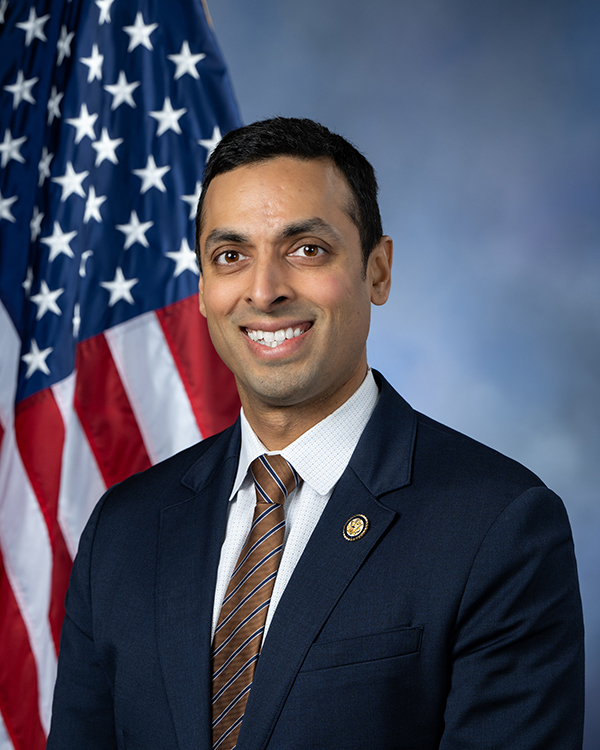
Suhas Subramanyam
100% support rate
Top opponent
Ronny Jackson
0% support rate
Ranked legislators
10
5 support · 5 oppose
Key legislators

Who's moving citizenship & naturalization in United States

Legislators moving citizenship & naturalization in United States
Legislator Party Stance Support rate Votes
Suhas Subramanyam
Suhas Subramanyam House · District 10
D
Strong +
100% 4
Jake Auchincloss
Jake Auchincloss House · District 4
D
Strong +
100% 3
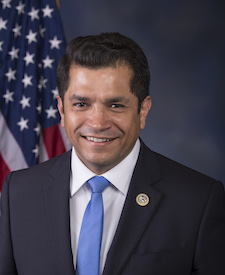
Jimmy Gomez
Jimmy Gomez House · District 34
D
Strong +
100% 3
Rick Larsen
Rick Larsen House · District 2
D
Strong +
100% 3
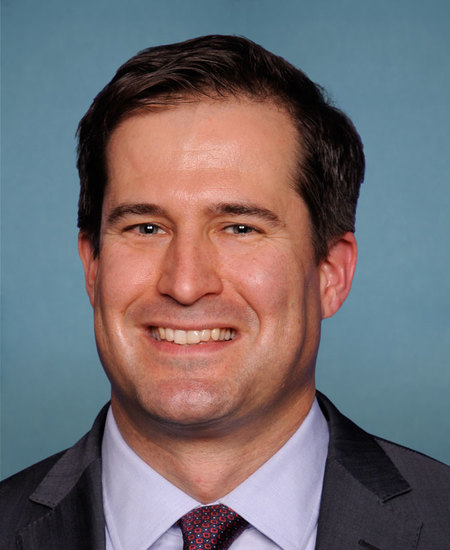
Seth Moulton
Seth Moulton House · District 6
D
Strong +
100% 3
Ronny Jackson
Ronny Jackson House · District 13
R
Strong −
0% 5
Glenn Grothman
Glenn Grothman House · District 6
R
Strong −
0% 4
Michael A. Rulli
Michael A. Rulli House · District 6
R
Strong −
0% 4
Elise M. Stefanik
Elise M. Stefanik House · District 21
R
Strong −
0% 3
Nathaniel Moran
Nathaniel Moran House · District 1
R
Strong −
0% 3
Showing 31–40 of 130 bills

All immigration bills

in committee · United States · House Jun 9, 2026

HRES 1350: Expressing support of the goal of celebrating a "National Day of Honor and Respect" in conjunction with "Constitution Day and Citizenship Day".

H.R. 1350 is a non-binding resolution that expresses the House of Representatives' support for creating a National Day of Honor and Respect alongside Constitution Day and Citizenship Day. The bill aims to honor immigrants and diverse backgrounds while encouraging positive interactions among citizens and reducing hate and discrimination. It also affirms the importance of promoting civic education and public service across the nation.
in committee · United States · House May 14, 2026

HR 8836: Know Your American Customer Act

This bill, known as the Know Your American Customer Act, requires banks and credit unions to verify that all new and existing individual account holders are legally present in the United States. To open an account, individuals must present specific documents proving citizenship or lawful status, such as a passport, driver's license, or permanent resident card, with stricter rules applying to those with temporary visas. The law mandates that institutions freeze or close accounts for individuals who lose their legal status, though it provides a temporary grace period to allow for incoming deposits before restricting withdrawals. Additionally, the bill introduces criminal penalties, including fines and imprisonment, for individuals who illegally open or maintain accounts, while explicitly exempting those who have recently lost status or are seeking asylum.
in committee · United States · House Mar 17, 2026

HR 7958: Expatriate Terrorists Act of 2026

The Expatriate Terrorists Act of 2026 expands immigration and citizenship laws to target individuals who support terrorism or join designated foreign terrorist organizations. It mandates that people convicted of terrorism-related crimes be held in mandatory detention and gives courts priority in processing their removal cases. The bill also creates new grounds for revoking U.S. citizenship and stripping nationality from those who provide material support to terrorist groups or serve in their ranks. Additionally, it shifts some deportation authority from the Attorney General to the Secretary of Homeland Security and allows removal proceedings to begin alongside citizenship revocation cases.
in committee · United States · House Jun 2, 2026

HR 9096: Deport the Terrorists Act of 2026

This bill, titled the Deport the Terrorists Act of 2026, aims to remove from the United States any naturalized citizen convicted of specific terrorism-related crimes. It directly affects individuals who have already become U.S. citizens by automatically revoking their citizenship and declaring their naturalization certificates void upon conviction of offenses such as using weapons of mass destruction or providing material support to terrorists. The law also designates these individuals as deportable aliens and requires the Department of Homeland Security to prioritize their removal from the country. By amending existing immigration laws, the bill ensures that courts have the authority to cancel citizenship immediately following a conviction for these designated offenses.
in committee · United States · Senate Apr 30, 2026

S 4450: Financial Access Protection Act

The Financial Access Protection Act prevents banks, credit unions, and other covered financial institutions from asking customers about their citizenship or immigration status to open or maintain accounts. It also bars these institutions from collecting, storing, or sharing such information with government agencies. Additionally, the law stops federal banking regulators from requiring these institutions to gather immigration data or using such data to influence regulatory decisions. While the bill restricts the collection of personal status information, it explicitly preserves existing rules for preventing money laundering and other financial crimes.
in committee · United States · Senate Apr 29, 2026

SJRES 189: A joint resolution proposing an amendment to the Constitution of the United States to protect United States citizenship.

This joint resolution proposes a new amendment to the U.S. Constitution to clarify who qualifies as a citizen at birth. It would restrict automatic citizenship to children born in the United States only if at least one parent is a U.S. citizen, a lawful permanent resident, or an alien with lawful status serving in the military. The bill aims to limit the scope of the 14th Amendment's citizenship clause and explicitly grants Congress the authority to pass laws enforcing these new requirements. If ratified, this change would alter the legal definition of birthright citizenship for children born to undocumented immigrants or other non-citizen parents.
in committee · United States · House May 4, 2026

HJRES 172: Proposing an amendment to the Constitution of the United States to protect United States citizenship.

This bill proposes a constitutional amendment to clarify how citizenship is determined at birth, directly affecting individuals born in the United States and their parents. It would restrict automatic citizenship to children born to parents who are U.S. citizens, lawful permanent residents, or active-duty military members, while also granting Congress the authority to pass laws enforcing these rules. By modifying the interpretation of the 14th Amendment, the measure aims to establish specific criteria for birthright citizenship that align with current immigration laws.
in committee · United States · Senate May 14, 2026

S 4546: ASSIMILATION Act

The ASSIMILATION Act fundamentally restructures the U.S. immigration system by replacing family-based and lottery-based admissions with a merit-based approach that prioritizes economic self-sufficiency and national interest. Key provisions include eliminating the Diversity Visa lottery, reducing family-sponsored immigration caps, and raising the English language requirement for naturalization to a B2 proficiency level. The bill also tightens public charge rules by presuming inadmissibility for those who rely on means-tested benefits, mandates universal use of E-Verify for all employers, and imposes stricter financial sponsorship requirements with mandatory bonds. Additionally, it limits H-1B visas to 50,000 annually, restricts asylum for those transiting through other countries, and expands criminal bars for naturalization applicants.
in committee · United States · House Jun 2, 2026

HJRES 190: Proposing an amendment to the Constitution of the United States to clarify the 14th amendment does not provide for automatic citizenship for the children of aliens.

This bill proposes a constitutional amendment to clarify that the 14th Amendment does not grant automatic citizenship to children born in the United States to non-citizen parents. It would restrict birthright citizenship to only those born to parents who are U.S. citizens, U.S. nationals, or lawful permanent residents. The measure also authorizes Congress to pass laws implementing these new restrictions. If ratified, it would fundamentally change how citizenship is determined at birth for children of undocumented or temporary foreign workers.
in committee · United States · House May 12, 2026

HR 8742: Respect Tribal IDs Act

The Respect Tribal IDs Act requires the Department of Homeland Security to create and enforce annual training for immigration officers on how to properly identify and accept Native American tribal documents as proof of U.S. citizenship. This legislation directly affects federal immigration officials by mandating that they complete specific curricula developed in collaboration with the Bureau of Indian Affairs and Indian tribes. Key provisions include establishing a database of tribal document examples, incorporating scenario-based exercises, and ensuring officers understand the historical trust responsibility between the U.S. government and American Indians. Additionally, the bill defines which tribal documents, such as enrollment cards and certificates of degree of Indian blood, are considered valid proof of citizenship.
Sub-Topics Citizenship & Naturalization Driver Licenses & IDs Tags Tribal Nations
Showing 31 to 40 of 130 bills
Previous 1 3 4 5 13 Next