Issue · Housing

Housing (Housing Finance)

Every housing bill, vote, and legislator stance in United States, automatically classified by Maddy, our AI policy reader.

Total bills
154
119th Congress
Top supporter
Adam B. Schiff
100% support rate
Top opponent
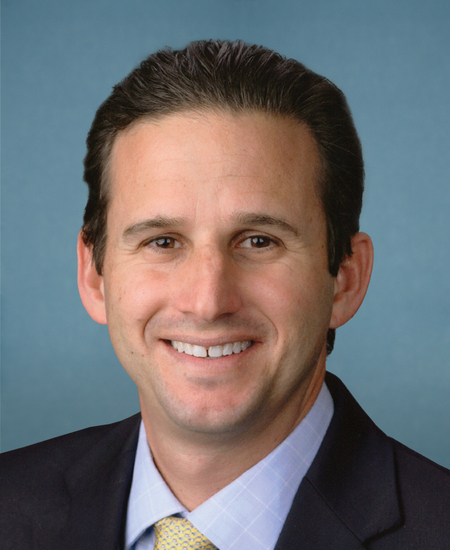
Brian Schatz
0% support rate
Ranked legislators
10
5 support · 5 oppose
Key legislators

Who's moving housing finance in United States

Legislators moving housing finance in United States
Legislator Party Stance Support rate Votes
Adam B. Schiff
Adam B. Schiff Senate
D
Strong +
100% 3
Alex Padilla
Alex Padilla Senate
D
Strong +
100% 3
Amy Klobuchar
Amy Klobuchar Senate
D
Strong +
100% 3
Andy Kim
Andy Kim Senate
D
Strong +
100% 3
Angela D. Alsobrooks
Angela D. Alsobrooks Senate
D
Strong +
100% 3
Brian Schatz
Brian Schatz Senate
D
Strong −
0% 3
Mike Lee
Mike Lee Senate
R
Strong −
0% 3
Rand Paul
Rand Paul Senate
R
Strong −
0% 3
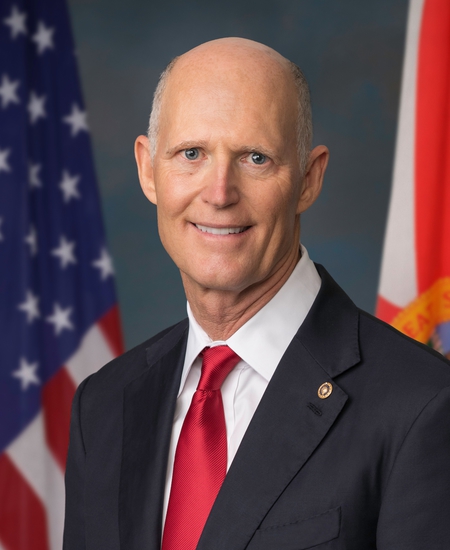
Rick Scott
Rick Scott Senate
R
Strong −
0% 3
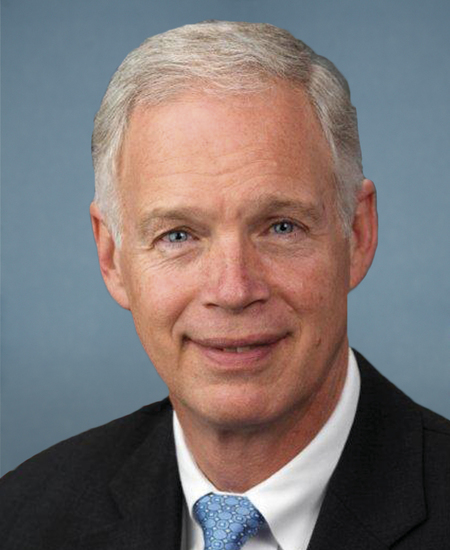
Ron Johnson
Ron Johnson Senate
R
Strong −
0% 3
Showing 71–80 of 154 bills

All housing bills

in committee · United States · House Dec 2, 2025

HR 6363: Build Now Act of 2025

The Build Now Act of 2025 adjusts Community Development Block Grant (CDBG) allocations for eligible cities and urban counties under Section 106 of the Housing and Community Development Act of 1974. It calculates a "housing growth improvement rate" for each recipient - measuring changes in housing unit growth - and rewards jurisdictions with the highest improvement rates by adding bonus funds to their CDBG allocation, while reducing allocations by 10% for those below the median rate. The bill applies to metropolitan areas meeting specific criteria (e.g., not experiencing disasters, having sufficient zoning authority) and requires the Department of Housing and Urban Development (HUD) to publish annual reports on these rates and distribution. Funding adjustments take effect three years after enactment and run through 2043.
in committee · United States · House Mar 27, 2025

HR 2038: American Housing and Economic Mobility Act of 2025

# Summary of the American Housing and Economic Mobility Act of 2025 This comprehensive legislation addresses housing affordability, civil rights, financial inclusion, and tax policy through multiple titles: **Fair Housing Expansion (Title I):** - Expands protections under the Fair Housing Act to include gender identity, sexual orientation, marital status, source of income, and veteran status - Requires housing providers receiving federal assistance to comply with enhanced accessibility standards (twice as many units must be accessible) **Community Reinvestment Act Strengthening (Title II):** - Requires banks to form diverse Community Advisory Committees in each metropolitan area - Mandates regular biannual consultations between bank executives and community advisory groups - Requires detailed data collection on lending practices by demographic factors (including race, ethnicity, and disability status) - Establishes new requirements for banks to analyze and report on disparities in access to credit **Veterans' Housing Access (Title III):** - Expands eligibility for VA home loans to include direct descendants of veterans who served between June 22, 1944, and April 11, 1968, who are first-time, first-generation homebuyers **Public Housing Improvements (Title IV):** - Requires public housing agencies to analyze where participants live and develop strategies to increase access to higher-opportunity neighborhoods - Mandates regional collaboration among housing agencies to reduce disparities in access - Requires HUD to develop mapping tools to help agencies analyze neighborhood access **Estate Tax Reforms (Title V):** - Increases estate tax rates for large estates (over $13 million) - Reduces the basic exclusion amount from $13 million to $3.5 million - Imposes a 10% surtax on estates exceeding $1 billion - Increases the exclusion limit for farm real property from $750,000 to $3 million - Increases the exclusion for land subject to conservation easements from $500,000 to $2 million - Creates a new 5-8% surcharge on high-income estates and trusts **Additional Provisions:** - Strengthens credit union service to underserved areas - Raises public welfare caps for banks to increase investments in low-income communities - Requires new data collection and reporting requirements for financial institutions This legislation represents a significant expansion of housing rights, financial inclusion, and tax policy reforms aimed at reducing disparities in access to housing and financial services while reforming the estate tax system.
in committee · United States · House Aug 12, 2025

HR 4957: Rural Housing Service Reform Act of 2025

This bill establishes a permanent Rural Housing Preservation and Revitalization Program to help maintain affordable housing in rural areas. It provides mechanisms for loan restructuring, extends rental assistance contracts for up to 20 years, and streamlines application processing for housing assistance. The bill also adjusts rural housing voucher programs to better respond to tenant needs, including allowing for interim and annual reviews of voucher amounts based on income changes. These changes directly affect low-income rural residents living in federally assisted housing and the housing providers who manage these properties.
Sub-Topics Affordable Housing Housing Finance Renters Tags Rural Communities
in committee · United States · Senate Dec 11, 2025

S 3464: Housing BOOM Act

The Housing BOOM Act (S 3464) authorizes billions of dollars in new funding to increase affordable housing supply and combat homelessness through expanded programs. It increases funding for housing credit programs, community development block grants, workforce housing, and supportive housing for vulnerable populations, with specific requirements that construction projects must use 15% of labor hours by qualified apprentices and follow prevailing wage standards. The bill creates new initiatives like the Housing Accelerator Program, the Office of Eviction Prevention, and the Interagency Council on Housing Affordability. It directly affects low and middle-income households, housing developers, public housing agencies, and local governments through new funding streams and program requirements.
in committee · United States · Senate Mar 11, 2025

S 934: American Housing and Economic Mobility Act of 2025

The American Housing and Economic Mobility Act of 2025 aims to increase housing affordability and accessibility through multiple provisions. It expands Fair Housing protections to include gender identity, sexual orientation, marital status, source of income, and veteran status, making discrimination based on these characteristics illegal. The bill includes significant funding mechanisms for affordable housing infrastructure and requires twice as many accessible dwelling units in housing assisted under the Act. It also makes substantial changes to estate tax rules, including higher tax rates for large estates and elimination of certain exemptions. These provisions collectively seek to reduce housing discrimination, increase access to affordable housing, and generate revenue for housing programs.
in committee · United States · Senate Feb 27, 2025

S 788: A bill to amend the Internal Revenue Code of 1986 to impose an excise tax on the failure of certain hedge funds owning excess single-family residences to dispose of such residences, and for other purposes.

S 788, the HOPE for Homeownership Act, targets hedge funds with $50 million or more in assets under management that own single-family residences. It imposes two taxes: a 15% or $10,000 tax on acquiring new homes, and an annual tax of $5,000 per excess home held beyond a phased ownership limit (starting at 90% of prior holdings and declining to 0% after 9 years). The bill also disallows mortgage interest and depreciation deductions for properties owned by these funds when they owe the tax. This directly affects large hedge funds owning multiple single-family homes, requiring them to reduce holdings over time or pay ongoing taxes.
in committee · United States · Senate Jul 23, 2025

S 2391: BUILD Housing Act

The BUILD Housing Act streamlines environmental review processes for federal housing assistance programs. It allows the Department of Housing and Urban Development (HUD) to designate certain HUD-funded housing projects as "special projects" for environmental review under the National Environmental Policy Act (NEPA), reducing administrative steps. This directly affects HUD housing programs, particularly enabling federally recognized tribes to assume environmental review responsibilities instead of relying solely on states or local governments. The bill modifies existing law to include tribes as eligible entities for these reviews, using the federal definition of "Indian Tribe" from the Native American Housing Act.
Sub-Topics Housing Finance Property Development Tags Tribal Nations
in committee · United States · House Feb 4, 2026

HR 7344: Affordable Housing Supply Chain Clarity Act

HR 7344, the Affordable Housing Supply Chain Clarity Act, requires the Department of Housing and Urban Development (HUD) to clarify how "Build America, Buy America" rules apply to the Home Investment Partnerships Program (HOPA), which funds affordable housing development. Specifically, HUD must complete a review within 180 days of enactment, issue updated guidance within 90 days of the review, and submit a report to Congress within 270 days. This bill directly affects housing developers and local governments receiving HOPA funds by providing clearer rules for sourcing materials and labor under existing federal requirements. It does not change funding or create new housing but aims to reduce confusion in applying current procurement rules to affordable housing projects.
in committee · United States · House Nov 10, 2025

HR 6008: Bring Down Housing Costs Act

The Bring Down Housing Costs Act establishes a federal task force under the Department of Housing and Urban Development to address rising home prices in specific states. The task force, composed of 21 members including congressional representatives, federal agency officials, community advocates, and housing industry experts, will identify states with year-over-year increases in median home prices (using HUD data), develop and recommend best practices for reducing costs, and monitor their implementation. It must submit annual reports to state governors, federal agencies, and relevant congressional committees for five years. This bill creates a process for collaborative problem-solving but does not mandate specific policy changes or funding for states.
in committee · United States · Senate Nov 3, 2025

S 3092: Affordable Housing Expansion Act

This bill updates how prevailing wages are calculated for affordable housing construction projects. It requires the Department of Labor to revise its survey methods for wage data collection and limits each project to a single wage rate based on its residential character. A new Davis-Bacon Modernization Working Group will review potential changes to wage requirements for affordable housing developments. The bill directly affects housing developers, construction workers, and federal agencies like HUD and the Department of Labor that administer housing programs.
Showing 71 to 80 of 154 bills
Previous 1 7 8 9 16 Next