Issue · Housing

Housing (Homeownership)

Every housing bill, vote, and legislator stance in United States, automatically classified by Maddy, our AI policy reader.

Total bills
157
119th Congress
Top supporter
Adam B. Schiff
100% support rate
Top opponent
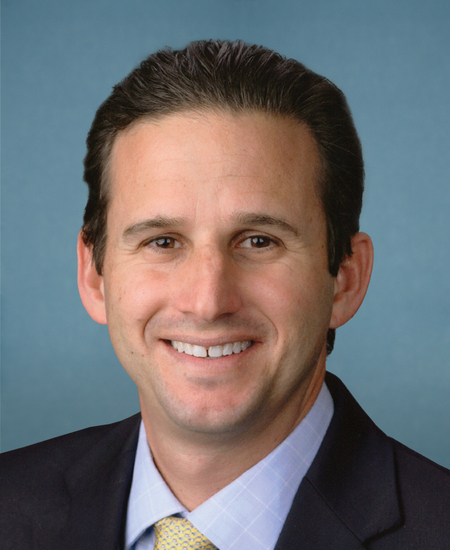
Brian Schatz
0% support rate
Ranked legislators
10
5 support · 5 oppose
Key legislators

Who's moving homeownership in United States

Legislators moving homeownership in United States
Legislator Party Stance Support rate Votes
Adam B. Schiff
Adam B. Schiff Senate
D
Strong +
100% 3
Alex Padilla
Alex Padilla Senate
D
Strong +
100% 3
Amy Klobuchar
Amy Klobuchar Senate
D
Strong +
100% 3
Andy Kim
Andy Kim Senate
D
Strong +
100% 3
Angela D. Alsobrooks
Angela D. Alsobrooks Senate
D
Strong +
100% 3
Brian Schatz
Brian Schatz Senate
D
Strong −
0% 3
Mike Lee
Mike Lee Senate
R
Strong −
0% 3
Rand Paul
Rand Paul Senate
R
Strong −
0% 3
Rick Scott
Rick Scott Senate
R
Strong −
0% 3
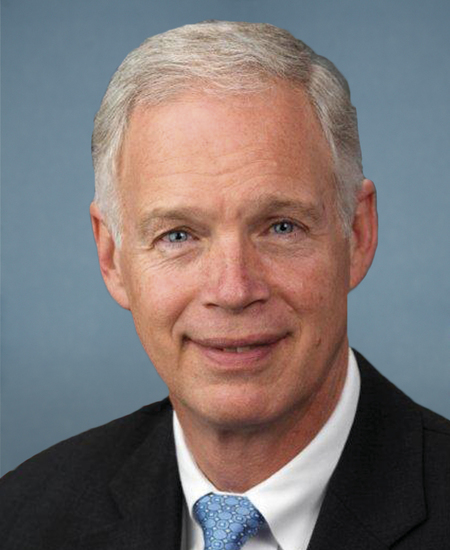
Ron Johnson
Ron Johnson Senate
R
Strong −
0% 3
Showing 71–80 of 157 bills

All housing bills

in committee · United States · House Jan 14, 2026

HR 7051: American Dream Act

HR 7051, the American Dream Act, allows individuals aged 65 or older to exclude taxable gains from selling their home to a first-time homebuyer under specific conditions. The bill applies when the home sells for $500,000 or less, the buyer is a first-time homebuyer purchasing it as their primary residence, and the buyer provides a sworn statement confirming these details. The exclusion is only available for sales occurring after December 31, 2026, and expires after December 31, 2031. This policy directly affects seniors aged 65+ selling their primary residence and first-time homebuyers purchasing it as their main home.
Sub-Topics Homeownership Tags Seniors
in committee · United States · House Mar 4, 2026

HR 7792: Property Improvement and Manufactured Housing Loan Modernization Act of 2026

This bill increases FHA loan limits for manufactured home purchases, home improvements, and accessory dwelling units under the National Housing Act. It raises the maximum loan amount for single-section manufactured home purchases to $106,405 and multi-section homes to $195,322, while setting a $75,000 cap for home improvements. The bill also requires annual adjustments to these limits based on HUD's methodology and mandates a HUD study comparing off-site construction (including manufactured/modular homes) to site-built housing on cost, quality, maintenance, and applications like accessory dwelling units. It directly affects borrowers seeking FHA financing for these housing types.
in committee · United States · House Jun 5, 2025

HR 3745: American Neighborhoods Protection Act of 2025

This bill imposes an annual $10,000 tax on large residential property owners who own more than 75 single-family homes (defined as properties with up to 4 units), excluding nonprofits, construction companies, and owners of federally subsidized housing. Revenue from this tax funds a new Housing Trust Fund, which provides down payment assistance grants to homebuyers. Priority for these grants goes to families purchasing homes sold by owners subject to the tax. The tax applies to taxable years beginning after December 2025.
signed · United States · Senate May 4, 2026

S 723: Tribal Trust Land Homeownership Act of 2025

Tribal Trust Land Homeownership Act of 2025 This act sets forth requirements for the processing of a proposed residential leasehold mortgage, business leasehold mortgage, land mortgage, or right-of-way document by the Bureau of Indian Affairs (BIA). The BIA must notify lenders upon receipt of such documentation, perform a preliminary review of such documents not later than 10 days after receipt, and approve or disapprove of such documents within 20 or 30 days, depending on the type of application. Additionally, the act sets forth requirements for the BIA regarding (1) response times for the completion of certified title status reports, (2) notification of delays in processing, and (3) the form of notices and delivery of certain reports. The act also provides relevant federal agencies and Indian tribes with read-only access to the Trust Asset and Accounting Management System maintained by the BIA. The Government Accountability Office must report on digitizing documents for the purpose of streamlining and expediting the completion of mortgage packages for residential mortgages on Indian land. Finally, the act establishes within the BIA's Division of Real Estate Services the position of Realty Ombudsman.
Sub-Topics Homeownership Mortgages Tags Tribal Nations
in committee · United States · House Feb 5, 2026

HR 7393: Save for Success Act

The Save for Success Act (HR 7393) amends the tax code to allow distributions from 529 college savings plans to be used for first-time homebuyers' housing expenses, such as purchasing a principal residence, closing costs, and mortgage payments. It directly affects individuals using 529 plans who qualify as first-time homebuyers - defined as those with no ownership of a principal residence in the past three years. The key provision expands the list of qualified expenses under 529 plans beyond education costs to include home purchases, while maintaining the "first-time homebuyer" definition from existing tax law. This change takes effect for distributions made after December 31, 2026.
in committee · United States · House Feb 9, 2026

HR 7422: NEST Act

The NEST Act creates a new tax-advantaged savings account specifically for first-time homebuyers, allowing them to deduct contributions from their taxable income. Contributions would be limited to 20% of a state's median home price, with tax-free distributions available for qualified home ownership expenses like down payments and closing costs. Employer contributions to these accounts would be excluded from both income tax and employment taxes. The bill includes safeguards such as a 20% additional tax on funds withdrawn for non-homebuying purposes and rules preventing misuse of the accounts. It would take effect for taxable years beginning after December 31, 2025.
in committee · United States · Senate Sep 18, 2025

S 2867: Uplifting First-Time Homebuyers Act of 2025

This bill increases the limit for penalty-free withdrawals from retirement accounts for first-time homebuyers. It amends the tax code to raise the maximum amount from $10,000 to $50,000 per individual for qualified first-time homebuyer distributions. This change directly affects first-time homebuyers who need to access retirement savings to purchase a home without incurring early withdrawal penalties. The provision applies to taxable years beginning after December 31, 2024.
Sub-Topics Homeownership
in committee · United States · House Jan 27, 2026

HR 7244: First-Time Home Buyers Match Act

HR 7244, the First-Time Home Buyers Match Act, establishes a 5-year pilot program to help low-to-moderate-income first-time homebuyers save for a home purchase. Eligible buyers (earning ≤120% of local median income, with ≤$75,000 in liquid assets) can receive annual matching funds equal to 50% of their savings - up to $5,000 per year - into a qualifying savings account. Funds must be used for down payments, closing costs, or specific home repairs, and function as a second mortgage repaid over 36 months. The program limits account balances to 10% of local median home values and requires HUD to report on participation, outcomes, and demographics.
in committee · United States · House Feb 23, 2026

HR 7647: MORE Opportunities for Homeownership Act

The MORE Opportunities for Homeownership Act (HR 7647) amends the Federal Home Loan Bank Act to expand eligibility for community financial institutions. Specifically, it adds the Federal Credit Union Act to the list of qualifying acts alongside the Federal Deposit Insurance Act, allowing credit unions to access Federal Home Loan Bank programs. This change directly affects credit unions by enabling them to secure funding for mortgage lending through these programs. The key mechanism is updating the legal definition of eligible institutions, aiming to increase homeownership opportunities in underserved communities.
in committee · United States · House Jul 14, 2025

HR 4385: Helping More Families Save Act

HR 4385, the Helping More Families Save Act, establishes a 10-year pilot program allowing families receiving Section 8 or 9 housing assistance to save money toward financial stability. Under the program, eligible families (with income under 80% of area median income) have rent increases tied to their earned income placed into interest-bearing escrow accounts managed by participating housing agencies. Families can withdraw these savings after 5 years (or earlier for self-sufficiency goals approved by the agency), without affecting their eligibility for other benefits. The program requires agencies to notify families of enrollment options and prohibits denial of housing assistance for opting out, with a final evaluation report due 8 years after implementation.
Showing 71 to 80 of 157 bills
Previous 1 7 8 9 16 Next