Issue · Housing

Housing (Homeownership)

Every housing bill, vote, and legislator stance in United States, automatically classified by Maddy, our AI policy reader.

Total bills
157
119th Congress
Top supporter
Adam B. Schiff
100% support rate
Top opponent
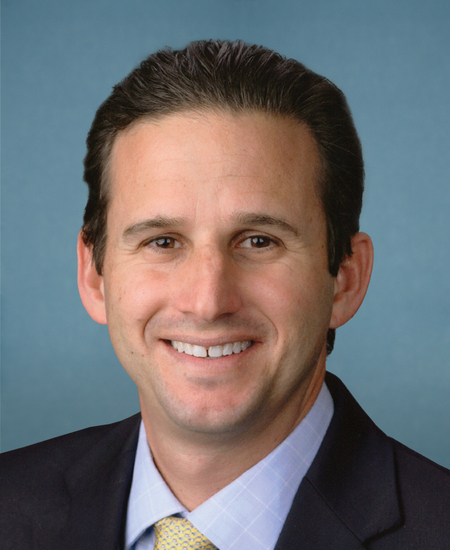
Brian Schatz
0% support rate
Ranked legislators
10
5 support · 5 oppose
Key legislators

Who's moving homeownership in United States

Legislators moving homeownership in United States
Legislator Party Stance Support rate Votes
Adam B. Schiff
Adam B. Schiff Senate
D
Strong +
100% 3
Alex Padilla
Alex Padilla Senate
D
Strong +
100% 3
Amy Klobuchar
Amy Klobuchar Senate
D
Strong +
100% 3
Andy Kim
Andy Kim Senate
D
Strong +
100% 3
Angela D. Alsobrooks
Angela D. Alsobrooks Senate
D
Strong +
100% 3
Brian Schatz
Brian Schatz Senate
D
Strong −
0% 3
Mike Lee
Mike Lee Senate
R
Strong −
0% 3
Rand Paul
Rand Paul Senate
R
Strong −
0% 3
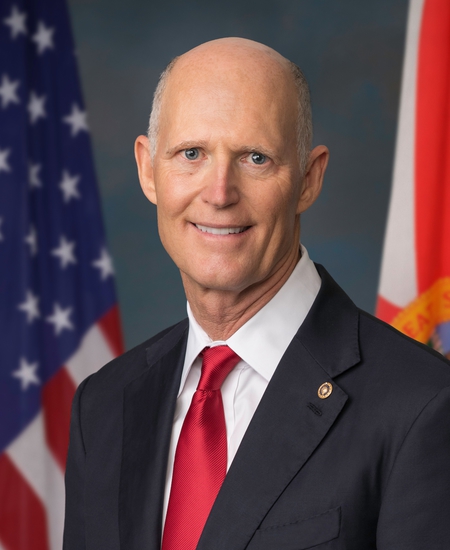
Rick Scott
Rick Scott Senate
R
Strong −
0% 3
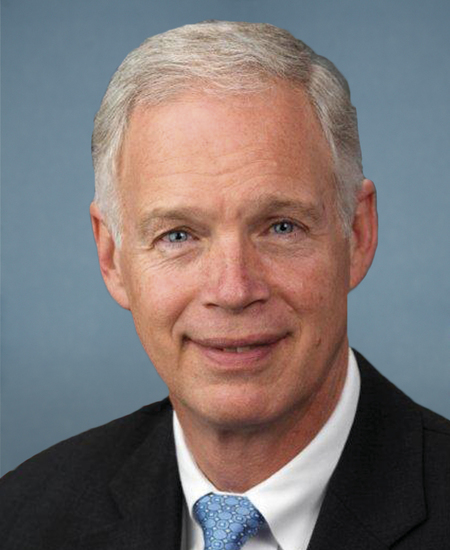
Ron Johnson
Ron Johnson Senate
R
Strong −
0% 3
Showing 61–70 of 157 bills

All housing bills

in committee · United States · House Jan 16, 2025

HR 426: Housing Survivors of Major Disasters Act

This bill expands eligibility for FEMA disaster assistance by broadening the types of evidence considered proof of property ownership for survivors without formal deeds. It allows applicants to submit documents like property tax receipts, mortgage records, insurance papers, or even death certificates (in states without will requirements) to demonstrate "constructive ownership" of their home. The bill also permits a simple signed declaration under penalty of perjury - without notarization - to support claims when other evidence is insufficient. These changes apply to disaster assistance funds appropriated after the bill's enactment, directly helping individuals affected by major disasters who lack traditional ownership documentation.
Sub-Topics Homelessness Homeownership Mortgages Tags Emergency Management
in committee · United States · House Nov 19, 2025

HR 6125: Housing Financial Literacy Act of 2025

The Housing Financial Literacy Act of 2025 modifies mortgage insurance premiums for first-time homebuyers who complete approved financial literacy counseling programs. It requires that such counseling be completed before signing a mortgage application or sales agreement. The bill reduces the mortgage insurance premium by 25 basis points (0.25%) below the standard rate established by the Secretary of Housing and Urban Development. This change directly affects first-time homebuyers who participate in qualifying housing counseling programs.
in committee · United States · House Apr 8, 2025

HR 2748: First Time Homeowner Savings Plan Act

HR 2748 increases the penalty-free withdrawal limit for first-time homebuyers from retirement accounts from $10,000 to $25,000 under IRS rules. This directly affects first-time homebuyers who need to access retirement savings without early withdrawal penalties. The bill also adds an inflation adjustment mechanism, automatically raising the $25,000 limit each year after 2026 based on the cost-of-living index. The changes apply to withdrawals made after December 31, 2025, for tax years ending after that date.
Sub-Topics Homeownership
in committee · United States · House Dec 9, 2025

HR 6511: Affordable Homeownership Access Act

The Affordable Homeownership Access Act exempts small property owners who provide direct financing (owner financing) from certain mortgage licensing requirements if they make no more than 24 loans per year for properties they own. It also amends federal definitions to exclude these owner financers from "mortgage originator" rules, requiring loans to be fully amortizing, have reasonable interest rate caps, and include buyer ability-to-pay assessments. The bill mandates a study by HUD and Treasury on owner financing usage - particularly for homes under $150,000 or 60% of local median value - to evaluate its potential to boost homeownership and wealth creation in underserved communities.
in committee · United States · Senate Sep 4, 2025

S 2719: LIFT Homebuyers Act of 2025

The LIFT Homebuyers Act of 2025 creates a federal program to help low-income first-time homebuyers purchase single-family homes. It establishes the "LIFT HOME Fund" within HUD and USDA to support eligible mortgages with monthly payments capped at 100-110% of standard rates for comparable loans. The bill directly affects homebuyers with household income under 120% (or 140% in high-cost areas) of local median income who are both first-time buyers and first-generation homebuyers (with no prior home ownership by them or their parents). Key mechanisms include waiving some insurance premium caps, requiring borrower self-attestation for eligibility, and mandating outreach programs to expand participation.
in committee · United States · House Jan 7, 2026

HR 6962: Families First Housing Act of 2026

This bill requires federal housing agencies (like HUD and Fannie Mae) to prioritize qualified first-time homebuyers when selling single-family homes (1-4 units). For 180 days after listing, properties must be offered only to eligible buyers (individuals, nonprofits, local governments, or community land trusts) at fair market value based on recent third-party appraisals, with public online listings showing the priority window. Covered entities must report quarterly sales data, including prices relative to appraised value, and annual audits will verify compliance. Institutional investors (e.g., rental companies) cannot purchase during the priority period. The law aims to increase access to homeownership for specific groups through transparency and structured sales processes.
in committee · United States · House Jul 21, 2025

HR 4568: Supporting Upgraded Property Projects and Lending for Yards (SUPPLY) Act

The SUPPLY Act establishes a federal program to insure second loans (additional financing) for building accessory dwelling units (ADUs) on single-family properties. This insurance, administered by the Department of Housing and Urban Development, covers up to 30% of a standard one-unit home loan amount or 100% of the property value after construction (with potential increases based on 50% of projected rental income). Homeowners seeking to add ADUs - such as backyard cottages, converted basements, or detached units - can use this insurance to secure financing, with a government premium of up to 1% annually. The bill also requires Fannie Mae and Freddie Mac to purchase and securitize these insured loans, potentially expanding access to ADU financing.
in committee · United States · House Apr 10, 2025

HR 2854: Neighborhood Homes Investment Act

The Neighborhood Homes Investment Act creates a new tax credit for developers who build or rehabilitate affordable homes in distressed communities. The credit is calculated as the lesser of (1) the difference between development costs and sale price, (2) 40% of development costs, or (3) 32% of the national median home price. It applies only to homes sold to qualified homeowners with income up to 140% of area median income in designated "qualified census tracts" (areas with high poverty rates, low median home values, and low median family income). Developers must meet quality standards and repay the credit if the home is sold within 5 years of the affordable sale. This credit aims to address the "value gap" that prevents housing development in distressed communities by incentivizing affordable home construction and rehabilitation.
in committee · United States · House Jun 23, 2025

HR 4069: Downpayment Toward Equity Act of 2025

The Downpayment Toward Equity Act of 2025 creates a federal program to provide financial assistance to first-generation homebuyers for down payments, closing costs, and other home purchase expenses. It authorizes $100 billion in funding to be distributed through states and eligible entities, with grants that can cover up to $20,000 or 10% of a home's purchase price (whichever is greater). To qualify, homebuyers must meet income limits (up to 120-140% of median area income), be first-time homebuyers with no prior home ownership by their parents, and complete homebuyer counseling. The program requires recipients to occupy homes as primary residences for at least five years, with repayment required if they sell sooner, and states must report on program demographics to ensure equitable outcomes.
in committee · United States · House Oct 10, 2025

HR 5728: Rural Homeownership Continuity Act of 2025

This bill modifies the USDA's 502 housing loan program to make it easier for rural homeowners to transfer properties with existing loans. It allows qualified buyers to assume a guaranteed loan when purchasing a property, releasing the original borrower from liability and transferring the loan's obligations to the new owner. The changes apply to loans guaranteed under the program after the bill's enactment, directly affecting rural homeowners and buyers in USDA loan programs. The bill also permits servicers to charge fees for transaction costs related to these loan assumptions.
Sub-Topics Homeownership
Showing 61 to 70 of 157 bills
Previous 1 6 7 8 16 Next