Issue · Housing

Housing (Housing Finance)

Every housing bill, vote, and legislator stance in United States, automatically classified by Maddy, our AI policy reader.

Total bills
154
119th Congress
Top supporter
Adam B. Schiff
100% support rate
Top opponent
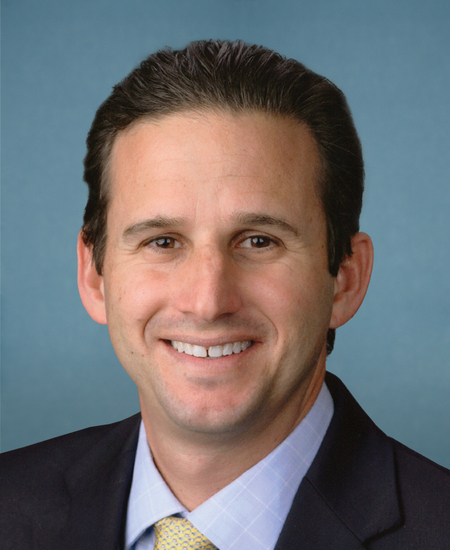
Brian Schatz
0% support rate
Ranked legislators
10
5 support · 5 oppose
Key legislators

Who's moving housing finance in United States

Legislators moving housing finance in United States
Legislator Party Stance Support rate Votes
Adam B. Schiff
Adam B. Schiff Senate
D
Strong +
100% 3
Alex Padilla
Alex Padilla Senate
D
Strong +
100% 3
Amy Klobuchar
Amy Klobuchar Senate
D
Strong +
100% 3
Andy Kim
Andy Kim Senate
D
Strong +
100% 3
Angela D. Alsobrooks
Angela D. Alsobrooks Senate
D
Strong +
100% 3
Brian Schatz
Brian Schatz Senate
D
Strong −
0% 3
Mike Lee
Mike Lee Senate
R
Strong −
0% 3
Rand Paul
Rand Paul Senate
R
Strong −
0% 3
Rick Scott
Rick Scott Senate
R
Strong −
0% 3
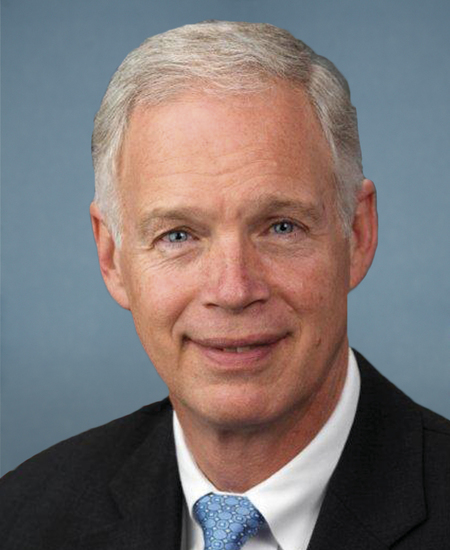
Ron Johnson
Ron Johnson Senate
R
Strong −
0% 3
Showing 51–60 of 154 bills

All housing bills

in committee · United States · House Jan 27, 2026

HR 7244: First-Time Home Buyers Match Act

HR 7244, the First-Time Home Buyers Match Act, establishes a 5-year pilot program to help low-to-moderate-income first-time homebuyers save for a home purchase. Eligible buyers (earning ≤120% of local median income, with ≤$75,000 in liquid assets) can receive annual matching funds equal to 50% of their savings - up to $5,000 per year - into a qualifying savings account. Funds must be used for down payments, closing costs, or specific home repairs, and function as a second mortgage repaid over 36 months. The program limits account balances to 10% of local median home values and requires HUD to report on participation, outcomes, and demographics.
in committee · United States · House Jul 14, 2025

HR 4385: Helping More Families Save Act

HR 4385, the Helping More Families Save Act, establishes a 10-year pilot program allowing families receiving Section 8 or 9 housing assistance to save money toward financial stability. Under the program, eligible families (with income under 80% of area median income) have rent increases tied to their earned income placed into interest-bearing escrow accounts managed by participating housing agencies. Families can withdraw these savings after 5 years (or earlier for self-sufficiency goals approved by the agency), without affecting their eligibility for other benefits. The program requires agencies to notify families of enrollment options and prohibits denial of housing assistance for opting out, with a final evaluation report due 8 years after implementation.
in committee · United States · House May 6, 2025

HR 3215: Utilizing National Land for Opportunities and Community Key (UNLOCK) Housing Act

HR 3215, the UNLOCK Housing Act, redefines affordable housing development on federal land as a "public purpose" under existing law, directly enabling housing for extremely low-income, very low-income, and low-income families (as defined by federal standards). It creates a Joint Task Force between HUD and the Interior Department to identify underused federal land suitable for housing, streamline land transfers, and measure costs from housing shortages. The Task Force must annually report progress to Congress and will dissolve 10 years after the bill's enactment. This bill changes how federal land can be used for housing by making affordable development a priority under current land management statutes.
in committee · United States · House Feb 17, 2026

HR 7596: Improving Housing Access Act

HR 7596, the Improving Housing Access Act, requires the Comptroller General to study barriers to housing for elderly and disabled people within one year of the bill's enactment. The study will specifically examine potential improvements to two federal housing programs: supportive housing for the elderly (under Section 202 of the 1959 Housing Act) and supportive housing for people with disabilities (under Section 811 of the Cranston-Gonzalez Act). It focuses on identifying ways to improve access, including options for providing financial support to these programs. The bill does not create new benefits but mandates a review to inform future policy decisions.
Sub-Topics Affordable Housing Homeownership Housing Finance Tags People with Disabilities Seniors
in committee · United States · House Dec 16, 2025

HR 6737: SPUR Housing Act

HR 6737, the SPUR Housing Act, establishes a new $50 million annual HUD grant program (2026-2030) to support emerging housing developers. It provides competitive grants to nonprofit housing organizations and community development financial institutions (CDFIs), which then offer financing (like predevelopment loans), capacity-building training, and technical assistance to developers with limited experience or capital. The program specifically targets affordable housing projects in distressed communities and high-opportunity areas, requiring grantees to demonstrate plans for supporting these developers through budgeting, financing, and business planning assistance. Priority is given to organizations helping undercapitalized developers or focusing on underserved communities.
in committee · United States · House Jan 16, 2026

HR 7138: Stop Wall Street Landlords Act of 2026

HR 7138 disallows tax deductions for mortgage interest and depreciation on single-family homes (1-4 units) owned by large investment entities with over $100 million in assets, while imposing a 100% excise tax on sales or transfers of such properties. The bill directly affects institutional landlords (e.g., large real estate investment firms), excluding government entities, nonprofits, and federally assisted housing. Revenue from the tax will fund low-income housing programs via the Housing Trust Fund. It also prohibits Fannie Mae, Freddie Mac, and Ginnie Mae from purchasing or guaranteeing mortgages for these properties. The provisions apply 18 months after enactment.
in committee · United States · House May 21, 2025

HR 3540: Low-Income Housing Tax Credit Elimination Act

HR 3540, the Low-Income Housing Tax Credit Elimination Act, eliminates the federal Low-Income Housing Tax Credit (LIHTC) for new housing projects. It directly affects developers and investors who rely on this tax credit to fund affordable housing construction. The bill amends the tax code to end eligibility for the credit on buildings placed in service after the law's effective date. This means no new tax credits will be available for affordable housing developments starting in the next taxable year.
in committee · United States · Senate Sep 4, 2025

S 2720: Yes in God's Backyard Act

The "Yes in God's Backyard Act" (S 2720) creates a new program to help faith-based organizations, colleges, and local governments build or preserve affordable rental housing on their properties. It provides technical assistance to address local policy barriers and offers competitive grants to communities with existing policies supporting such housing development. The grants specifically prioritize housing for families earning up to 60% of local median income, homeless individuals, veterans, people with disabilities, and other vulnerable groups. The bill authorizes $25 million annually for technical assistance and $50 million yearly for grants from 2026 to 2031.
in committee · United States · Senate Jul 24, 2025

S 2463: Eviction Right to Counsel Act of 2025

This bill provides federal funding to states, local governments, and tribal entities that have implemented or will implement "right to counsel" laws for low-income tenants. It establishes a $100 million annual fund (2026-2030) to grant money to jurisdictions with existing or planned laws guaranteeing free legal representation for tenants earning at or below 200% of the federal poverty line in eviction cases or housing subsidy terminations. The grants cover costs like attorney training and recruitment, with priority given to jurisdictions that also limit evictions for non-fault reasons, require 30-day notice periods, or offer rental assistance. The bill does not create new legal rights but supports existing state/local programs that provide free legal aid during eviction proceedings.
in committee · United States · House Nov 7, 2025

HR 5938: Innovation Fund Act

The Innovation Fund Act establishes a competitive grant program providing up to $200 million annually (2027-2031) to local governments and tribes that have demonstrably increased housing supply. Eligible entities - such as cities, counties, or tribes with proven housing growth - can use funds to implement specific initiatives like reforming zoning rules (e.g., reducing parking requirements, allowing denser housing), streamlining permitting, or using tax incentives to expand affordable housing options. The grants require applicants to show how projects address community housing needs and improve affordability, with priority given to innovative approaches that increase housing supply. The bill explicitly prohibits federal preemption of local zoning laws and focuses on supporting existing local housing strategies rather than mandating new policies.
Showing 51 to 60 of 154 bills
Previous 1 5 6 7 16 Next