Issue · Housing

Housing (Homeownership)

Every housing bill, vote, and legislator stance in United States, automatically classified by Maddy, our AI policy reader.

Total bills
157
119th Congress
Top supporter
Adam B. Schiff
100% support rate
Top opponent
Brian Schatz
0% support rate
Ranked legislators
10
5 support · 5 oppose
Key legislators

Who's moving homeownership in United States

Legislators moving homeownership in United States
Legislator Party Stance Support rate Votes
Adam B. Schiff
Adam B. Schiff Senate
D
Strong +
100% 3
Alex Padilla
Alex Padilla Senate
D
Strong +
100% 3
Amy Klobuchar
Amy Klobuchar Senate
D
Strong +
100% 3
Andy Kim
Andy Kim Senate
D
Strong +
100% 3
Angela D. Alsobrooks
Angela D. Alsobrooks Senate
D
Strong +
100% 3
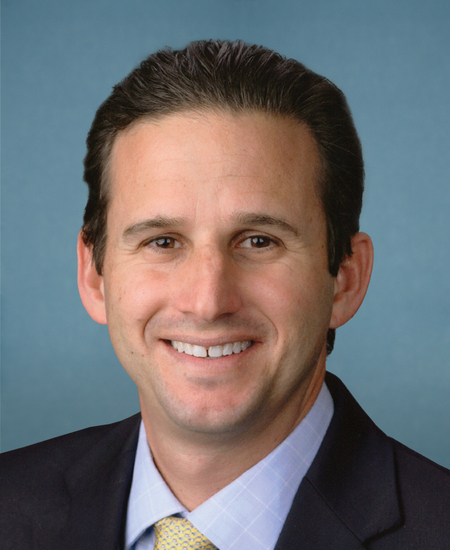
Brian Schatz
Brian Schatz Senate
D
Strong −
0% 3
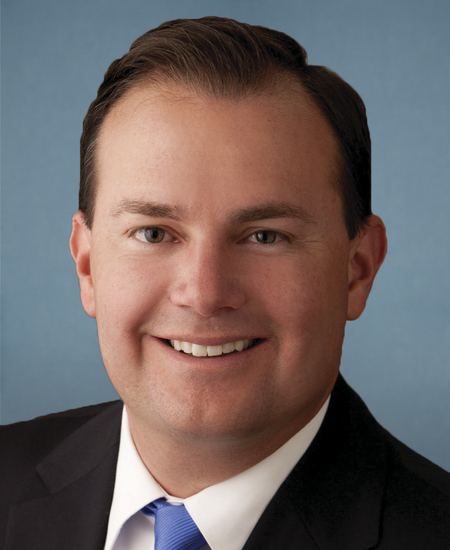
Mike Lee
Mike Lee Senate
R
Strong −
0% 3
Rand Paul
Rand Paul Senate
R
Strong −
0% 3
Rick Scott
Rick Scott Senate
R
Strong −
0% 3
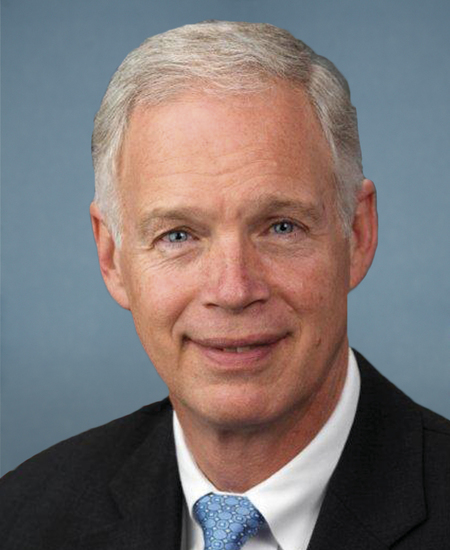
Ron Johnson
Ron Johnson Senate
R
Strong −
0% 3
Showing 91–100 of 157 bills

All housing bills

in committee · United States · House Sep 1, 2026

HR 1640: HEIRS Act of 2025

The HEIRS Act of 2025 establishes two grant programs to help homeowners with "heirs' property" - residential land held by multiple heirs without clear title due to intestacy. It provides $30 million annually (2026-2036) to states/local governments that adopt the Uniform Partition of Heirs Property Act, funding title documentation, legal fees, and estate planning. An additional $10 million annually (2026-2030) supports HUD-approved housing counselors and legal services to assist low- and moderate-income minority homeowners in clearing title and retaining homes. The bill requires grantees to prioritize neighborhoods with high concentrations of affected residents and includes mandatory education about heirs' property risks and solutions.
Sub-Topics Homeownership
in committee · United States · House Mar 14, 2025

HR 2094: HELPER Act of 2025

Homes for Every Local Protector, Educator, and Responder Act of 2025 or the HELPER Act of 2025 This bill establishes a program administered by the Department of Housing and Urban Development to provide mortgage assistance to law enforcement officers, elementary and secondary school teachers, firefighters, or other first responders. Specifically, these individuals may be eligible for a first-time mortgage on a primary family residence with no down payment. Instead, the mortgage is subject to a one-time, up-front mortgage insurance premium.
in committee · United States · House Jan 20, 2026

HR 7160: First Home Affordability Act

The First Home Affordability Act establishes a refundable tax credit for first-time homebuyers purchasing a primary residence in the U.S. The credit equals 2% of the home's purchase price (capped at $25,000 per purchase), with special provisions increasing the credit to 10% for teachers, childcare workers, and first responders. The credit is reduced for higher-income households relative to local area median income and home prices, and requires the homebuyer to be at least 18 years old. Homebuyers must meet specific criteria including no prior home ownership in the past three years and using a federally backed mortgage. If the home is sold within the credit period, a portion of the credit may need to be repaid to the IRS.
in committee · United States · House Sep 19, 2025

HR 5508: Mortgage Insurance Freedom Act

HR 5508, the Mortgage Insurance Freedom Act, stops the government from collecting annual mortgage insurance premiums on FHA-insured mortgages once the remaining loan balance falls to 78% or less of the home's original purchase price or appraised value. It directly affects homeowners with FHA loans who reach this balance threshold, eliminating their annual insurance payments. The bill requires the Secretary of Housing and Urban Development to create a process for homeowners to prove their loan balance meets the 78% threshold and to conduct outreach about this change. An exception applies if the Mutual Mortgage Insurance Fund's capital ratio drops below 2%, temporarily keeping premiums in effect for certain mortgages. This applies only to mortgages endorsed for FHA insurance after the bill's enactment.
in committee · United States · House Jan 3, 2025

HR 53: Responsible Borrower Protection Act of 2025

This bill blocks the Federal Housing Finance Agency (FHFA) and mortgage enterprises (like Fannie Mae and Freddie Mac) from implementing specific mortgage fee changes announced in January 2023. It specifically revokes the FHFA's updated single-family mortgage pricing framework and related guidance documents. The bill does not affect the existing practice of risk-based pricing for mortgage credit fees, which remains permitted. It directly impacts mortgage lenders and borrowers by halting the 2023 fee changes without altering current risk-based fee structures.
in committee · United States · Senate Jan 30, 2026

S 3754: Affordable Housing and Homeownership Protection Act of 2026

S 3754 imposes a tiered tax on investors purchasing single-family homes, targeting those owning significant portfolios: 1% for medium-sized investors (16-25 homes), 3% for large investors (26-100 homes), and 5% for giant investors (over 100 homes). The tax applies to home purchases, excluding new construction unless replacing an existing home on the same site, and exempts nonprofits focused on affordable housing, government entities, and community land trusts. Revenue generated will be allocated 65% to the Housing Trust Fund and 35% to the Capital Magnet Fund to support affordable housing programs. The law takes effect for taxable years beginning after December 31, 2025.
in committee · United States · House Feb 4, 2025

HR 917: Mortgage Debt Tax Forgiveness Act of 2025

This bill permanently excludes forgiven mortgage debt on primary residences from taxable income under the Internal Revenue Code. It directly affects homeowners who have their mortgage debt forgiven (e.g., through short sales or foreclosure) by preventing them from owing income tax on the forgiven amount. The key change amends tax code Section 108(a)(1)(E) to remove the temporary expiration date, making the exclusion permanent. The provision applies to mortgage debt discharged after December 31, 2025. This simplifies tax treatment for affected homeowners without creating new government programs or benefits.
in committee · United States · House Dec 15, 2025

HR 6726: To amend the Housing and Urban Development Act of 1968 to provide reforms to housing counseling and financial literacy programs.

HR 6726 amends housing counseling programs under the 1968 Housing and Urban Development Act to improve oversight and effectiveness. It requires counseling organizations to serve diverse geographic areas (urban and rural) and mandates regular performance reviews by HUD, including evaluating counselors based on borrower default rates for covered loans. The bill also requires HUD to provide foreclosure mitigation counseling to borrowers 30+ days delinquent on FHA, VA, USDA, or similar loans, with costs covered by the Mutual Mortgage Insurance Fund if eligibility rules are met. These changes directly affect HUD-funded counseling agencies, mortgage counselors, and borrowers with specific loan types facing delinquency. The reforms focus on accountability, quality control, and expanding access to foreclosure prevention services.
in committee · United States · House Feb 4, 2025

HR 918: Mortgage Insurance Tax Deduction Act of 2025

HR 918 makes a tax deduction for mortgage insurance premiums permanent for homeowners. The bill removes a temporary expiration clause in the tax code, ensuring that individuals who pay mortgage insurance (typically those with less than 20% down payment on a home loan) can continue deducting these costs on their federal taxes. This change applies to premiums paid after December 31, 2024, providing ongoing tax relief for affected homeowners without altering the deduction's eligibility rules. The policy change directly affects millions of homeowners who rely on this deduction to reduce their taxable income.
in committee · United States · House Feb 21, 2025

HR 1454: Rural Historic Tax Credit Improvement Act

This bill increases tax credits for rehabilitating historic buildings in rural areas. It creates a new "applicable rural project" category: affordable housing projects get a 40% credit on rehabilitation costs (up to $5 million total), while other rural projects get a 30% credit. The credit can now be transferred to other taxpayers, unlike previous rules. It specifically targets buildings in areas outside cities over 50,000 people or adjacent urban zones, and requires affordable housing projects to maintain housing affordability standards. The changes apply to property placed in service after December 31, 2025.
Showing 91 to 100 of 157 bills
Previous 1 9 10 11 16 Next