Issue · Healthcare

Healthcare

Every healthcare bill, vote, and legislator stance in United States, automatically classified by Maddy, our AI policy reader.

Total bills
2,910
119th Congress
Top supporter
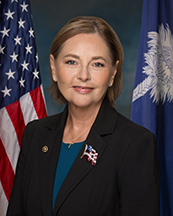
Darline Graham
82% support rate
Top opponent
Rick Scott
19% support rate
Ranked legislators
10
5 support · 5 oppose
Key legislators

Who's moving healthcare in United States

Legislators moving healthcare in United States
Legislator Party Stance Support rate Decisive votes
Darline Graham
Darline Graham Senate
R
Strong +
82% 11
Peter Welch
Peter Welch Senate
D
Strong +
81% 27
Ron Wyden
Ron Wyden Senate
D
Support
78% 27
Alex Padilla
Alex Padilla Senate
D
Support
77% 26
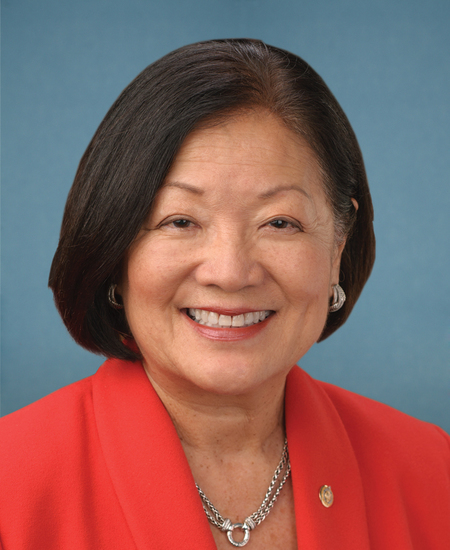
Mazie K. Hirono
Mazie K. Hirono Senate
D
Support
74% 27
Rick Scott
Rick Scott Senate
R
Strong −
19% 27
Ashley Moody
Ashley Moody Senate
R
Oppose
22% 27
Rand Paul
Rand Paul Senate
R
Oppose
22% 27
Brad Knott
Brad Knott House · District 13
R
Oppose
28% 18
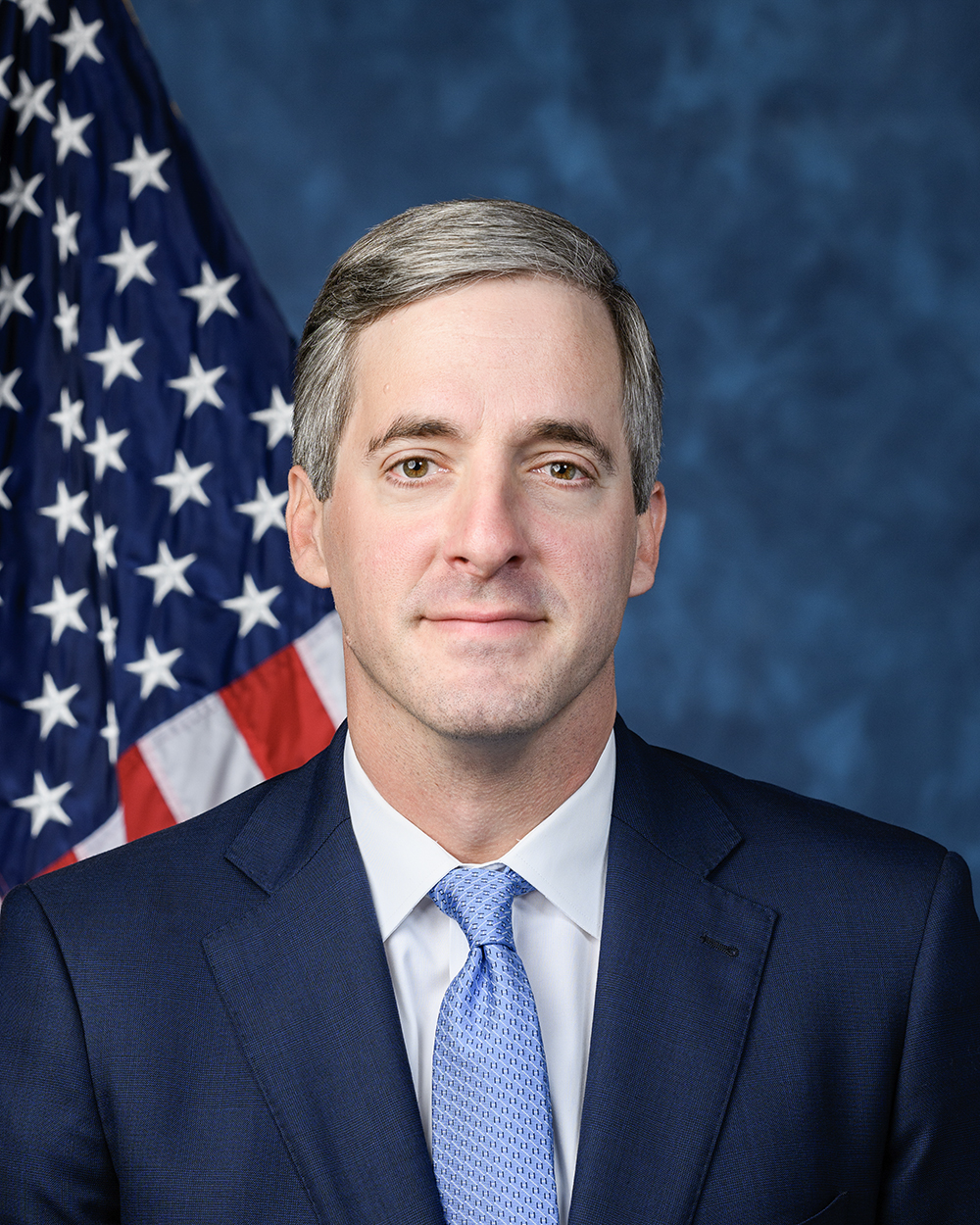
Pat Harrigan
Pat Harrigan House · District 10
R
Oppose
28% 18
Showing 871–880 of 2,910 bills

All healthcare bills

in committee · United States · House Mar 9, 2026

HR 7861: Care Over Profits Act of 2026

This bill, known as the Care Over Profits Act of 2026, aims to reform health insurance regulations by increasing the minimum medical loss ratio requirement and strengthening penalties for fraudulent enrollment practices. It directly affects health insurance companies offering plans in small group and individual markets, as well as agents and brokers who help people enroll in qualified health plans through health insurance exchanges. The bill raises the medical loss ratio requirement from 80% to 85% starting in 2026, meaning insurers must spend at least 85 cents of every premium dollar on medical care rather than administrative costs or profits. Additionally, it introduces new civil and criminal penalties for agents and brokers who negligently or knowingly provide false information during enrollment applications, with fines ranging from $10,000 to $200,000 per affected individual and potential imprisonment of up to 10 years for willful violations.
Sub-Topics Insurance
in committee · United States · House Mar 5, 2026

HR 7838: Veteran Artists Healing Act

This bill, known as the Veteran Artists Healing Act, would allow VA medical centers to directly purchase original artwork from veterans who are current patients. The program enables medical center heads to buy art without needing higher-level approval, provided the work is non-partisan and focuses on themes like recovery, nature, or service. Veterans must either have a clinical recommendation for creative arts therapy or a history of participating in the National Veterans Creative Arts Festival to qualify. Each medical center can spend up to $2,500 per fiscal year on artwork from a single veteran, and the purchases would count toward small business contracting goals.
in committee · United States · House Jul 21, 2026

HR 7994: HERO Act

This bill, known as the HERO Act, creates a federal grant program to help schools purchase opioid overdose reversal drugs and develop emergency response plans and educational resources for students and staff. Schools receiving federal funding would be required to report any distribution of these reversal drugs to federal tracking systems. The grants would be awarded competitively, with priority given to schools in areas with high rates of opioid overdoses, and recipients would need to submit annual reports on how they used the funds and implemented safety measures.
in committee · United States · House Mar 17, 2026

HR 7961: H–1Bs for Physicians and the Healthcare Workforce Act

This bill exempts H-1B visa holders working in healthcare from a presidential restriction that requires a $100,000 payment for entry into the United States. It directly affects foreign medical professionals and healthcare workers who hold H-1B nonimmigrant visas. The legislation removes the additional fee requirement for these workers while limiting any fees that may be charged to the standard amount already established under immigration law. The bill defines healthcare workers using the existing definition from the Affordable Care Act and was introduced in the 119th Congress in March 2026.
in committee · United States · House Mar 12, 2026

HR 7922: Small Business Dependent Care FSA Opportunity Act

This bill creates a tax credit for small employers who set up new dependent care flexible spending plans for their employees. The credit covers startup costs like plan establishment and employee education expenses, but only for the first three years after the plan begins. To qualify, the employer must not have previously offered a similar plan to the same employees, and the plan must include at least one non-highly compensated employee. The maximum credit is $500 in the first year and the next two years, or up to $250 per eligible employee, capped at $5,000 total.
Sub-Topics Tax Credits Tags Small Business
in committee · United States · House Mar 9, 2026

HR 7875: POINTS Act of 2026

This bill establishes a federal grant program to help States, Indian Tribes, and Tribal organizations provide services to people struggling with gambling addiction. The program would fund prevention efforts, screening, treatment, and support services including training for healthcare providers, public awareness campaigns, and access to help lines and peer support groups. Grants would be awarded competitively, with priority given to programs serving vulnerable populations such as Native Americans, veterans, youth, and those in rural or underserved areas. Funding would come from a portion of the federal excise tax on gambling, with amounts adjusted annually for inflation.
in committee · United States · House Mar 30, 2026

HRES 1149: Supporting the goals and ideals of Social Work Month and World Social Work Day on March 17, 2026.

This resolution formally supports the goals and ideals of Social Work Month and World Social Work Day, which are observed on March 17, 2026. It recognizes the contributions of social workers across various settings including healthcare, schools, child welfare agencies, and disaster relief efforts. The measure acknowledges the profession's role in addressing mental health, addiction, poverty, and social justice while encouraging awareness of social workers' integral role in community well-being.
in committee · United States · House Apr 3, 2026

HR 8149: Agricultural Access to Addiction and Mental Health Care Act

This bill requires the Secretary of Agriculture to conduct a study examining how accessible addiction and mental health care providers and services are for farmers and ranchers facing challenges like drought, extreme weather, market instability, and consumer misinformation. The study will investigate rural availability of trained providers, barriers such as financial and geographic obstacles, and successful state and local programs that could be expanded federally. It also explores options like funding for therapy sessions through existing networks and enhancing telehealth services in rural areas. The results will be reported to Congress within 180 days, with up to $1 million authorized annually for fiscal years 2026 through 2029 to support the study.
Sub-Topics Mental Health Substance Abuse Telehealth Tags Agriculture Rural Communities
in committee · United States · House Mar 5, 2026

HR 7854: Medicines for the People Act

This bill, titled the Medicines for the People Act, would create a new National Institute for Biomedical Research and Development within the Public Health Service Act. The new institute would conduct full-cycle research and development of drugs, devices, and biological products using federal laboratories, contracts with public and private entities, and acquisitions of existing technologies. Key provisions include government ownership of patents and trade secrets from institute-funded research, mandatory sharing of clinical trial data with the public, and licensing agreements that prioritize nonprofit and public entities while allowing some for-profit licensing under public interest terms. The institute would be overseen by a 15-member governing board with restrictions on members from the pharmaceutical industry, and it would receive an initial authorization of $90 billion for fiscal year 2027.
in committee · United States · Senate Jul 28, 2026

S 4110: EMPOWER for Health Act

This bill, known as the EMPOWER for Health Act, extends federal funding for health workforce programs through fiscal year 2030, directly supporting medical schools, residency programs, and health education centers. It increases annual appropriations for various initiatives that train and place healthcare professionals in underserved areas, including specific programs for pediatric care and area health education centers. The legislation also updates eligibility requirements and service obligations for participants, ensuring that training programs align with current medical practice standards and that graduates serve in communities with healthcare shortages.
Showing 871 to 880 of 2,910 bills
Previous 1 … 87 88 89 … 291 Next