Issue · Healthcare

Healthcare (Medicare)

Every healthcare bill, vote, and legislator stance in United States, automatically classified by Maddy, our AI policy reader.

Total bills
591
119th Congress
Top supporter
Christopher Murphy
88% support rate
Top opponent
Bill Hagerty
12% support rate
Ranked legislators
10
5 support · 5 oppose
Key legislators

Who's moving medicare in United States

Legislators moving medicare in United States
Legislator Party Stance Support rate Decisive votes
Christopher Murphy
Christopher Murphy Senate
D
Strong +
88% 8
Adam B. Schiff
Adam B. Schiff Senate
D
Support
78% 9
Alex Padilla
Alex Padilla Senate
D
Support
78% 9
Amy Klobuchar
Amy Klobuchar Senate
D
Support
78% 9
Andy Kim
Andy Kim Senate
D
Support
78% 9
Bill Hagerty
Bill Hagerty Senate
R
Strong −
12% 8
Mitch McConnell
Mitch McConnell Senate
R
Strong −
12% 8
Roger F. Wicker
Roger F. Wicker Senate
R
Strong −
12% 8
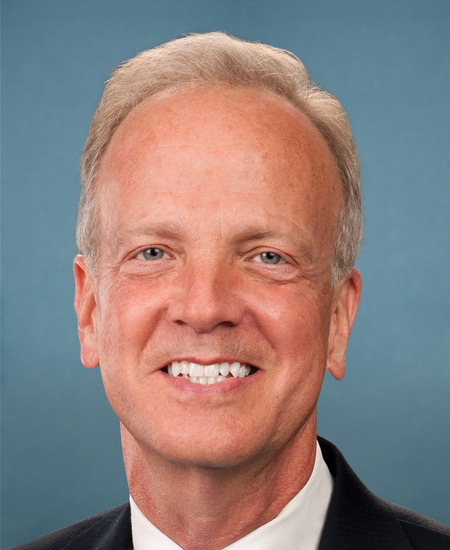
Jerry Moran
Jerry Moran Senate
R
Strong −
14% 7
Ashley Moody
Ashley Moody Senate
R
Oppose
22% 9
Showing 411–420 of 591 bills

All healthcare bills

in committee · United States · House May 6, 2025

HR 3222: SMART Health Care Act

HR 3222, the SMART Health Care Act, aims to improve Medicare efficiency and affordability. It requires Medicare Advantage plans to use two years of diagnostic data for risk adjustment starting in 2026, affecting how these plans are funded. The bill also implements site-neutral payments for outpatient services (ending exceptions after 2025) and mandates that covered entities provide Medicare patients with drugs at the purchase price minus discounts, with public reporting of pricing data. These changes directly impact Medicare Advantage insurers, hospitals, outpatient departments, and drug providers, focusing on cost control and transparency.
in committee · United States · Senate Sep 17, 2025

S 2829: Preventive Home Visit Act

This bill adds Medicare coverage for "preventive home visits" to assess home safety and health risks for eligible beneficiaries. It requires Medicare to pay 100% of the cost for these visits - conducted by qualified professionals at least once every two years - to identify fall risks, improve mobility, and provide referrals for home modifications or nutrition support. The visits can be in-person, remote, or combined, and must focus on reducing physical risks like falls. The policy applies to Medicare beneficiaries starting January 1, 2027, and defines specific visit requirements in Medicare law.
in committee · United States · Senate Sep 17, 2025

S 2834: Medically Tailored Home-Delivered Meals Program Pilot Act

This bill establishes a 6-year Medicare pilot program to provide medically tailored home-delivered meals to high-risk Medicare beneficiaries after hospital discharge. It requires selected hospitals (40 total, meeting quality ratings and program integrity standards) to screen eligible patients with diet-impacted conditions (like diabetes or heart failure), provide 2 tailored meals daily for 12+ weeks, and offer medical nutrition therapy. The program aims to improve health outcomes and reduce readmissions by covering costs without patient copays, using existing Medicare funding with budget-neutral adjustments to hospital payments. Hospitals must submit data on health outcomes and costs for evaluation by Medicare.
Sub-Topics Hospitals Medicare
in committee · United States · House Sep 18, 2025

HR 5454: Medicare Advantage Prompt Pay Act

HR 5454, the Medicare Advantage Prompt Pay Act, requires Medicare Advantage plans to pay 95% of valid claims (with complete data) within 14 days for electronic claims or 30 days for paper claims, starting January 1, 2027. Plans that miss these deadlines must pay interest at standard government rates and face $25,000 civil penalties per violation. The bill also mandates annual reports showing payment rates for in-network versus out-of-network claims and interest paid. This directly affects Medicare Advantage insurers and healthcare providers (like doctors and hospitals) who bill these plans.
Sub-Topics Medicare
in committee · United States · House Jun 6, 2025

HR 3826: Expanding Access to Diabetes Self-Management Training Act of 2025

This bill expands Medicare coverage for diabetes self-management training. It requires Medicare to cover 10 initial hours of training plus 2 additional hours annually for beneficiaries with diabetes, eliminating cost-sharing (like copays) for these services. The policy directly affects Medicare beneficiaries with diabetes by making essential education and training fully covered. The changes apply to services provided on or after January 1, 2027.
in committee · United States · House Apr 29, 2025

HR 2484: Seniors’ Access to Critical Medications Act of 2025

This bill temporarily allows doctors to prescribe and dispense certain Medicare-covered medications directly to seniors in their offices from 2026 to 2030, under specific conditions. It requires prior in-person visits, limits dispensing to group practices, and mandates billing through the physician’s practice. The bill also directs the GAO to study whether physician-owned pharmacies are becoming common and how such arrangements might affect prescribing. It directly affects seniors receiving Medicare Part D drugs and physician practices participating in these arrangements. The exception expires in 2030, with no changes to Medicare Part D program rules.
Sub-Topics Medicaid Medicare Prescription Drugs Tags Seniors
in committee · United States · Senate Feb 25, 2026

S 3908: SOS: Sustaining Outpatient Services Act

This bill amends Medicare payment rules to allow certain outpatient services provided by off-campus hospital departments to be paid under the hospital outpatient department system starting in 2027. It specifically targets services in physician specialties where the total Medicare payments for all such services in the previous year were less than $2 million. This change directly affects hospitals operating off-campus outpatient departments serving lower-volume physician specialties. The key provision shifts payment methodology for these specific services to align with hospital outpatient department rates, aiming to stabilize funding for smaller specialty programs. The bill does not alter existing Medicare coverage or create new benefits.
Sub-Topics Hospitals Medicare
in committee · United States · House Apr 28, 2025

HR 3032: Expanding Remote Monitoring Access Act

This bill changes Medicare billing rules for remote monitoring services, allowing providers to bill for a minimum of 2 days of patient data collected over a 30-day period instead of the current 16 days. It directly affects Medicare patients with chronic conditions (like diabetes, heart failure, or post-surgery recovery) and healthcare providers who use remote monitoring tools. The key provision eliminates the 16-day requirement for all patients - not just during the pandemic - based on clinical evidence showing shorter monitoring periods are sufficient for many conditions. The bill also requires a report to Congress within one year analyzing the impact and recommending future reimbursement models. This aims to reduce administrative barriers while maintaining coverage for clinically appropriate remote monitoring.
in committee · United States · House Oct 31, 2025

HR 5873: PROMPT Act

This bill requires Medicare to provide beneficiaries with a clear explanation of benefits within 30 days after receiving care or a service. It amends Medicare rules to mandate that the Health and Human Services Secretary send this summary not later than 30 days following payment (or expected payment) for covered items. The law directly affects Medicare beneficiaries, who will receive timely, transparent information about their coverage and costs. This change aims to simplify understanding of Medicare billing without altering benefit eligibility or coverage rules.
Sub-Topics Medicare
in committee · United States · Senate Mar 11, 2025

S 931: COMPLETE Care Act

This bill creates Medicare payment incentives for primary care providers who integrate behavioral health services into their practice. It boosts payments for specific behavioral health services (using HCPCS codes like 99484, 99492, and 99493) to 125-175% of standard rates during 2027-2029, waiving budget neutrality rules to allow these higher payments. The bill also requires the Health and Human Services Secretary to provide technical assistance to primary care practices adopting integration models by 2026, using new funding for fiscal years 2025-2029. It directly affects Medicare providers delivering these integrated care services and aims to expand access to combined mental and physical health care.
Showing 411 to 420 of 591 bills
Previous 1 … 41 42 43 … 60 Next