Issue · Healthcare

Healthcare (Medicare)

Every healthcare bill, vote, and legislator stance in United States, automatically classified by Maddy, our AI policy reader.

Total bills
550
119th Congress
Top supporter
Christopher Murphy
88% support rate
Top opponent
Bill Hagerty
12% support rate
Ranked legislators
10
5 support · 5 oppose
Key legislators

Who's moving medicare in United States

Legislators moving medicare in United States
Legislator Party Stance Support rate Decisive votes
Christopher Murphy
Christopher Murphy Senate
D
Strong +
88% 8
Adam B. Schiff
Adam B. Schiff Senate
D
Support
78% 9
Alex Padilla
Alex Padilla Senate
D
Support
78% 9
Amy Klobuchar
Amy Klobuchar Senate
D
Support
78% 9
Andy Kim
Andy Kim Senate
D
Support
78% 9
Bill Hagerty
Bill Hagerty Senate
R
Strong −
12% 8
Mitch McConnell
Mitch McConnell Senate
R
Strong −
12% 8
Roger F. Wicker
Roger F. Wicker Senate
R
Strong −
12% 8
Jerry Moran
Jerry Moran Senate
R
Strong −
14% 7
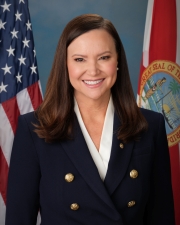
Ashley Moody
Ashley Moody Senate
R
Oppose
22% 9
Showing 401–410 of 550 bills

All healthcare bills

in committee · United States · House Sep 8, 2025

HR 5217: Rural Behavioral Health Improvement Act of 2025

This bill amends the Social Security Act to remove an exclusion for rural facilities primarily treating mental health conditions from Medicare coverage. It specifically changes Section 1861(aa)(2) by deleting the phrase "or a facility which is primarily for the care and treatment of mental diseases," allowing these facilities to qualify for Medicare reimbursement. The change directly affects rural behavioral health centers specializing in mental health care that were previously excluded. The amendment takes effect on January 1, 2027, enabling these facilities to access federal Medicare funding for services.
in committee · United States · Senate Dec 11, 2025

S 3439: Connecting Caregivers to Medicare Act of 2025

This bill requires Medicare to simplify access for family caregivers to beneficiaries' health information. It mandates that Medicare create a new authorization form (CMS-10106) allowing beneficiaries to grant caregivers access to their personal health data via 1-800-MEDICARE. The law also directs Medicare to provide clear outreach through notices, websites, and provider channels, including multilingual materials and training for call center staff. It requires the Secretary to develop fraud protection best practices within one year and ensure all Medicare beneficiaries - regardless of plan type - can authorize caregiver access.
Sub-Topics Medicare
in committee · United States · Senate Jul 24, 2025

S 2426: Equitable Community Access to Pharmacist Services Act

This bill expands Medicare Part B coverage to include specific pharmacist services, directly affecting Medicare beneficiaries and pharmacists who provide these services. It defines "pharmacist services" as evaluations and treatments for illnesses like COVID-19, flu, RSV, or strep throat, or services addressing public health emergencies, requiring collaboration with physicians as state law permits. Medicare would pay 80% of the lower of the actual charge or 85% of the physician payment rate (100% for public health emergencies), and prohibits balance billing for these services. The changes take effect January 1, 2026.
in committee · United States · House Feb 7, 2025

HR 1142: To amend the Public Health Service Act to direct the Secretary of Health and Human Services to establish drug adherence guidelines, and for other purposes.

This bill requires the HHS Secretary to create drug adherence guidelines aiming for 90% medication adherence among Medicare Part B and D drug users. It mandates using AI and machine learning technologies in developing these guidelines and prioritizes promoting generic and biosimilar drugs where possible. The policy directly affects Medicare beneficiaries and providers by setting a measurable adherence target for covered drugs. Key changes include new federal guidelines focused on improving medication consistency through technology and cost-effective drug options.
in committee · United States · Senate Jun 12, 2025

S 2066: Medicare Transaction Fraud Prevention Act

This bill establishes a two-year pilot program (starting January 2026) to test predictive risk-scoring algorithms for monitoring Medicare payments for durable medical equipment and clinical diagnostic lab tests. It requires voluntary participation from Medicare beneficiaries who opt in to electronic Medicare Summary Notices and agree to the pilot. The algorithm would score transactions from 1 (low risk) to 99 (high risk), triggering human review for high-risk cases, with beneficiaries given a chance to correct errors via email or phone. The program mandates algorithm testing, beneficiary notifications about data use, and requires human oversight before suspending payments or transactions. It specifically covers claims for durable medical equipment and lab tests under Medicare.
Sub-Topics Medicare
in committee · United States · House Mar 10, 2025

HR 2002: MATCH IT Act of 2025

The MATCH IT Act of 2025 establishes national standards to improve patient matching accuracy in healthcare, directly affecting hospitals, clinics, health IT vendors, and federal agencies like CMS and HHS. It requires the Secretary of Health and Human Services to develop a uniform definition for measuring patient match rates within 180 days, accounting for duplicate records, overlaid records, and mismatch rates. The bill mandates health IT vendors to incorporate a standardized data set into their systems to support 99.9% matching accuracy, with Medicare providers earning voluntary bonus payments for achieving at least 90% matching accuracy through anonymous reporting. This aims to reduce medical errors, prevent unnecessary tests, and cut costs linked to patient misidentification, which currently cost the healthcare system over $6.7 billion annually.
Sub-Topics Medicaid Medicare
in committee · United States · Senate Apr 30, 2025

S 1535: Rural Patient Monitoring (RPM) Access Act

This bill increases Medicare reimbursement rates for rural remote patient monitoring (RPM) services by setting a minimum floor of 1.00 for practice expense and malpractice indices starting in 2026, directly benefiting rural clinics and providers in areas with health care shortages. It requires RPM providers to respond to data anomalies, share patient vitals with electronic health records, and report data to track Medicare savings. The bill mandates a two-year report analyzing cost savings from reduced hospital stays and better medication adherence among beneficiaries using RPM. These changes specifically target improving access to RPM for rural Medicare patients with chronic conditions like heart failure and diabetes.
Sub-Topics Hospitals Medicare Telehealth Tags Rural Communities
in committee · United States · House Jun 25, 2025

HR 4139: Cutting Copays Act

HR 4139, the Cutting Copays Act, lowers out-of-pocket prescription drug costs for low-income Medicare Part D beneficiaries. It reduces the maximum copay for generic drugs to $0 starting in 2026 and caps copays for other drugs at $3 before 2026, with future adjustments tied to inflation. The bill directly affects Medicare Part D enrollees who qualify for low-income subsidies, ensuring their annual drug costs stay below set limits. These changes modify existing Medicare Part D cost-sharing rules without creating new programs or altering eligibility.
in committee · United States · House Nov 20, 2025

HR 6166: Lowering Drug Costs for American Families Act

This bill expands Medicare's drug price negotiation program to cover 50 drugs (up from 20) and requires health insurers to apply negotiated prices to cost-sharing for beneficiaries. It establishes annual out-of-pocket cost-sharing limits for prescription drugs under group health plans and insurance coverage, with specific limits of $2,000 for self-only coverage in 2027 that will increase annually. The bill also sets specific cost-sharing limits for insulin products, requiring coverage with no deductible and cost-sharing of no more than $35 per 30-day supply or 25% of the negotiated price. These provisions affect Medicare beneficiaries, people with group health plans, and health insurers across the country. The bill applies to plan years beginning on or after January 1, 2027.
in committee · United States · House Jul 15, 2026

HR 3514: Improving Seniors’ Timely Access to Care Act of 2025

This bill requires Medicare Advantage plans to implement electronic pre-approval systems for medical services by 2028 and meet transparency reporting standards starting in 2027. Plans must publicly report data on approval/denial rates, appeal outcomes, response times, and technology use for pre-approval requests, including details on how denials relate to clinical criteria. It establishes a 24-hour response timeframe for certain requests and mandates annual reviews of pre-approval requirements based on data and input from seniors and providers. The law directly affects Medicare Advantage plans, seniors enrolled in these plans, and healthcare providers who submit pre-approval requests. These changes aim to make the pre-approval process faster, more transparent, and more accountable for seniors seeking covered medical services.
Sub-Topics Long-Term Care Medicare Tags Seniors
Showing 401 to 410 of 550 bills
Previous 1 … 40 41 42 … 55 Next