Issue · Healthcare

Healthcare (Medicaid)

Every healthcare bill, vote, and legislator stance in United States, automatically classified by Maddy, our AI policy reader.

Total bills
441
119th Congress
Top supporter
Christopher Murphy
89% support rate
Top opponent
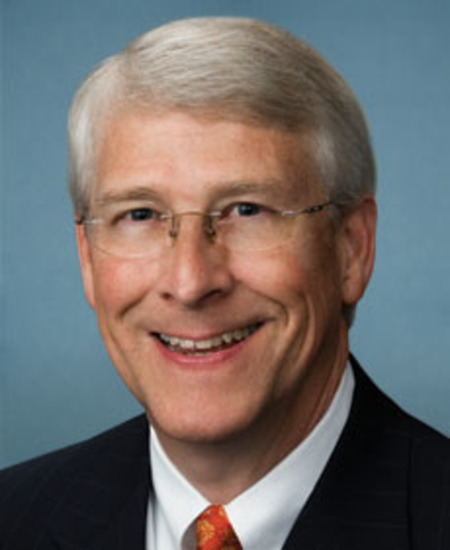
Bill Hagerty
11% support rate
Ranked legislators
10
5 support · 5 oppose
Key legislators

Who's moving medicaid in United States

Legislators moving medicaid in United States
Legislator Party Stance Support rate Decisive votes
Christopher Murphy
Christopher Murphy Senate
D
Strong +
89% 9
Adam B. Schiff
Adam B. Schiff Senate
D
Strong +
80% 10
Alex Padilla
Alex Padilla Senate
D
Strong +
80% 10
Amy Klobuchar
Amy Klobuchar Senate
D
Strong +
80% 10
Andy Kim
Andy Kim Senate
D
Strong +
80% 10
Bill Hagerty
Bill Hagerty Senate
R
Strong −
11% 9
Mitch McConnell
Mitch McConnell Senate
R
Strong −
11% 9
Roger F. Wicker
Roger F. Wicker Senate
R
Strong −
11% 9
Jerry Moran
Jerry Moran Senate
R
Strong −
12% 8
Ashley Moody
Ashley Moody Senate
R
Strong −
20% 10
Showing 361–370 of 441 bills

All healthcare bills

in committee · United States · Senate Jul 24, 2025

S 2433: Neonatal Care Transparency Act of 2025

This bill requires hospitals and obstetric providers to disclose policies on providing life-saving care to premature infants, directly affecting parents expecting premature births and healthcare facilities. Hospitals must publicly state if they have a minimum gestational age for treatment, whether care decisions are case-by-case, and transfer plans for infants needing higher-level care. Obstetric providers must share these policies with patients during the first prenatal visit. Non-compliant hospitals and providers risk losing federal Medicaid and CHIP funding starting January 2026. The law aims to ensure transparency about neonatal care options before delivery.
in committee · United States · Senate Dec 16, 2025

S 3492: Essential Caregivers Act of 2025

Essential Caregivers Act of 2025   This bill prohibits certain health care facilities from limiting the access of essential caregivers to residents of those facilities, including during designated emergency periods.   Specifically, the bill generally prohibits Medicare skilled nursing facilities, Medicaid nursing facilities, Medicaid intermediate care facilities, and associated inpatient rehabilitation facilities from restricting the access of essential caregivers to residents of the facilities, including during emergency periods in which visitation rights are otherwise restricted. During emergency periods, facilities may restrict access for an initial period of up to seven days and for one additional maximum seven-day period (if the additional period is approved by the state health department). Facilities may restrict access for a total of 7 days (or 14 days with the approval of the state health department) during an emergency period. Essential caregivers must agree to comply with any safety protocols set by the facility, which may be no more stringent for caregivers compared to those for staff. Caregivers who fail to comply with these requirements may be denied access, subject to an appeals process.
in committee · United States · House Nov 7, 2025

HR 5944: Restoring Inpatient Mental Health Access Act of 2025

HR 5944, the Restoring Inpatient Mental Health Access Act of 2025, removes a longstanding Medicaid coverage barrier for inpatient mental health services. It amends the Social Security Act to allow federal Medicaid funding for care provided in mental health facilities (previously excluded as "institutions for mental diseases") for services furnished on or after January 1, 2027. This change directly affects Medicaid beneficiaries requiring inpatient mental health treatment by enabling federal financial support for those services. The bill does not create new programs but updates existing Medicaid rules to expand coverage for this critical care. The policy change takes effect January 1, 2027, with no retroactive application.
in committee · United States · Senate May 1, 2025

S 1551: No Subsidies for Gender Transition Procedures Act

This bill would deny federal tax deductions for medical expenses related to gender transition procedures and prohibit federal funding through Medicaid, Medicare, and essential health benefits for such procedures. It defines gender transition procedures broadly to include various hormonal treatments and surgeries, while excluding certain medical conditions like disorders of sex development and specific medical emergencies. The bill would affect individuals seeking gender transition care who rely on federal health programs for coverage. The provisions would apply to services furnished after the bill's enactment, with specific exclusions for certain medically necessary treatments.
Sub-Topics Medicaid Medicare
in committee · United States · House Sep 18, 2025

HR 5462: Michelle Alyssa Go Act

HR 5462, the Michelle Alyssa Go Act, changes Medicaid rules to exclude small mental health facilities with 36 beds or fewer from the definition of "institution for mental diseases" if they meet specific national standards. This directly affects small mental health and substance use disorder treatment facilities (36 beds or less) that comply with evidence-based standards for services, care hours, staffing, and clinical programs. The bill modifies Medicaid funding eligibility by removing these small facilities from the restrictive "institution" category, allowing them to remain eligible for Medicaid coverage under state plans. The change takes effect 180 days after the law is enacted, applying to all state Medicaid plans starting then.
in committee · United States · House May 6, 2025

HRES 278: Providing for consideration of the bill (H.R. 185) to advance responsible policies.

HRES 278 is a procedural resolution that establishes rules for the House to immediately consider H.R. 185, a bill aiming to temporarily prevent cuts to Medicaid and SNAP benefits. It waives objections to H.R. 185 and specifies that an amendment adding this prohibition (which would expire January 20, 2029) is to be treated as adopted. The resolution also sets a one-week timeline for the House to pass the bill and transmit it to the Senate. This resolution itself does not change policy but enables the consideration of H.R. 185 through specific procedural steps.
Sub-Topics Medicaid
in committee · United States · House Dec 19, 2025

HR 4648: Access to Fertility Treatment and Care Act

This bill would require health insurance plans that cover obstetrical services to also cover a broad range of fertility treatments, including in vitro fertilization, artificial insemination, embryo preservation, and fertility medications. It mandates coverage regardless of whether a person has been diagnosed with infertility, with cost-sharing (deductibles, coinsurance) limited to the same level as other medical services. The law would apply to employer-sponsored health plans, individual insurance, Medicare, Medicaid, TRICARE, and VA benefits, with implementation deadlines ranging from January 1, 2026 for Medicare to January 1, 2027 for notice requirements. The bill also prohibits plans from discouraging fertility treatment or limiting providers who offer it, while ensuring coverage is provided without requiring individuals to undergo treatment.
in committee · United States · Senate Jul 30, 2025

S 2556: Protecting Health Care and Lowering Costs Act

This bill permanently extends the enhanced premium tax credit for Affordable Care Act marketplace insurance plans, directly affecting millions of lower-income households (earning 150%-400% of the federal poverty level) who purchase coverage through state or federal marketplaces. It establishes a sliding-scale percentage system where the tax credit reduces monthly premiums based on income, starting at 0% for households earning up to 150% of poverty and increasing to 8.5% for those earning 300%-400% of poverty. The bill replaces temporary provisions with permanent rules, ensuring consistent cost-sharing support for eligible buyers. The changes apply to tax years beginning after December 31, 2025.
in committee · United States · House Sep 8, 2025

HR 1510: Due Process Continuity of Care Act

HR 1510, the Due Process Continuity of Care Act, expands Medicaid eligibility to cover individuals in jail or custody while awaiting trial or disposition of charges, at a state's option. This allows states to provide Medicaid benefits to this population without requiring them to be convicted first. The bill provides $50 million in planning grants to states to develop implementation plans, including assessing healthcare needs, recruiting providers (especially for behavioral health and substance use treatment), and creating electronic billing systems for correctional facilities and outpatient providers. States must also consult with stakeholders like jails, providers, and Medicaid advocates before finalizing their plans.
in committee · United States · Senate Dec 2, 2025

S 3299: DSH in Tennessee Act

S 3299, the "DSH in Tennessee Act," permanently restores federal funding for hospitals in Tennessee that serve many low-income patients, directly affecting those hospitals. For fiscal year 2026, it sets Tennessee's funding level equal to its 2015 amount, adjusted annually for inflation using the consumer price index. Starting in 2027, Tennessee will be treated as a "low DSH state," receiving annual funding increases based on the same inflation adjustment used for similar states. This bill specifically changes how Tennessee's Medicaid Disproportionate Share Hospital (DSH) funding is calculated and allocated.
Sub-Topics Hospitals Medicaid
Showing 361 to 370 of 441 bills
Previous 1 … 36 37 38 … 45 Next