Issue · Healthcare

Healthcare (Medicaid)

Every healthcare bill, vote, and legislator stance in United States, automatically classified by Maddy, our AI policy reader.

Total bills
441
119th Congress
Top supporter
Christopher Murphy
89% support rate
Top opponent
Bill Hagerty
11% support rate
Ranked legislators
10
5 support · 5 oppose
Key legislators

Who's moving medicaid in United States

Legislators moving medicaid in United States
Legislator Party Stance Support rate Decisive votes
Christopher Murphy
Christopher Murphy Senate
D
Strong +
89% 9
Adam B. Schiff
Adam B. Schiff Senate
D
Strong +
80% 10
Alex Padilla
Alex Padilla Senate
D
Strong +
80% 10
Amy Klobuchar
Amy Klobuchar Senate
D
Strong +
80% 10
Andy Kim
Andy Kim Senate
D
Strong +
80% 10
Bill Hagerty
Bill Hagerty Senate
R
Strong −
11% 9
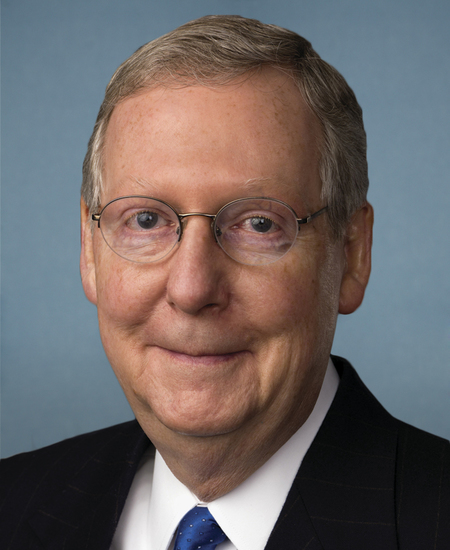
Mitch McConnell
Mitch McConnell Senate
R
Strong −
11% 9
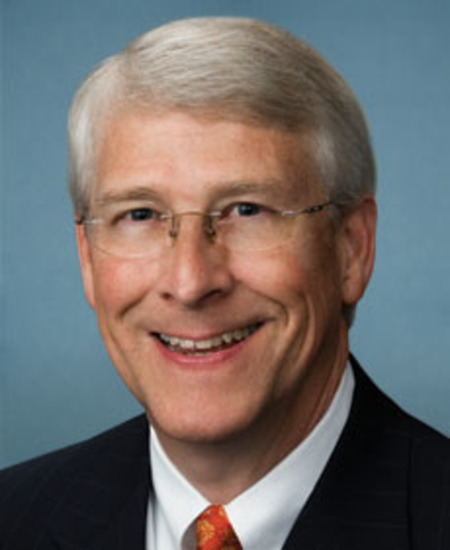
Roger F. Wicker
Roger F. Wicker Senate
R
Strong −
11% 9
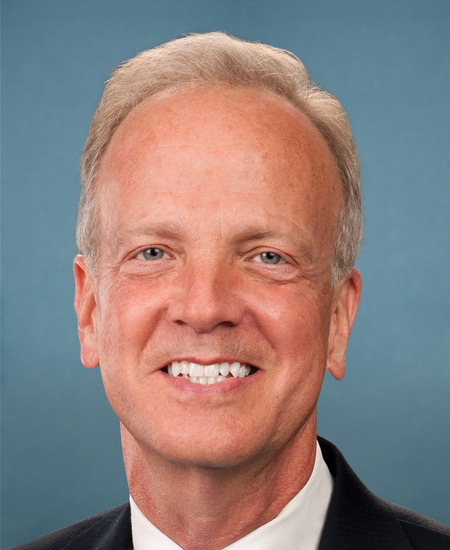
Jerry Moran
Jerry Moran Senate
R
Strong −
12% 8
Ashley Moody
Ashley Moody Senate
R
Strong −
20% 10
Showing 291–300 of 441 bills

All healthcare bills

in committee · United States · House Jun 17, 2025

HR 4037: Occupational Therapy Mental Health Parity Act.

The Occupational Therapy Mental Health Parity Act requires the U.S. Department of Health and Human Services to provide education and outreach about Medicare coverage for occupational therapy services treating mental health and substance use disorders. Specifically, it directs the Secretary to clarify how these services are covered under the Medicare Benefit Policy Manual using standard medical billing codes (HCPCS). This education must be completed within one year of the bill's enactment. The goal is to improve understanding of existing Medicare coverage for occupational therapy in mental health and substance use treatment, without changing current benefit rules.
in committee · United States · Senate Jan 16, 2025

S 141: Connected MOM Act

S 141, the Connected MOM Act, requires the U.S. Health and Human Services Secretary to report to Congress within 18 months on Medicaid coverage of remote health monitoring devices (like pulse oximeters and blood pressure cuffs) for pregnant and postpartum women. The report must identify barriers to coverage under state Medicaid programs and assess their impact on maternal and child health outcomes. Six months after the report is submitted, HHS must update state Medicaid resources, such as telehealth toolkits, to align with the report's recommendations. This bill directly affects Medicaid-enrolled pregnant and postpartum women by aiming to improve access to remote health monitoring. It focuses on gathering data and updating state resources, not on direct funding or new coverage mandates.
in committee · United States · House May 14, 2025

HR 3399: Care for Military Kids Act of 2025

The Care for Military Kids Act of 2025 requires states to treat military-connected children and dependents as residents of their new state for Medicaid eligibility when relocating due to active duty service, effective January 1, 2028. It ensures these families maintain their place on home care service waiting lists after relocation without needing to restart eligibility processes. The bill mandates states to cover medical assistance for these families in their new state and preserves their waiting list status until a service slot becomes available or they opt out. Implementation funding of $1 million annually (2026-2030) supports this policy change.
in committee · United States · Senate Jun 3, 2025

S 1936: Improving Access to Transfusion Care for Hospice Patients Act of 2025

S 1936 would test a new payment model for Medicare hospice care, allowing blood transfusions to be paid separately from the standard hospice all-inclusive payment. This change would directly affect hospice patients requiring transfusions and Medicare hospice providers, altering how these services are reimbursed. The bill requires the Center for Medicare and Medicaid Innovation (CMI) to establish this model within one year, setting transfusion payments at the standard Medicare rate (not the bundled hospice rate). CMI must then evaluate the model by comparing key metrics like hospital visits, transfusion frequency, and hospice care duration between patients in the new model and similar patients not in the model. The goal is to assess whether separate payment improves access to necessary transfusions without increasing overall costs.
in committee · United States · Senate Apr 2, 2025

S 1261: CONNECT for Health Act of 2025

The CONNECT for Health Act of 2025 expands Medicare coverage for telehealth services by removing geographic restrictions that previously limited where patients could receive telehealth care. It allows more healthcare providers to offer telehealth services, including expanding eligibility for practitioners and removing the six-month in-person visit requirement for telemental health. The bill also includes specific provisions for Federally Qualified Health Centers, rural health clinics, and Native American health facilities to better integrate telehealth into their services. Additionally, it establishes program integrity measures to address billing patterns and requires the posting of telehealth service data to improve transparency and quality measurement. These changes aim to make telehealth more accessible for Medicare beneficiaries, particularly in rural areas and for underserved populations.
in committee · United States · Senate Dec 3, 2025

S 3318: American Citizens First Act

The American Citizens First Act restricts federal benefits for noncitizens and strengthens immigration enforcement. It bars noncitizens from receiving most federal benefits, including welfare, food assistance, Medicaid (except emergency services), housing aid, and student loans. The bill also allows revoking citizenship for naturalized citizens convicted of violent protests or acts against the government, expands expedited removal for certain immigrants, and requires security reviews for Afghans admitted since 2021. Additionally, it automatically terminates temporary protected status for nationals from countries where the crime rate among them exceeds the national average by 20%, with semiannual crime rate reports to Congress.
in committee · United States · Senate Apr 10, 2025

S 1410: Find It Early Act

The Find It Early Act requires health insurance plans and government health programs to cover breast cancer screenings with no cost-sharing for certain high-risk individuals. It affects people at increased breast cancer risk (based on medical guidelines), with dense breast tissue, or determined by healthcare providers to need screening due to factors like age, race, ethnicity, or family history. The bill mandates coverage for various screening methods including mammograms, ultrasounds, MRI, and molecular imaging without frequency limitations. This applies to group health plans, Medicare, Medicaid, TRICARE, and VA health care, with most provisions taking effect January 1, 2026.
in committee · United States · Senate May 22, 2025

S 1855: Care for Military Kids Act

Care for Military Kids Act This bill requires a state Medicaid program to consider active-duty members of the Armed Forces and their dependents who are receiving home- and community-based services to be residents of that state even if they are relocated to another state because of their military service, unless the member chooses not to be considered as such. The requirement applies beginning in 2028. The bill provides funds through FY2030 for the Centers for Medicare & Medicaid Services to implement the bill.
in committee · United States · House Jan 28, 2025

HR 742: PROTECTS Act of 2025

This bill prohibits federal funds from being used to cover gender transition procedures for individuals under 18, including puberty blockers, hormone therapies (at higher-than-normal doses), and surgeries like hysterectomies or mastectomies. It defines "sex" biologically as male or female and exempts certain medical treatments, such as puberty suppression for precocious puberty or care for genetic disorders of sex development. The policy directly affects minors receiving federally funded healthcare (e.g., Medicaid), restricting coverage for most gender-affirming care. Key mechanisms include funding restrictions and specific medical exceptions, though it does not ban private insurance or out-of-pocket payments.
Sub-Topics Medicaid
died · United States · Senate Oct 9, 2025

S 2882: Continuing Appropriations and Extensions and Other Matters Act, 2026

This bill provides continuing appropriations for federal government operations through October 31, 2025, ensuring that agencies can maintain essential services without interruption. It authorizes funding for departments including Defense, Health and Human Services, Veterans Affairs, and Transportation, while extending specific programs like community health centers, Medicare services, and veterans' benefits. Key provisions include maintaining funding levels for existing programs, extending deadlines for various health and human services initiatives through October 2025, and providing specific amounts for programs like the WIC food assistance program. The bill also includes numerous extensions for programs that would otherwise expire, such as the National Health Service Corps and certain Medicare payment adjustments. This continuing resolution prevents government shutdowns by providing temporary funding until a full fiscal year 2026 appropriations bill can be enacted.
Showing 291 to 300 of 441 bills
Previous 1 … 29 30 31 … 45 Next