Issue · Healthcare

Healthcare

Every healthcare bill, vote, and legislator stance in United States, automatically classified by Maddy, our AI policy reader.

Total bills
2,910
119th Congress
Top supporter
Darline Graham
82% support rate
Top opponent
Rick Scott
19% support rate
Ranked legislators
10
5 support · 5 oppose
Key legislators

Who's moving healthcare in United States

Legislators moving healthcare in United States
Legislator Party Stance Support rate Decisive votes
Darline Graham
Darline Graham Senate
R
Strong +
82% 11
Peter Welch
Peter Welch Senate
D
Strong +
81% 27
Ron Wyden
Ron Wyden Senate
D
Support
78% 27
Alex Padilla
Alex Padilla Senate
D
Support
77% 26
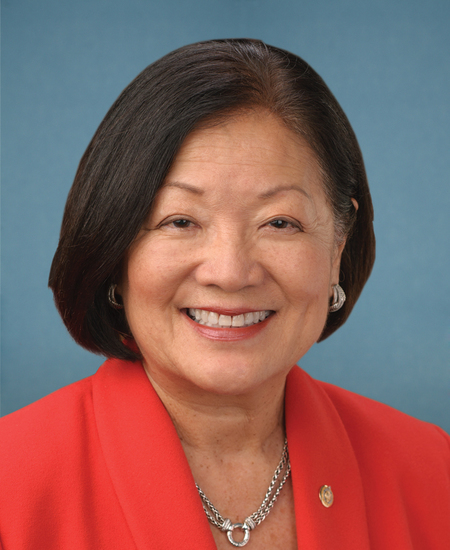
Mazie K. Hirono
Mazie K. Hirono Senate
D
Support
74% 27
Rick Scott
Rick Scott Senate
R
Strong −
19% 27
Ashley Moody
Ashley Moody Senate
R
Oppose
22% 27
Rand Paul
Rand Paul Senate
R
Oppose
22% 27
Brad Knott
Brad Knott House · District 13
R
Oppose
28% 18
Pat Harrigan
Pat Harrigan House · District 10
R
Oppose
28% 18
Showing 2,201–2,210 of 2,910 bills

All healthcare bills

in committee · United States · Senate Mar 11, 2025

S 927: Protecting Pharmacies in Medicaid Act

Protecting Pharmacies in Medicaid Act This bill provides funds beginning in FY2026 for the Centers for Medicare & Medicaid Services to survey retail and non-retail pharmacies (e.g., mail-order pharmacies) to determine average prices of covered outpatient drugs under Medicaid. Pharmacies that fail to participate in the surveys are subject to civil penalties. The bill additionally provides funds for FY2026 for the Office of the Inspector General of the Department of Health and Human Services to study the results of the survey and report accordingly to Congress. The bill also requires pass-through pricing models, and prohibits spread-pricing, for payment arrangements with pharmacy benefit managers under Medicaid.
in committee · United States · Senate Jan 23, 2025

SRES 32: A resolution designating January 23, 2025, as "Maternal Health Awareness Day".

This resolution designates January 23, 2025, as "Maternal Health Awareness Day" to highlight maternal health challenges in the U.S. It focuses on raising public awareness about maternal mortality (with statistics showing 800 annual pregnancy-related deaths) and disparities (such as Black women facing nearly 3x higher mortality rates than White women). The resolution encourages federal, state, tribal, and local entities to take action on improving maternal care and reducing inequities, though it does not create new laws or funding. As a symbolic designation, it has no binding effect but aims to promote existing efforts like maternal mortality reviews and community-based care models.
Sub-Topics Women's Health
in committee · United States · House Sep 16, 2025

HR 5375: Essential Skills and Child Care for Health Professions Act

This bill requires new demonstration projects for health care training programs to provide foundational skills education and affordable child care support. It mandates assessments of adult basic skills, partner networks for pre-training support, and embedded skill maintenance during training. Participants must receive guaranteed child care access through referrals, direct payments to providers, or coverage of fees. The policy affects lower-skilled individuals entering health professions training and takes effect October 1, 2025.
in committee · United States · House Jan 31, 2025

HR 879: Medicare Patient Access and Practice Stabilization Act of 2025

Medicare Patient Access and Practice Stabilization Act of 2025 This bill increases certain payment adjustments under the Medicare physician fee schedule for services furnished between April 1, 2025, and January 1, 2026.
Sub-Topics Medicare
in committee · United States · Senate Apr 1, 2025

S 1232: Workplace Violence Prevention for Health Care and Social Service Workers Act

This bill requires health care and social service employers to develop and implement workplace violence prevention plans for their employees. The plans must include risk assessments, hazard prevention measures, incident reporting procedures, and annual evaluations. Employers must provide specific training to employees, maintain incident records for 5 years, and protect employees from retaliation for reporting violence. The bill applies to hospitals, residential treatment facilities, clinics, and other covered facilities that provide health care or social services. It establishes specific definitions for types of workplace violence and requires employers to follow detailed safety protocols.
Sub-Topics Workplace Safety
in committee · United States · House May 7, 2025

HR 3262: NURSE Act

HR 3262, the NURSE Act, creates a federal grant program to help schools hire more registered school nurses, primarily targeting public elementary and secondary schools serving high-need communities. The bill prioritizes schools where at least 20% of students qualify for free/reduced-price lunches (indicating high poverty) or lack any nurse, with federal funds covering up to 75% of costs for hiring nurses. Eligible schools or consortia must demonstrate student health needs, such as chronic conditions or mental health support, and the program requires a report to Congress evaluating impacts on nurse staffing and student health outcomes. The grant program is authorized for fiscal years 2026-2030, aiming to address the current shortage where one-third of schools lack a school nurse.
in committee · United States · House Apr 24, 2025

HR 3022: Restoring Rights of Physicians to Own Hospitals Act

This bill repeals restrictions that previously prevented physicians from owning hospitals, particularly in rural areas. It amends Section 1877 of the Social Security Act to remove specific ownership prohibitions and exceptions related to rural hospitals. The key change allows physicians to directly own or invest in hospitals without needing special qualifying exceptions. This directly affects physicians seeking to own rural hospitals and rural hospitals that previously faced ownership barriers. The bill makes a concrete policy change by removing these legal barriers to physician ownership.
in committee · United States · Senate May 21, 2025

S 1843: Second Chance Reauthorization Act of 2025

S 1843, the Second Chance Reauthorization Act of 2025, extends funding for existing federal reentry programs through 2030 instead of 2023. It updates timeframes across multiple programs, including state reentry demonstration projects (adding substance use disorder treatment and housing services), family-based substance abuse grants, prison education evaluations, career training for incarcerated individuals, and community mentoring programs. These programs directly support people returning from incarceration by providing critical services like recovery support, job training, and transitional housing. The bill makes no new policy changes but continues current federal funding mechanisms for reentry assistance.
in committee · United States · Senate May 5, 2025

S 1598: BABIES Act

The BABIES Act (S 1598) creates two main programs to expand access to independent birth centers. First, it provides grants of $300,000-$500,000 per year to up to 15 accredited birth centers in underserved areas (e.g., maternity care shortage zones) for facility upgrades, equipment, or accreditation costs ($5 million total over 2026-2030). Second, it launches a Medicaid demonstration program testing new payment models for birth centers serving low-risk pregnant women enrolled in Medicaid, requiring centers to meet strict accreditation, licensure, and care coordination standards. This directly affects birth centers seeking expansion, Medicaid recipients in underserved communities, and states developing payment systems for birth center services.
in committee · United States · Senate Jul 24, 2025

S 2447: Repealing the Trump Sick Tax Act

This bill repeals two specific provisions from the 2023 "Trump Sick Tax Act" (Public Law 119-21) that affected Medicaid and drug pricing. It restores previous Medicaid cost-sharing rules under Title XIX of the Social Security Act and reverts changes to orphan drug exclusions under the Drug Price Negotiation Program (Title XI). These changes directly affect Medicaid beneficiaries and pharmaceutical manufacturers by returning to the pre-2023 policy framework for cost-sharing and drug pricing negotiations. The bill does not create new programs but reverses specific cost-related provisions enacted in 2023.
Showing 2,201 to 2,210 of 2,910 bills