Issue · Healthcare

Healthcare

Every healthcare bill, vote, and legislator stance in United States, automatically classified by Maddy, our AI policy reader.

Total bills
2,910
119th Congress
Top supporter
Darline Graham
82% support rate
Top opponent
Rick Scott
19% support rate
Ranked legislators
10
5 support · 5 oppose
Key legislators

Who's moving healthcare in United States

Legislators moving healthcare in United States
Legislator Party Stance Support rate Decisive votes
Darline Graham
Darline Graham Senate
R
Strong +
82% 11
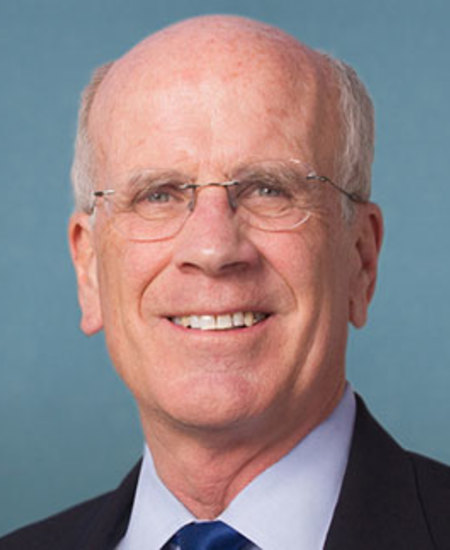
Peter Welch
Peter Welch Senate
D
Strong +
81% 27
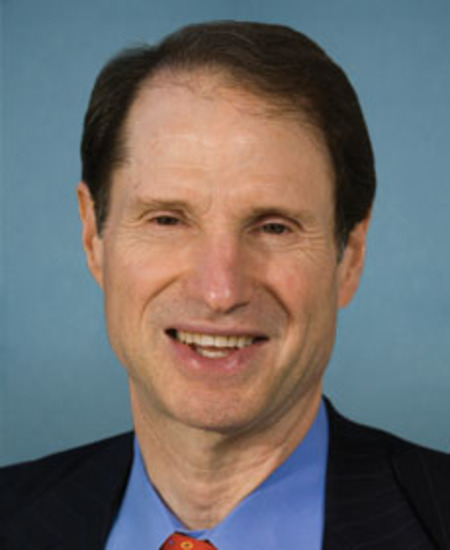
Ron Wyden
Ron Wyden Senate
D
Support
78% 27
Alex Padilla
Alex Padilla Senate
D
Support
77% 26
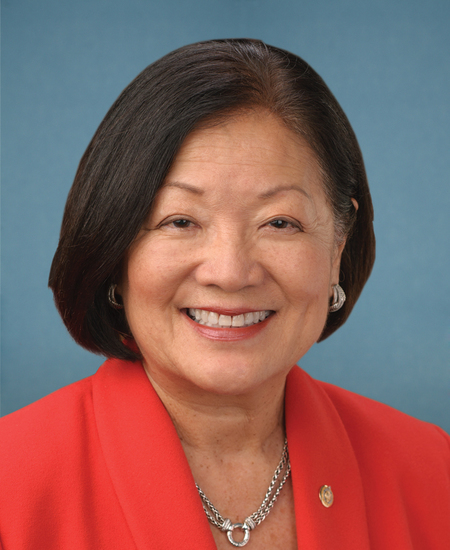
Mazie K. Hirono
Mazie K. Hirono Senate
D
Support
74% 27
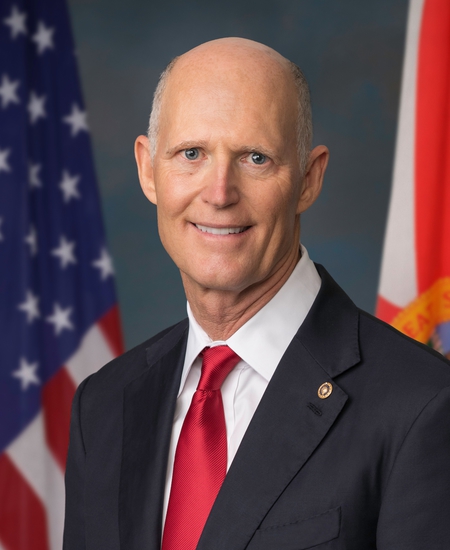
Rick Scott
Rick Scott Senate
R
Strong −
19% 27
Ashley Moody
Ashley Moody Senate
R
Oppose
22% 27
Rand Paul
Rand Paul Senate
R
Oppose
22% 27
Brad Knott
Brad Knott House · District 13
R
Oppose
28% 18
Pat Harrigan
Pat Harrigan House · District 10
R
Oppose
28% 18
Showing 2,071–2,080 of 2,910 bills

All healthcare bills

in committee · United States · Senate May 7, 2025

S 1656: Vieques Recovery and Redevelopment Act

S 1656 establishes a compensation program for Vieques residents (in Puerto Rico) who developed specific illnesses - like cancer, diabetes, or heavy metal poisoning - due to 60+ years of U.S. military activity on the island. It awards $50,000 to $110,000 per qualifying illness based on the number of diseases, processed by a Special Master appointed by the Attorney General. The bill also mandates funding to build a new level-3 trauma medical facility with cancer and renal care, including interim services like air transport and telemedicine until the facility opens. All compensation and facility costs are capped at $1 billion, with claims needing to be filed within 15 years of the bill’s enactment.
in committee · United States · House Jun 3, 2025

HRES 465: Expressing the sense of the House of Representatives that the Congress should enact the Older Americans Bill of Rights to establish that older Americans should have the right to live with dignity and with independence.

HRES 465 is a resolution expressing the House of Representatives' support for Congress to enact the Older Americans Bill of Rights. It calls for future legislation establishing specific rights for older Americans, including access to dignified healthcare (like affordable prescriptions and caregiver support), financial security (such as strengthened Social Security), and community participation (like accessible housing and voting). The resolution itself does not create new laws but urges Congress to draft such a bill. It directly addresses older Americans, particularly those facing poverty, health disparities, or isolation, based on cited statistics about their challenges.
Sub-Topics Long-Term Care Tags Seniors
in committee · United States · House Jan 8, 2026

HR 6974: Improving MA SNP Act of 2026

HR 6974 amends Medicare accreditation rules for Special Needs Plans (SNPs) serving individuals with disabilities or chronic conditions. Starting in 2026, these plans may use any private accrediting organization approved by the Secretary of Health and Human Services, replacing the current requirement for exclusive NCQA approval. This change directly affects SNP providers who must now meet updated accreditation standards under the new framework. The bill focuses on expanding certification options while maintaining federal oversight through the Secretary’s approval process.
Sub-Topics Medicare
in committee · United States · House Mar 5, 2025

HR 1843: To amend the Federal Food, Drug, and Cosmetic Act to increase transparency in generic drug applications.

This bill requires the FDA to disclose whether a generic drug's inactive ingredients match those in the brand-name reference drug. It mandates that, upon request from a generic drug applicant, the FDA must confirm if the drugs are "qualitatively and quantitatively the same" in inactive ingredients or specify which ingredients differ and by how much. The policy directly affects generic drug manufacturers seeking FDA approval for their products. This change increases transparency in the drug approval process by providing clear, specific information to applicants about ingredient equivalence.
Sub-Topics Prescription Drugs
in committee · United States · Senate Mar 11, 2026

S 1552: Living Donor Protection Act of 2025

Living Donor Protection Act of 2025 This bill prohibits life insurance, disability insurance, and long-term insurance carriers from denying or otherwise restricting coverage for living organ donors. Specifically, carriers may not deny, cancel, vary premiums, or otherwise impose conditions on policies based on an individual's status as a living organ donor. The bill also expressly specifies that recovery from organ-donation surgery constitutes a serious health condition that entitles eligible employees to job-protected medical leave. In addition, the Department of Health and Human Services must update educational materials on living organ donation to include information about the benefits and risks of living organ donation and the impact of donation on insurance access, particularly with respect to the bill's changes.
introduced · United States · Senate Mar 11, 2025

S 924: Further Additional Continuing Appropriations and Other Extensions Act, 2025

Further Additional Continuing Appropriations and Other Extensions Act, 2025 This bill provides continuing FY2025 appropriations for federal agencies through April 11, 2025. It also extends various expiring programs and authorities, including several public health programs. Specifically, the bill provides continuing FY2025 appropriations to federal agencies through the earlier of April 11, 2025, or the enactment of the applicable appropriations act. It is known as a continuing resolution (CR) and prevents a government shutdown that would otherwise occur if the FY2025 appropriations bills have not been enacted when the existing CR expires on March 14, 2025. The CR funds most programs and activities at the FY2024 levels with some exceptions that provide funding flexibility and additional appropriations for various programs. For example, the CR provides additional emergency funding for the Federal Emergency Management Agency's Disaster Relief Fund, permits the Navy to apportion funds at the rate necessary to fund the Columbia-class submarine program and cost increases for certain shipbuilding programs, and provides additional funding for the Office of Navajo and Hopi Relocation. In addition, the bill extends several expiring programs and authorities, including several public health, Medicare, and Medicaid authorities and programs; authorities related to the Commodity Futures Trading Commission whistleblower program; authorities for the Department of Homeland Security and the Department of Justice to take actions to mitigate a credible threat from an unmanned aircraft system; the special assessment on nonindigent persons or entities convicted of certain offenses involving sexual abuse or human trafficking; and the National Cybersecurity Protection System.
in committee · United States · Senate May 21, 2025

S 784: Rural Veterans Transportation to Care Act

This bill expands VA transportation grants to help rural veterans access medical care by modifying existing grant program rules. It adds "rural or highly rural" eligibility criteria, allows grants to fund vehicles meeting ADA requirements (up to $80,000), and explicitly includes county veterans service organizations and tribal organizations as eligible recipients. The bill defines "rural" using USDA's RUCA coding system and removes fixed funding caps, directing the VA to provide "such sums as may be necessary" for these grants. It directly affects rural veterans needing transportation to medical appointments and the local organizations that coordinate their care.
Sub-Topics Veteran Benefits Veteran Healthcare Veteran Mental Health Tags Rural Communities
in committee · United States · Senate Jul 30, 2025

S 800: Precision Brain Health Research Act of 2025

Precision Brain Health Research Act of 2025 This bill expands the Scott Hannon Initiative for Precision Mental Health, a program at the Department of Veterans Affairs (VA). Specifically, the bill expands the scope of the initiative by requiring the identification and validation of brain and mental health biomarkers among veterans for repetitive low-level blast exposure, dementia, and other such brain conditions. Currently, the initiative addresses several other conditions such as depression and post-traumatic stress disorder. The VA must work with the Department of Defense to establish a data-sharing partnership under the initiative. The bill requires the VA to conduct various research studies about repetitive low-level blast exposure under the initiative. The VA must seek to enter into a contract with the National Academies of Sciences, Engineering, and Medicine to work in tandem with the initiative on validation of brain and mental health biomarkers among veterans and report on the findings at least once every two years. The VA must assess all in progress and planned translational research studies under the initiative and report to Congress on the assessment. Additionally, the VA must report to Congress on the initiative at least once every two years and include recommendations for immediate administrative and legislative action to improve the initiative. The bill authorizes the initiative through FY2034.
in committee · United States · House Dec 18, 2025

HR 6863: CAT Act of 2025

HR 6863, the CAT Act of 2025, requires the Centers for Medicare & Medicaid Services (CMS) to provide Medicare and Medicaid providers with greater transparency and due process when payments are suspended due to fraud allegations. The bill limits payment suspensions to 180 days unless "good cause" is shown, mandates CMS to explain the specific fraud allegations and evidence to providers within 30 days, and requires regular updates during suspensions. It also establishes a new appeals process for providers to challenge suspensions within 180 days of the law's enactment and requires annual reports to Congress on suspension statistics. This directly affects healthcare providers whose payments are suspended, aiming to prevent unnecessary financial harm to those acting in good faith.
Sub-Topics Medicaid Medicare
in committee · United States · House Jun 17, 2025

HR 4030: Treatment Continuity Act of 2025

This bill updates federal grant programs to expand access to long-acting injectable medications, lab testing, and counseling for people with substance use disorders or serious mental illness. It requires grant recipients (state/local health agencies) to provide these specific services and train clinicians on medication use. The changes apply to new grants starting after the bill's enactment. Annual reports on program outcomes must also be submitted to Congress.
Showing 2,071 to 2,080 of 2,910 bills