Issue · Healthcare

Healthcare

Every healthcare bill, vote, and legislator stance in United States, automatically classified by Maddy, our AI policy reader.

Total bills
240
119th Congress
Top supporter
Darline Graham
100% support rate
Top opponent
Ashley Moody
18% support rate
Ranked legislators
10
5 support · 5 oppose
Key legislators

Who's moving healthcare in United States

Legislators moving healthcare in United States
Legislator Party Stance Support rate Decisive votes
Darline Graham
Darline Graham Senate
R
Strong +
100% 6
AA
Alan Armstrong Senate
R
Strong +
88% 8
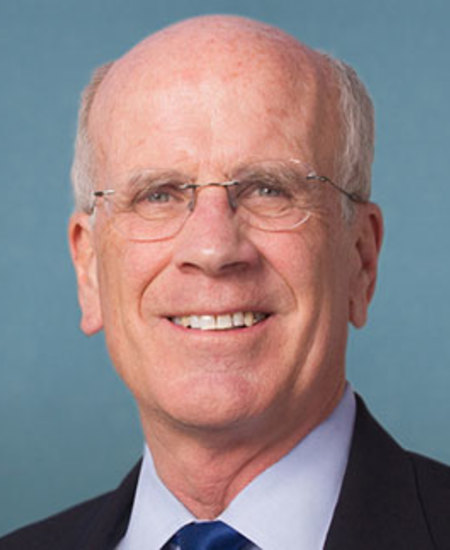
Peter Welch
Peter Welch Senate
D
Strong +
82% 22
Ron Wyden
Ron Wyden Senate
D
Support
77% 22
Alex Padilla
Alex Padilla Senate
D
Support
76% 21
Ashley Moody
Ashley Moody Senate
R
Strong −
18% 22
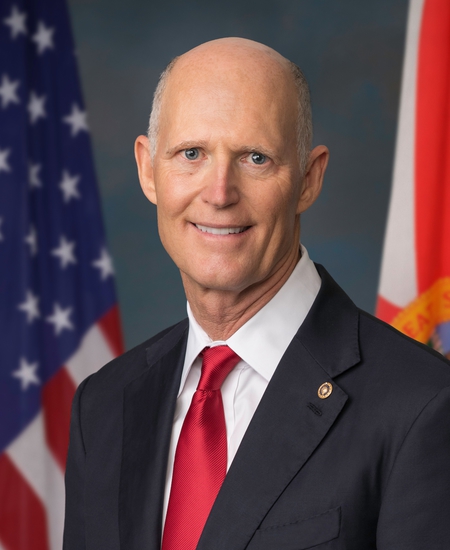
Rick Scott
Rick Scott Senate
R
Strong −
18% 22
Rand Paul
Rand Paul Senate
R
Oppose
23% 22
Brad Knott
Brad Knott House · District 13
R
Oppose
28% 18
Pat Harrigan
Pat Harrigan House · District 10
R
Oppose
28% 18
Showing 131–140 of 240 bills

All healthcare bills

in committee · United States · House Feb 13, 2025

HR 1279: To amend title XIX of the Social Security Act to establish a community engagement requirement for certain individuals under the Medicaid program.

HR 1279 would require certain Medicaid recipients (excluding those under 18, over 65, pregnant, caregivers, or in education/health programs) to complete 80 hours monthly of work, community service, or approved work programs to maintain Medicaid eligibility. This applies to individuals who fail to meet this "community engagement requirement" for three consecutive months, triggering a loss of federal Medicaid funding for that month. States would verify compliance using existing databases (like payroll records) before requesting additional proof. The bill does not change Medicaid eligibility criteria but ties federal funding to this new activity requirement for qualifying individuals.
Sub-Topics Medicaid
in committee · United States · House Aug 12, 2025

HR 4964: Child Interstate Abortion Notification Act

HR 4964, the Child Interstate Abortion Notification Act, requires physicians performing abortions on minors traveling across state lines to provide 24 hours of actual or constructive notice to the minor's parent before the procedure. It directly affects minors (under 18) seeking abortions in a state different from their residence, their parents, and healthcare providers. Key provisions mandate parental notification unless exceptions apply - such as medical emergencies, court waivers, verified abuse disclosures, or the minor being accompanied by a documented parent. The law aims to ensure compliance with parental involvement requirements in the minor’s home state, with penalties for noncompliance including fines or imprisonment for physicians.
Sub-Topics Women's Health
in committee · United States · House Jan 23, 2025

HR 679: To nullify the modifications made by the Food and Drug Administration in January 2023 to the risk evaluation and mitigation strategy for the abortion pill mifepristone, and for other purposes.

HR 679 nullifies specific changes the Food and Drug Administration (FDA) made in January 2023 to the safety rules (REMS) for the abortion pill mifepristone. The bill prohibits the FDA from implementing any future safety rules for mifepristone that are substantially similar to the nullified changes. This directly affects the FDA's regulatory authority over mifepristone, which could impact how healthcare providers prescribe the medication and how patients access it. The bill focuses solely on reversing the FDA's 2023 modifications without altering the drug's broader approval status.
in committee · United States · House May 9, 2025

HR 3321: Ending Medicaid Discrimination Against the Most Vulnerable Act

This bill phases out enhanced federal funding for Medicaid in states that expanded coverage under the Affordable Care Act. It gradually reduces the federal share of Medicaid costs for states that expanded coverage, decreasing the percentage each year from 2027 through 2034 before returning to standard funding levels after 2035. The change directly affects low-income residents in expansion states who rely on Medicaid, as states will pay more for their coverage over time. Non-expansion states (those that haven't expanded Medicaid) are exempt from these reductions, and expansion states can choose to limit coverage to individuals at or below 100% of the federal poverty line to maintain the higher federal funding rate.
Sub-Topics Medicaid
in committee · United States · House Jan 23, 2026

HR 7237: Chemical Abortion Risk Awareness Act

This bill requires providers receiving federal funds to provide detailed, FDA-approved drug warnings about chemical abortions to patients at least 24 hours before the procedure. It mandates that providers highlight warnings and adverse reactions from the drug label, read them to patients, and obtain written confirmation. Non-compliant providers risk losing federal funding, and patients can sue for damages if providers fail to follow these requirements. The law specifically excludes medical emergencies like ectopic pregnancies or miscarriage treatment from its definition of "chemical abortion."
Sub-Topics Women's Health
in committee · United States · House Jun 26, 2025

HR 4209: No Medicaid for Illegals Act

HR 4209, the "No Medicaid for Illegals Act," would prohibit federal Medicaid and CHIP funding for individuals without verified U.S. citizenship, nationality, or immigration status. It removes the current requirement for states to provide medical coverage while individuals verify their status, meaning states are no longer obligated to cover such individuals during verification periods. States may choose to continue coverage during these periods by electing an optional provision. The bill affects all states administering Medicaid and CHIP programs and would take effect upon enactment.
in committee · United States · House Jul 21, 2026

HR 6213: Heat Workforce Standards Act of 2025

HR 6213, the Heat Workforce Standards Act of 2025, prohibits the U.S. Department of Labor from finalizing, implementing, or enforcing OSHA's proposed "Heat Injury and Illness Prevention" standard (published August 30, 2024). This bill directly blocks the specific regulatory proposal targeting heat safety in both outdoor and indoor work settings. It does not create new requirements or affect workers; it solely prevents the implementation of the existing OSHA proposal. The bill is procedural, focusing on halting a regulatory action rather than establishing new policy.
in committee · United States · House Jan 27, 2026

HJRES 144: Providing for congressional disapproval under chapter 8 of title 5, United States Code, of the rule submitted by the Department of Veterans Affairs relating to "Reproductive Health Services".

HJRES 144 is a congressional disapproval resolution targeting a specific rule issued by the Department of Veterans Affairs (VA) on December 31, 2025, which addressed "Reproductive Health Services" (90 Fed. Reg. 61310). This resolution directs Congress to disapprove the VA rule under Chapter 8 of Title 5, U.S. Code, meaning the rule would have no legal effect if passed. The bill directly affects the VA's implementation of reproductive health services for veterans, as it seeks to nullify the agency's existing policy. This is a procedural measure, not a substantive policy change, aimed solely at blocking the VA's rule through congressional action.
in committee · United States · Senate Mar 4, 2025

S 832: EPIC Act of 2025

The EPIC Act of 2025 extends the required time period for negotiating drug prices under the federal program for biologic drugs. It changes the rule so that biologic drug manufacturers must wait at least 11 years after FDA approval before their drug can be included in price negotiations, starting with the 2028 initial price applicability year. This specifically affects biologic drug manufacturers, as the change applies only to biologics (not small-molecule drugs, which already have different rules). The bill modifies Section 1192(e)(1)(A)(ii) of the Social Security Act to implement this longer waiting period. This is a concrete policy change to the timing of drug price negotiations, not a new program or broader policy shift.
in committee · United States · House Dec 9, 2025

HR 6509: SAFE Drugs Act of 2025

HR 6509, the SAFE Drugs Act of 2025, limits how often pharmacies and healthcare providers can create custom drug formulations that copy standard medications. It restricts compounding any drug essentially identical to a commercially available product to no more than 20 times per month for individual patients. The bill also requires pharmacies compounding such drugs for out-of-state patients more than 20 times monthly to report details to the FDA, while exempting hospital pharmacies. These changes aim to improve safety oversight of non-standard drug compounding by setting clear limits and reporting rules.
Showing 131 to 140 of 240 bills
Previous 1 … 13 14 15 … 24 Next