Issue · Healthcare

Healthcare (Medicare)

Every healthcare bill, vote, and legislator stance in United States, automatically classified by Maddy, our AI policy reader.

Total bills
591
119th Congress
Top supporter
Christopher Murphy
88% support rate
Top opponent
Bill Hagerty
12% support rate
Ranked legislators
10
5 support · 5 oppose
Key legislators

Who's moving medicare in United States

Legislators moving medicare in United States
Legislator Party Stance Support rate Decisive votes
Christopher Murphy
Christopher Murphy Senate
D
Strong +
88% 8
Adam B. Schiff
Adam B. Schiff Senate
D
Support
78% 9
Alex Padilla
Alex Padilla Senate
D
Support
78% 9
Amy Klobuchar
Amy Klobuchar Senate
D
Support
78% 9
Andy Kim
Andy Kim Senate
D
Support
78% 9
Bill Hagerty
Bill Hagerty Senate
R
Strong −
12% 8
Mitch McConnell
Mitch McConnell Senate
R
Strong −
12% 8
Roger F. Wicker
Roger F. Wicker Senate
R
Strong −
12% 8
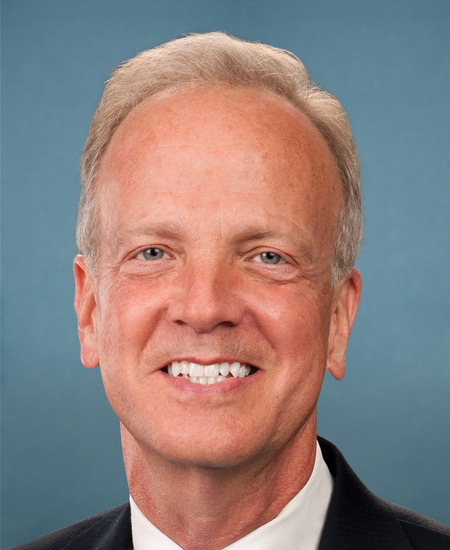
Jerry Moran
Jerry Moran Senate
R
Strong −
14% 7
Ashley Moody
Ashley Moody Senate
R
Oppose
22% 9
Showing 121–130 of 591 bills

All healthcare bills

in committee · United States · House Apr 15, 2026

HR 8293: Abolish the CMMI Act

This bill, titled the "Abolish the CMMI Act," would eliminate the Center for Medicare and Medicaid Innovation (CMMI). The CMMI is responsible for developing and testing new healthcare payment and service delivery models for Medicare and Medicaid programs. Its abolition would directly affect Medicare and Medicaid beneficiaries and healthcare providers who participate in or are impacted by these innovative models. The bill achieves this by repealing Section 1115A of the Social Security Act, which established the CMMI.
Sub-Topics Medicaid Medicare
in committee · United States · House Apr 15, 2026

HR 8310: Patient Safety and Whistleblower Protections Act

The Patient Safety and Whistleblower Protections Act aims to protect healthcare practitioners from retaliation by healthcare facilities when they report patient safety concerns. The bill prohibits facilities from taking adverse employment actions against practitioners who communicate issues such as quality of care, staffing, or equipment sufficiency to supervisors, state authorities, government officials, or, after 90 days, the news media. It allows practitioners to file individual or class action lawsuits for retaliation, seeking actual damages, attorney's fees, and punitive damages. Additionally, the bill voids contractual provisions that restrict reporting patient safety concerns and requires Medicare-participating facilities to establish anonymous reporting mechanisms and investigation processes.
Sub-Topics Medicare
in committee · United States · House Apr 16, 2026

HR 8319: KIDNEY Remote Monitoring Act

The KIDNEY Remote Monitoring Act (H.R. 8319) aims to ensure Medicare payment for remote physiologic monitoring services provided to individuals with end-stage renal disease (ESRD) who receive home dialysis. The bill amends the Social Security Act to direct that these monitoring services, when furnished by a physician, will be paid for under Medicare Part B. This change would take effect for services provided on or after January 1, 2028, aligning their payment with the standard fee schedule for physician services.
Sub-Topics Medicare Telehealth
in committee · United States · House Apr 14, 2026

HR 8260: Cardiovascular Disease Early Detection and Prevention Act of 2026

The Cardiovascular Disease Early Detection and Prevention Act of 2026 mandates that private health insurance plans, Medicare, and Medicaid cover specific cardiovascular disease screenings. The bill requires coverage for testing of lipoprotein(a) (Lp(a)) and apolipoprotein B (ApoB) levels. This coverage applies to individuals with a family history of premature cardiovascular disease, a personal history of heart attack or stroke, elevated LDL cholesterol, diabetes, obesity, or other recognized cardiovascular risk factors. For eligible individuals, these tests must be provided without any cost sharing, such as co-pays or deductibles.
in committee · United States · House Apr 20, 2026

HR 8391: To amend titles XVIII and XIX of the Social Security Act to require coverage of certain food and nutrition services under the Medicare and Medicaid programs.

This bill, HR 8391, proposes to expand the types of services covered under the Medicare and Medicaid programs. It directly affects Medicare beneficiaries and Medicaid recipients by requiring coverage for certain food and nutrition services. Under Medicare, these services would be covered, with Medicare paying 80% of the actual charge. For Medicaid, these services would also be covered and become a mandatory benefit that states must provide. The Secretary of Health and Human Services will specify the exact requirements for these services, and the changes would take effect 180 days after the bill's enactment.
Sub-Topics Medicaid Medicare
in committee · United States · House Apr 20, 2026

HR 8377: Stop Deadly Denials Act of 2026

This bill, the "Stop Deadly Denials Act of 2026," aims to significantly restrict prior authorization requirements for Medicare beneficiaries. It prohibits Medicare Advantage plans from imposing prior authorization for most medical services and items starting January 1, 2027, with non-compliant plans facing potential sanctions. For traditional Medicare, the bill blocks a specific prior authorization pilot program and limits future models from implementing prior authorization if they use artificial intelligence for denials without individual physician review or do not use Medicare administrative contractors for processing. Additionally, it requires public notice and comment for all future Medicare innovation models.
Sub-Topics Medicare
in committee · United States · House Apr 20, 2026

HR 8386: RECOVER Act of 2026

The RECOVER Act of 2026 seeks to eliminate a specific payment reduction under the Medicare program, directly affecting Medicare beneficiaries who receive multiple therapy services and the providers who furnish them. Currently, Medicare applies a 50% payment reduction when certain multiple therapy services are provided to a beneficiary on the same day. This bill amends existing law to eliminate that 50% reduction, changing it to 0 percent. This change applies to therapy services billed under the physician fee schedule, as well as outpatient and comprehensive outpatient rehabilitation services, and will take effect for services furnished on or after January 1, 2027.
Sub-Topics Medicare
in committee · United States · House Apr 14, 2026

HR 8261: Chronic Care Management Improvement Act of 2026

HR 8261, the Chronic Care Management Improvement Act of 2026, aims to reduce healthcare costs for Medicare Part B beneficiaries receiving chronic care management services. Effective January 1, 2027, the bill mandates that Medicare will cover 100% of the cost for these specific services. This means individuals will no longer be responsible for any copayments or deductibles for chronic care management. The change directly affects Medicare Part B enrollees who utilize these services, making them more affordable by eliminating out-of-pocket costs.
Sub-Topics Medicare Telehealth
in committee · United States · House Apr 16, 2026

HR 8355: Accountable Produce is Medicine Act of 2026

The "Accountable Produce is Medicine Act of 2026" mandates the creation of a new pilot program within the Center for Medicare and Medicaid Innovation. This program requires selected healthcare providers to offer a comprehensive set of "Accountable Produce is Medicine services" to eligible Medicare, Medicaid, and CHIP beneficiaries. These services, provided without patient cost-sharing, include healthy foods (like fruits and vegetables), nutrition counseling, care coordination, and remote monitoring for individuals with specific chronic diseases in underserved areas. Participating programs will screen patients, deliver these services for a year, and track health data to evaluate outcomes and cost savings over a period of at least five years.
in committee · United States · House Apr 14, 2026

HR 8271: ICU Bed Act of 2026

The ICU Bed Act of 2026 mandates that hospitals, critical access hospitals, and rural emergency hospitals participating in Medicare report their intensive care unit (ICU) bed availability in real time. To achieve this, these facilities must participate in shared regional data systems and develop shared strategies for efficiently transferring patients when any hospital approaches ICU capacity. The Secretary of Health and Human Services will establish these regions based on factors like geography, population, and travel time between facilities. Additionally, the bill amends the Public Health Service Act to include efficient patient transfer activities in state and regional hospital preparedness efforts, extending funding for these activities through fiscal year 2031.
Showing 121 to 130 of 591 bills
Previous 1 … 12 13 14 … 60 Next