Issue · Healthcare

Healthcare (Women's Health)

Every healthcare bill, vote, and legislator stance in United States, automatically classified by Maddy, our AI policy reader.

Total bills
223
119th Congress
Top supporter
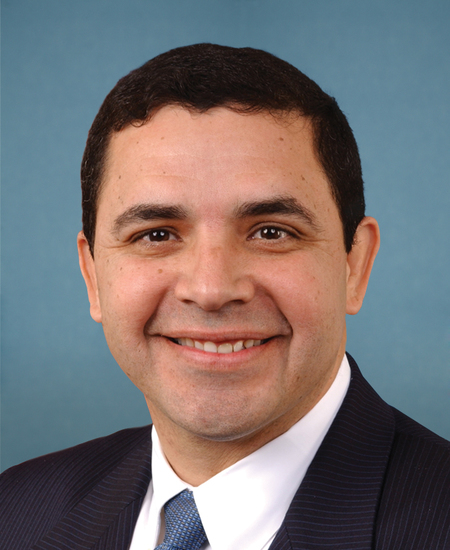
Henry Cuellar
100% support rate
Top opponent
John Garamendi
33% support rate
Ranked legislators
6
5 support · 1 oppose
Key legislators

Who's moving women's health in United States

Legislators moving women's health in United States
Legislator Party Stance Support rate Decisive votes
Henry Cuellar
Henry Cuellar House · District 28
D
Strong +
100% 4
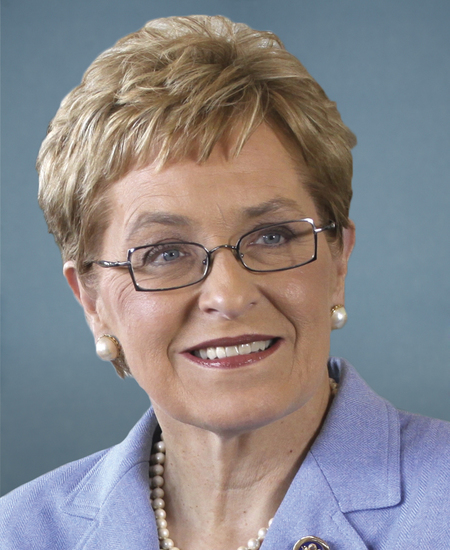
Marcy Kaptur
Marcy Kaptur House · District 9
D
Support
67% 3
Mike Haridopolos
Mike Haridopolos House · District 8
R
Support
67% 3
Aaron Bean
Aaron Bean House · District 4
R
Mixed
50% 4
Abraham J. Hamadeh
Abraham J. Hamadeh House · District 8
R
Mixed
50% 4
John Garamendi
John Garamendi House · District 8
D
Oppose
33% 3
Showing 121–130 of 223 bills

All healthcare bills

in committee · United States · House Aug 15, 2025

HR 4977: Connected MOM Act

HR 4977, the Connected MOM Act, requires the U.S. Department of Health and Human Services (HHS) to study Medicaid coverage of remote health monitoring devices (like blood pressure cuffs and pulse oximeters) for pregnant and postpartum women. Within 18 months of enactment, HHS must report to Congress on current state practices, barriers to coverage, and how these affect maternal and child health outcomes. Six months after the report, HHS must update state Medicaid resources, such as telehealth toolkits, to align with the report's recommendations. The bill directly affects pregnant and postpartum women enrolled in state Medicaid programs by aiming to improve access to these monitoring tools. It does not change Medicaid rules immediately but sets a process for future policy adjustments based on the findings.
in committee · United States · House Dec 3, 2025

HR 6394: Midwives for MOMS Act of 2025

HR 6394, the Midwives for MOMS Act of 2025, provides federal grants to fund midwifery education programs at accredited colleges and universities. It allocates $15 million annually for general midwifery schools (50% for student support, 25% for program expansion, 25% for clinical supervisors) and $20 million annually for nurse-midwifery programs with similar funding splits. Priority is given to institutions serving rural areas, economically disadvantaged communities, and health professional shortage areas. The bill directly affects midwifery and nurse-midwifery education programs, excluding those within nursing schools, to expand training capacity.
in committee · United States · House Dec 4, 2025

HR 6468: Rural Residency Planning and Development Act of 2025

This bill creates two federal grant programs to support medical residency training in rural areas. The first program provides grants to eligible organizations (like rural hospitals, health centers, and medical schools) to establish or expand residency programs where doctors train in rural settings for over half their residency time, focusing on primary care, high-need specialties, or maternal health. The second program funds technical assistance grants to help these organizations apply for and run the training programs. The bill authorizes $12.7 million annually from 2026 to 2030, with grants for the training programs lasting up to 3 years and technical assistance grants up to 4 years.
Sub-Topics Hospitals Primary Care Women's Health Tags Rural Communities
in committee · United States · House Feb 12, 2025

HR 1254: Rural Obstetrics Readiness Act

Rural Obstetrics Readiness Act This bill creates and expands federal grant programs within the Health Resources and Services Administration (HRSA) to increase capacity to provide emergency obstetric health services in rural areas or areas without practitioners or facilities specializing in obstetric services.  Specifically, HRSA must establish a program for providing grants to certain hospitals or consortiums that include hospitals in rural areas or areas with maternal health care professional shortages for training, developing a workforce, and purchasing equipment relating to obstetric emergencies. In addition, the bill requires HRSA’s Alliance for Innovation on Maternal Health Capacity program to provide grants for training on emergency obstetric services for practitioners in rural health care facilities without dedicated obstetric units. HRSA must also establish a pilot program to provide grants to government entities for developing or improving telehealth access programs to support urgent maternal health care in rural facilities without a dedicated obstetric unit.
in committee · United States · House Jun 24, 2025

HR 4099: Ensuring Women’s Right to Reproductive Freedom Act

This bill prohibits state officials from blocking abortion access for patients traveling from other states, including restricting providers who offer legal abortions in their state to out-of-state patients. It protects people traveling across state lines for legal abortions, those assisting such travel, and the interstate transport of FDA-approved abortion medication. Violations can be challenged by the Justice Department or affected individuals through civil lawsuits seeking injunctions and damages. The law applies broadly across all states, territories, and tribal nations, defining "abortion service" to include both medical procedures and related care.
Sub-Topics Women's Health
in committee · United States · House Oct 24, 2025

HR 5828: Dads Matter Act of 2025

HR 5828, the Dads Matter Act of 2025, requires the Health and Human Services Department to launch a public awareness campaign about fathers' roles in pregnancy and postpartum care, and to issue guidance to states on training healthcare providers (like hospitals and doctors) to better include fathers. The bill aims to improve maternal and infant health outcomes by encouraging providers to discuss topics such as father involvement in prenatal visits, skin-to-skin contact, breastfeeding support, and recognizing maternal health risks. It directs HHS to provide resources countering narratives that minimize fathers' roles and to address cultural barriers to father engagement. A government study will later assess the bill's effectiveness after six years.
in committee · United States · House Nov 20, 2025

HR 6242: Healthy MOM Act

The Healthy MOM Act (HR 6242) would require health insurance plans to provide a special enrollment period for pregnant individuals beginning when pregnancy is reported to the insurer. It mandates that group health plans and health insurance issuers cover maternity care, including childbirth and postpartum care, for all dependents regardless of age. The bill would extend Medicaid coverage for pregnant individuals and infants to 12 months postpartum (instead of ending at 60 days postpartum) and make this 12-month coverage permanent. These provisions would directly affect pregnant individuals, women with dependent children who are pregnant, and health insurance plans and Medicaid programs.
in committee · United States · House Dec 4, 2025

HR 6466: Forced Abortion Prevention and Accountability Act

HR 6466, the Forced Abortion Prevention and Accountability Act, prohibits non-consensual administration of abortion drugs (like mifepristone or misoprostol) to pregnant women without their informed consent. It criminalizes this act with penalties up to 25 years in prison and allows victims to sue for triple damages, psychological/physical injury compensation, and attorney fees. The bill directly affects pregnant women who might face coerced procedures and medical providers or others who administer such drugs without consent. Key provisions include criminal penalties for the act itself, enhanced penalties for serious injury or death, and a civil remedy framework for victims seeking compensation.
Sub-Topics Women's Health
in committee · United States · House Mar 18, 2025

HRES 231: Recognizing the longstanding and invaluable contributions of Black midwives to maternal and infant health in the United States.

HRES 231 (introduced March 18, 2025) is a symbolic resolution designating March 14, 2025, as "Black Midwives Day" to honor Black midwives' historical and ongoing role in improving maternal and infant health. It recognizes how Black midwives provide culturally competent care that addresses racial disparities in maternal outcomes, particularly in communities facing maternity care deserts. The resolution does not create new laws but calls for federal, state, and local governments to support initiatives expanding access to Black midwives and removing barriers to their practice. It highlights that Black birthing people face significantly higher maternal mortality rates (50.3 deaths per 100,000 live births in 2023) compared to other groups, often due to systemic inequities. The resolution emphasizes the need for policies promoting midwifery care as part of equitable maternal health solutions.
in committee · United States · House Jul 23, 2025

HR 4664: Stop Shackling and Detaining Pregnant Women Act

This bill would prohibit the detention of pregnant women, lactating women, and postpartum mothers (within one year of childbirth) in immigration custody, requiring their immediate release except in rare circumstances involving public safety threats. It bans the use of physical restraints on these individuals during pregnancy, labor, delivery, and postpartum recovery, with only extremely limited exceptions. The bill mandates that facilities provide comprehensive reproductive health care including prenatal care, labor and delivery services, postpartum care, and access to abortion services. It requires facilities to maintain medical records, obtain informed consent for medical procedures, and conduct weekly reviews of any detained individuals under exceptional circumstances. The bill also establishes reporting requirements for facilities and creates transparency through public reporting of detention practices.
Showing 121 to 130 of 223 bills
Previous 1 … 12 13 14 … 23 Next