Issue · Healthcare

Healthcare

Every healthcare bill, vote, and legislator stance in United States, automatically classified by Maddy, our AI policy reader.

Total bills
2,988
119th Congress
Top supporter
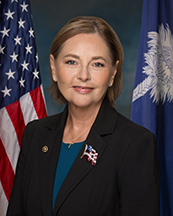
Darline Graham
82% support rate
Top opponent
Rick Scott
19% support rate
Ranked legislators
10
5 support · 5 oppose
Key legislators

Who's moving healthcare in United States

Legislators moving healthcare in United States
Legislator Party Stance Support rate Decisive votes
Darline Graham
Darline Graham Senate
R
Strong +
82% 11
Peter Welch
Peter Welch Senate
D
Strong +
81% 27
Ron Wyden
Ron Wyden Senate
D
Support
78% 27
Alex Padilla
Alex Padilla Senate
D
Support
77% 26
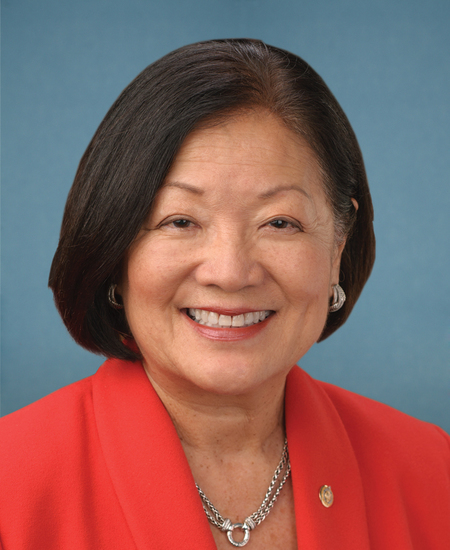
Mazie K. Hirono
Mazie K. Hirono Senate
D
Support
74% 27
Rick Scott
Rick Scott Senate
R
Strong −
19% 27
Ashley Moody
Ashley Moody Senate
R
Oppose
22% 27
Rand Paul
Rand Paul Senate
R
Oppose
22% 27
Brad Knott
Brad Knott House · District 13
R
Oppose
28% 18
Pat Harrigan
Pat Harrigan House · District 10
R
Oppose
28% 18
Showing 1,191–1,200 of 2,988 bills

All healthcare bills

in committee · United States · House Feb 18, 2025

HR 1397: Increasing Access to Dental Insurance Act

Increasing Access to Dental Insurance Act This bill permits individuals to enroll in a dental benefits plan on a health insurance exchange without also enrolling in a qualified health plan.
Sub-Topics Insurance
in committee · United States · House Jan 16, 2025

HR 541: To require the Department of Defense to share best practices with, and offer training to, State and local first responders regarding how to most effectively aid victims who experience trauma-related injuries.

HR 541 requires the U.S. Department of Defense to share best practices and provide training to state and local first responders (such as police, firefighters, and EMTs) on effectively aiding victims with trauma-related injuries. The bill directly affects first responders who handle emergency medical situations involving trauma. Its key mechanism mandates the Department of Defense to develop and deliver this training program. The goal is to improve on-the-ground support for trauma victims during emergencies, without altering existing medical protocols or funding.
Tags Emergency Management Public Safety
in committee · United States · House Feb 12, 2025

HR 1257: OPIOIDS Act

HR 1257, the OPIOIDS Act, provides federal grants to states, localities, and law enforcement agencies to improve data collection and response to opioid overdoses. It directly affects state/local governments, law enforcement, forensic labs, and medical examiners by funding training, equipment, and standardized data reporting. Key provisions include requiring grant recipients to submit overdose data to the National Forensic Laboratory Information System, mandating the DEA to develop uniform reporting standards for drug data, and adding fentanyl containment training for first responders through COPS grants. The bill focuses on enhancing data accuracy and coordination across agencies rather than directly changing drug policies or treatment access.
Sub-Topics Substance Abuse
in committee · United States · Senate Feb 11, 2025

S 520: Supporting the Abused by Learning Options to Navigate Survivor Stories Act

This bill requires states that mandate licensing training for cosmetologists and barbers to add free, state-approved domestic violence training for license seekers. The training teaches professionals to recognize abuse signs, respond appropriately, and refer clients to victim resources - optionally including sexual assault, stalking, and dating violence. States meeting this requirement can receive up to a 10% grant increase for domestic violence programs, with grants renewable for up to three years. The bill authorizes $5 million annually (2027-2033) to fund these grants, directly affecting cosmetology/barber license applicants and domestic violence service providers.
passed · United States · House Dec 2, 2025

HR 1262: Mikaela Naylon Give Kids a Chance Act

Give Kids a Chance Act of 2025 This bill expands the Food and Drug Administration’s (FDA’s) authority with respect to research on rare pediatric diseases, including by permitting the FDA to take enforcement action against drug sponsors that fail to satisfy pediatric study requirements and by reauthorizing programs that support pediatric research.  Specifically, the bill modifies requirements relating to molecularly targeted pediatric cancer investigations to permit research on new drugs in combination with active ingredients that have already been approved, provided certain conditions are met; permits the FDA to take enforcement action against drug sponsors that fail to comply with pediatric study requirements, if such sponsors demonstrated a lack of due diligence in satisfying the requirement; renews the FDA’s authority to award priority review vouchers to sponsors of new products intended to treat rare pediatric diseases through September 30, 2029; and reauthorizes through FY2027 certain funding for the National Institutes of Health to support priority pediatric research.  The bill also provides statutory authority for the FDA’s interpretation of the orphan drug exclusivity period. The bill specifies, consistent with FDA regulations, that the seven-year market exclusivity period for drugs for rare diseases or conditions (i.e., orphan drugs) prohibits the approval of the same drug for the same approved use or indication with respect to the disease or condition. (In Catalyst Pharmaceuticals, Inc. v. Becerra , a court rejected the FDA’s interpretation and held that orphan drug exclusivity extends to all uses or indications for the disease or condition.)
Sub-Topics Children's Health
in committee · United States · House Sep 16, 2025

HR 5372: DEMO Act

HR 5372, the DEMO Act, creates federal grants to fund 3-year demonstration projects helping low-income individuals (under 138% of the federal poverty level) with arrest or conviction records enter health professions careers. The bill requires participating states to have policies allowing health credentials despite records and mandates projects to provide legal assistance, job training, and post-employment support. Grants require applicants to demonstrate partnerships with organizations experienced in supporting people with criminal records and to target high-demand, well-paying health jobs. The legislation appropriates $10 million for fiscal year 2026 and mandates evaluations to measure outcomes like credential attainment and job placement.
in committee · United States · House Jul 15, 2025

HR 4400: Farmers First Act of 2025

Farmers First Act of 2025 This bill extends through FY2030 and revises the Farm and Ranch Stress Assistance Network (FRSAN). This Department of Agriculture program provides competitive grants to states, Indian tribes, and qualified nonprofit organizations to provide stress assistance programs (i.e., professional agricultural behavioral health counseling, helplines, and resources) to individuals engaged in farming, ranching, and agriculture-related occupations. The bill specifies that the grant funding for farm telephone helplines and websites may also be used for crisis lines. Further, FRSAN grant recipients may establish referral relationships with providers, including Certified Community Behavioral Health Clinics, health centers, rural health clinics, and critical access hospitals.
Sub-Topics Mental Health Tags Agriculture
in committee · United States · House Feb 20, 2025

HR 555: Veterans Affairs Transfer of Information and Sharing of Disability Examination Procedures With DOD Doctors Act

This bill requires the Department of Defense (DOD) to use Department of Veterans Affairs (VA)-certified health care providers when conducting physical examinations for service members separating from the military if a medical condition potentially qualifying them for VA disability benefits is identified. It mandates that any disability eligibility determination made during this required examination becomes binding for the VA, directly affecting separating service members by streamlining their initial disability rating process. Additionally, the bill creates a joint DOD-VA recordkeeping system to share medical and personnel records between the two agencies. These provisions aim to reduce delays and duplicate paperwork for service members transitioning to VA benefits.
in committee · United States · House Mar 27, 2025

HR 2398: Rural Veterinary Workforce Act

HR 2398, the Rural Veterinary Workforce Act, amends federal tax law to exempt certain student loan repayment or forgiveness assistance from income tax for veterinarians working in rural areas. It specifically expands existing tax exclusions to include programs under the National Agricultural Research, Extension, and Teaching Policy Act (7 U.S.C. 3151a) and similar state-level programs designed to increase rural veterinary access. This change directly affects veterinarians participating in qualifying loan repayment or forgiveness programs in states prioritizing rural veterinary services. The policy change modifies IRS tax treatment to reduce the financial burden on veterinarians serving underserved rural communities.
Sub-Topics Income Tax
in committee · United States · Senate May 6, 2025

S 1628: Improving Access to Nutrition Act of 2025

S 1628, the Improving Access to Nutrition Act of 2025, eliminates work requirements for the Supplemental Nutrition Assistance Program (SNAP). The bill directly affects approximately 6.1 million people currently subject to SNAP work requirements, including many Black and Hispanic individuals, families with children, and people with health barriers that prevent compliance. It amends the Food and Nutrition Act of 2008 by removing subsection (o) that enforced work requirements and making related administrative adjustments. This change aims to prevent benefit reductions or terminations for vulnerable households during the pandemic, addressing findings that work requirements disproportionately impact communities of color and those facing health or homelessness challenges. The bill takes effect 180 days after enactment.
Showing 1,191 to 1,200 of 2,988 bills