Issue · Healthcare

Healthcare (Medicaid)

Every healthcare bill, vote, and legislator stance in United States, automatically classified by Maddy, our AI policy reader.

Total bills
441
119th Congress
Top supporter
Christopher Murphy
89% support rate
Top opponent
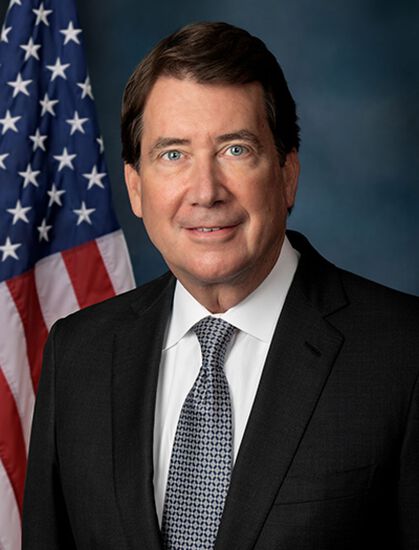
Bill Hagerty
11% support rate
Ranked legislators
10
5 support · 5 oppose
Key legislators

Who's moving medicaid in United States

Legislators moving medicaid in United States
Legislator Party Stance Support rate Decisive votes
Christopher Murphy
Christopher Murphy Senate
D
Strong +
89% 9
Adam B. Schiff
Adam B. Schiff Senate
D
Strong +
80% 10
Alex Padilla
Alex Padilla Senate
D
Strong +
80% 10
Amy Klobuchar
Amy Klobuchar Senate
D
Strong +
80% 10
Andy Kim
Andy Kim Senate
D
Strong +
80% 10
Bill Hagerty
Bill Hagerty Senate
R
Strong −
11% 9
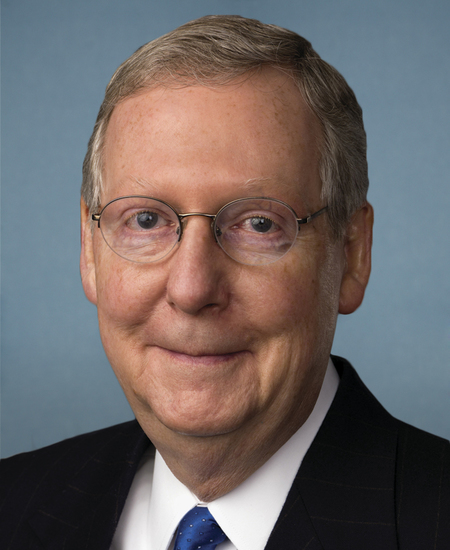
Mitch McConnell
Mitch McConnell Senate
R
Strong −
11% 9
Roger F. Wicker
Roger F. Wicker Senate
R
Strong −
11% 9
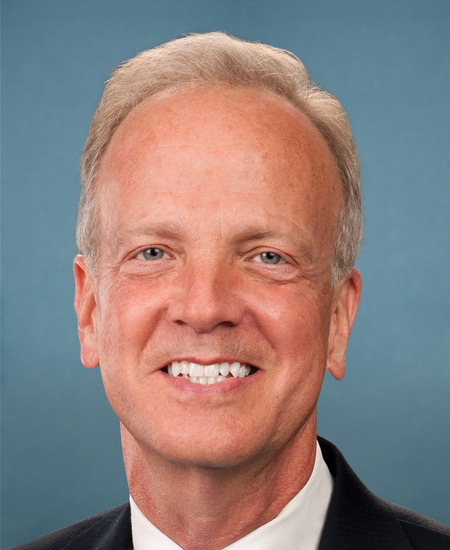
Jerry Moran
Jerry Moran Senate
R
Strong −
12% 8
Ashley Moody
Ashley Moody Senate
R
Strong −
20% 10
Showing 101–110 of 441 bills

All healthcare bills

in committee · United States · House May 19, 2026

HJRES 187: Providing for congressional disapproval under chapter 8 of title 5, United States Code, of the rule submitted by the Centers for Medicare & Medicaid Services of the Department of Health and Human Services relating to "Medicare Program; Implementation of Prior Authorization for Select Services for the Wasteful and Inappropriate Services Reduction (WISeR) Model".

This joint resolution expresses Congress's disapproval of a Centers for Medicare & Medicaid Services rule that requires doctors to obtain prior authorization for certain medical services under the WISeR Model. The bill directly affects healthcare providers and patients by seeking to cancel the rule, which would otherwise mandate that specific services be approved before they are delivered. If passed, the provision would render the rule ineffective, preventing the new prior authorization requirements from taking effect. This action is part of a standard legislative process used to reject federal regulations without needing to pass a new law.
Sub-Topics Medicaid Medicare
in committee · United States · House Apr 15, 2026

HR 8293: Abolish the CMMI Act

This bill, titled the "Abolish the CMMI Act," would eliminate the Center for Medicare and Medicaid Innovation (CMMI). The CMMI is responsible for developing and testing new healthcare payment and service delivery models for Medicare and Medicaid programs. Its abolition would directly affect Medicare and Medicaid beneficiaries and healthcare providers who participate in or are impacted by these innovative models. The bill achieves this by repealing Section 1115A of the Social Security Act, which established the CMMI.
Sub-Topics Medicaid Medicare
in committee · United States · House Apr 14, 2026

HR 8260: Cardiovascular Disease Early Detection and Prevention Act of 2026

The Cardiovascular Disease Early Detection and Prevention Act of 2026 mandates that private health insurance plans, Medicare, and Medicaid cover specific cardiovascular disease screenings. The bill requires coverage for testing of lipoprotein(a) (Lp(a)) and apolipoprotein B (ApoB) levels. This coverage applies to individuals with a family history of premature cardiovascular disease, a personal history of heart attack or stroke, elevated LDL cholesterol, diabetes, obesity, or other recognized cardiovascular risk factors. For eligible individuals, these tests must be provided without any cost sharing, such as co-pays or deductibles.
in committee · United States · House Apr 20, 2026

HR 8391: To amend titles XVIII and XIX of the Social Security Act to require coverage of certain food and nutrition services under the Medicare and Medicaid programs.

This bill, HR 8391, proposes to expand the types of services covered under the Medicare and Medicaid programs. It directly affects Medicare beneficiaries and Medicaid recipients by requiring coverage for certain food and nutrition services. Under Medicare, these services would be covered, with Medicare paying 80% of the actual charge. For Medicaid, these services would also be covered and become a mandatory benefit that states must provide. The Secretary of Health and Human Services will specify the exact requirements for these services, and the changes would take effect 180 days after the bill's enactment.
Sub-Topics Medicaid Medicare
in committee · United States · House Apr 15, 2026

HR 8317: Tech to Save Moms Act

The Tech to Save Moms Act aims to improve maternal health outcomes for pregnant and postpartum individuals by increasing access to technology-enabled care. It allows states to adopt and use telehealth tools under Medicaid for screening, monitoring, and managing health complications during pregnancy and up to one year postpartum. The bill also establishes two grant programs: one to fund technology-enabled collaborative learning models for training maternal healthcare providers, especially in underserved areas, and another to increase access to digital tools that reduce maternal health disparities. Finally, it directs the National Academies to study the use of technology and patient monitoring devices in maternity care, focusing on racial and ethnic biases.
in committee · United States · House Apr 20, 2026

HR 8390: National Food as Medicine Program Act of 2026

The National Food as Medicine Program Act of 2026 proposes to establish a federal grant program for states to create or expand "Food as Medicine" initiatives under Medicaid waivers. These programs would provide medically supportive food and nutrition interventions, like tailored meals or produce prescriptions, to Medicaid-eligible individuals with nutrition-related chronic conditions or food insecurity. The bill also directs the Department of Agriculture to provide technical assistance to farmers, especially socially disadvantaged and beginning farmers, to help them supply regeneratively or organically produced local food to these programs. Furthermore, it mandates federal guidance for states on implementing these programs, including eligibility criteria, provider roles, and procurement methods, aiming to integrate food interventions into healthcare.
Sub-Topics Medicaid
in committee · United States · House Apr 16, 2026

HR 8355: Accountable Produce is Medicine Act of 2026

The "Accountable Produce is Medicine Act of 2026" mandates the creation of a new pilot program within the Center for Medicare and Medicaid Innovation. This program requires selected healthcare providers to offer a comprehensive set of "Accountable Produce is Medicine services" to eligible Medicare, Medicaid, and CHIP beneficiaries. These services, provided without patient cost-sharing, include healthy foods (like fruits and vegetables), nutrition counseling, care coordination, and remote monitoring for individuals with specific chronic diseases in underserved areas. Participating programs will screen patients, deliver these services for a year, and track health data to evaluate outcomes and cost savings over a period of at least five years.
in committee · United States · House Apr 9, 2026

HR 8234: Save Money, Save Lives Act

The Save Money, Save Lives Act removes a budget neutrality requirement that previously limited certain Medicaid demonstration projects. This change directly affects state and local health programs that use Section 1115 waivers to test innovative healthcare delivery methods. By repealing the specific budget neutrality provision, the bill allows these programs to operate without the strict financial constraints that were previously in place. The legislation also rescinds the funding that had been set aside for enforcing this requirement.
Sub-Topics Medicaid
in committee · United States · House Dec 15, 2025

HR 6721: MAP for Care Act

This bill establishes a Medicare Advance Directive Certification Program to help Medicare beneficiaries create and manage legally recognized advance directives that outline their medical care preferences. The program would require participating vendors to meet strict accreditation standards for security, privacy, and accessibility while allowing beneficiaries to voluntarily enroll and update their documents online. Key provisions include mandatory notifications to Medicare enrollees, federal oversight of vendor compliance, and the availability of state-compliant advance directive forms on the Centers for Medicare & Medicaid Services website. The legislation does not preempt state laws and ensures that certified directives remain accessible to healthcare providers and designated family members when needed.
Sub-Topics Medicaid Medicare
in committee · United States · House Mar 12, 2026

HR 7909: Medicare Expansion and Lowering Costs Now Act

This bill creates a Medicare buy-in option for individuals aged 50 to 64 who would qualify for Medicare at age 65 but are not yet eligible, allowing them to enroll in Medicare Parts A, B, and D with premiums based on average costs and geographic adjustments. It also establishes a new voluntary supplemental insurance program for current Medicare beneficiaries to help cover deductibles and copayments, starting in 2027, and requires the government to negotiate lower drug prices for Medicare Part D plans beginning in 2029. The legislation creates a reinsurance fund to stabilize health insurance premiums in the individual market for high-cost enrollees starting in 2025 and extends risk corridor reauthorization through 2031. Additionally, the bill increases eligibility for premium tax credits to cover individuals with household incomes up to 400% of the poverty line and repeals certain reconciliation provisions from a previous law.
Showing 101 to 110 of 441 bills
Previous 1 … 10 11 12 … 45 Next