Issue · Healthcare

Healthcare

Every healthcare bill, vote, and legislator stance in United States, automatically classified by Maddy, our AI policy reader.

Total bills
4
119th Congress
Top supporter
Darline Graham
100% support rate
Top opponent
Ashley Moody
18% support rate
Ranked legislators
10
5 support · 5 oppose
Key legislators

Who's moving healthcare in United States

Legislators moving healthcare in United States
Legislator Party Stance Support rate Decisive votes
Darline Graham
Darline Graham Senate
R
Strong +
100% 6
AA
Alan Armstrong Senate
R
Strong +
88% 8
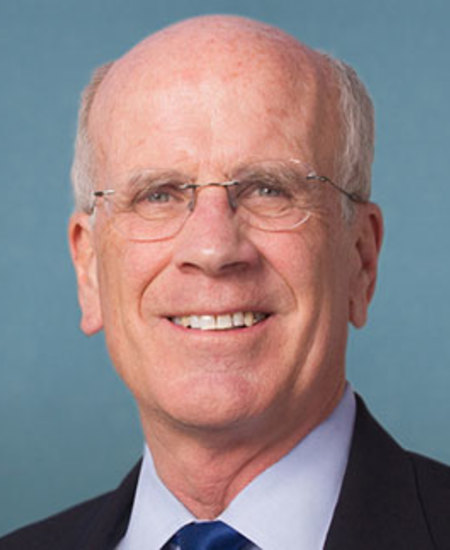
Peter Welch
Peter Welch Senate
D
Strong +
82% 22
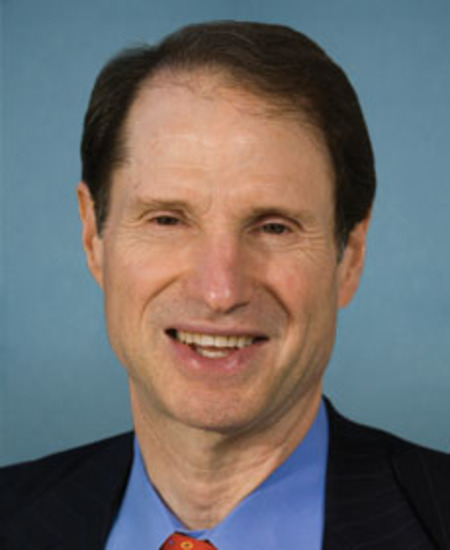
Ron Wyden
Ron Wyden Senate
D
Support
77% 22
Alex Padilla
Alex Padilla Senate
D
Support
76% 21
Ashley Moody
Ashley Moody Senate
R
Strong −
18% 22
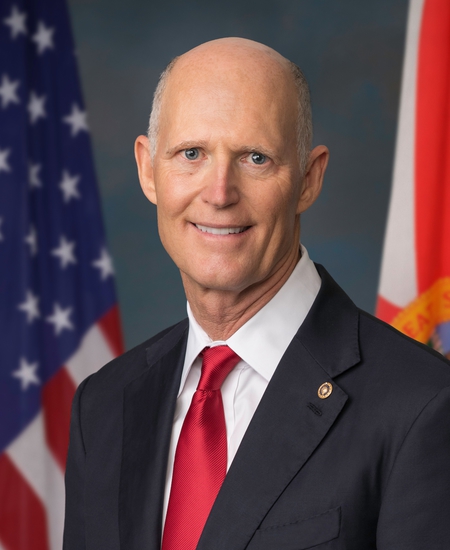
Rick Scott
Rick Scott Senate
R
Strong −
18% 22
Rand Paul
Rand Paul Senate
R
Oppose
23% 22
Brad Knott
Brad Knott House · District 13
R
Oppose
28% 18
Pat Harrigan
Pat Harrigan House · District 10
R
Oppose
28% 18
Showing 4 of 4 bills

All healthcare bills

in committee · United States · Senate Jul 16, 2026

SJRES 198: A joint resolution providing for congressional disapproval under chapter 8 of title 5, United States Code, of the rule submitted by the Centers for Medicare & Medicaid Services of the Department of Health and Human Services relating to "Medicare Program; Implementation of Prior Authorization for Select Services for the Wasteful and Inappropriate Services Reduction (WISeR) Model".

This joint resolution seeks to officially disapprove a specific rule issued by the Centers for Medicare & Medicaid Services regarding the implementation of prior authorization for certain Medicare services. The proposed action would prevent the rule, known as the WISeR Model, from taking effect, thereby stopping the new requirements from being enforced. If passed, the resolution would nullify the regulation and maintain the status quo for the affected healthcare services.
introduced · United States · Senate Jan 27, 2026

S 3627: Pregnant Students’ Rights Act

S 3627, the Pregnant Students’ Rights Act, requires colleges and universities participating in federal student aid programs to provide clear information about pregnancy-related resources and accommodations to all enrolled students. The bill mandates annual email notifications, inclusion in student handbooks and orientations, and availability at health centers and websites, detailing campus/community resources, available accommodations, and how to file Title IX complaints. It specifically covers students planning to or currently pregnant who wish to carry a baby to term. The law focuses solely on disseminating existing information and does not create new rights or accommodations. (Bill text amended under Section 485 of the Higher Education Act.)
in committee · United States · Senate Jan 13, 2026

SJRES 84: A joint resolution providing for congressional disapproval under chapter 8 of title 5, United States Code, of the rule submitted by the Centers for Medicare & Medicaid Services relating to "Patient Protection and Affordable Care Act; Marketplace Integrity and Affordability".

SJRES 84 is a joint resolution seeking to block a rule issued by the Centers for Medicare & Medicaid Services (CMS) under the Affordable Care Act. The rule, published in the Federal Register on June 25, 2025, aimed to improve affordability and integrity in health insurance marketplaces. If approved, this resolution would invalidate the rule under a federal disapproval process, preventing its implementation. This directly affects how health insurance plans are structured and priced for consumers using ACA marketplaces.
signed · United States · Senate Jul 16, 2025

S 331: HALT Fentanyl Act

Halt All Lethal Trafficking of Fentanyl Act or the HALT Fentanyl Act This act permanently places fentanyl-related substances as a class into schedule I of the Controlled Substances Act. A schedule I controlled substance is a drug, substance, or chemical that has a high potential for abuse; has no currently accepted medical value; and is subject to regulatory controls and administrative, civil, and criminal penalties under the Controlled Substances Act. Under the act, offenses involving fentanyl-related substances are triggered by the same quantity thresholds and subject to the same penalties as offenses involving fentanyl analogues (e.g., offenses involving 100 grams or more trigger a 10-year mandatory minimum prison term). Additionally, the act establishes a new, alternative registration process for certain schedule I research. The act also makes several other changes to registration requirements for conducting research with controlled substances, including permitting a single registration for related research sites in certain circumstances, waiving the requirement for a new inspection in certain situations, and allowing a registered researcher to perform certain manufacturing activities with small quantities of a substance without obtaining a manufacturing registration. Finally, the act expresses the sense that Congress agrees with the interpretation of the Controlled Substances Act in United States v. McCray , a 2018 case decided by the U.S. District Court for the Western District of New York. In that case, the court held that butyryl fentanyl, a controlled substance, can be considered an analogue of fentanyl even though, under the Controlled Substances Act, the term controlled substance analogue specifically excludes a controlled substance.