Issue · Environment

Environment (Agriculture)

Every environment bill, vote, and legislator stance in United States, automatically classified by Maddy, our AI policy reader.

Total bills
79
119th Congress
Top supporter
Marie Gluesenkamp Perez
89% support rate
Top opponent
Brian K. Fitzpatrick
22% support rate
Ranked legislators
10
5 support · 5 oppose
Key legislators

Who's moving environment · agriculture in United States

Legislators moving environment in United States
Legislator Party Stance Support rate Votes
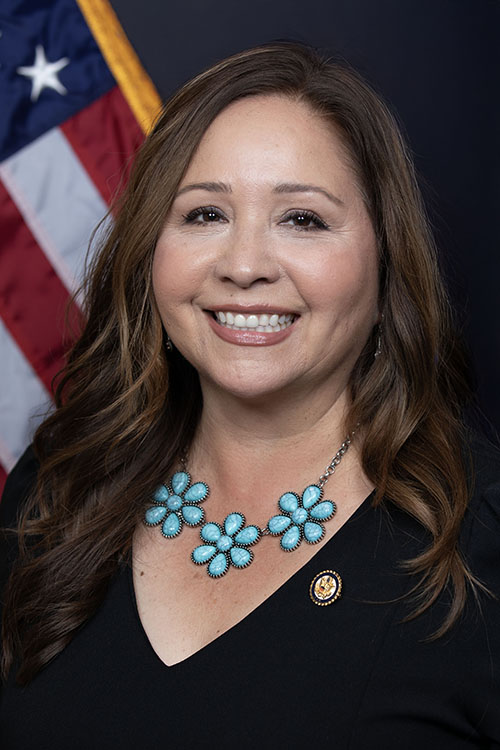
Marie Gluesenkamp Perez
Marie Gluesenkamp Perez House · District 3
D
Strong +
89% 9
Aaron Bean
Aaron Bean House · District 4
R
Support
78% 9
Abraham J. Hamadeh
Abraham J. Hamadeh House · District 8
R
Support
78% 9
Anna Paulina Luna
Anna Paulina Luna House · District 13
R
Support
78% 9
Ben Cline
Ben Cline House · District 6
R
Support
78% 9
Brian K. Fitzpatrick
Brian K. Fitzpatrick House · District 1
R
Oppose
22% 9
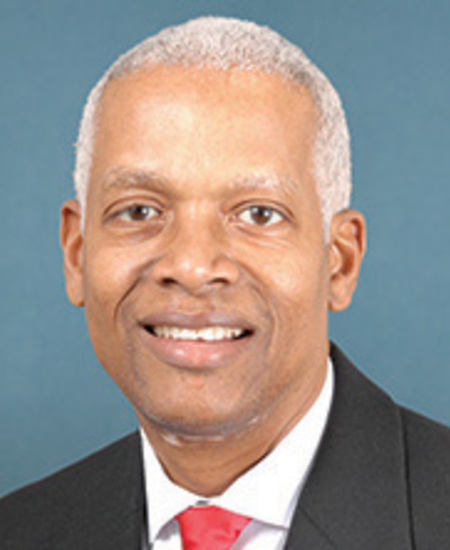
Henry C. "Hank" Johnson, Jr.
Henry C. "Hank" Johnson, Jr. House · District 4
D
Oppose
22% 9
Eleanor Holmes Norton
Eleanor Holmes Norton House · District At-Large
D
Oppose
29% 7
Pablo José Hernández
Pablo José Hernández House · District At-Large
D
Oppose
29% 7
Adelita S. Grijalva
Adelita S. Grijalva House · District 7
D
Oppose
33% 9
Showing 51–60 of 79 bills

All environment bills

passed · United States · House May 19, 2026

HR 7567: Farm, Food, and National Security Act of 2026

Farm, Food, and National Security Act of 2026 This bill (commonly known as the farm bill) reauthorizes through FY2031 and modifies Department of Agriculture programs that address commodity support, conservation, trade and international food aid, nutrition assistance, farm credit, rural development, research and extension activities, forestry, energy, horticulture, crop insurance, livestock and other animals, and foreign investments in U.S. agricultural land.
Sub-Topics Conservation Forestry Tags Agriculture
in committee · United States · Senate Jan 23, 2025

S 211: Resiliency for Ranching and Natural Conservation Health Act

This bill allows ranchers with grazing permits or leases to temporarily use vacant public grazing land when their usual land becomes unusable due to disasters like droughts, wildfires, or extreme weather. The Secretary of Agriculture or Interior can make this temporary access available, subject to conditions ensuring it doesn’t alter the rancher’s original grazing rights or future allocations. Key provisions require the Secretary to consider ecological conditions, coordinate across agencies, and establish guidelines within one year to streamline this process. The temporary use is limited to the duration needed for the original land to recover, and it does not affect the rancher’s permanent access or terms to their original allotment.
Sub-Topics Conservation Natural Disasters Public Lands Tags Agriculture
in committee · United States · House Dec 2, 2025

HR 5875: COWS Act of 2025

The COWS Act of 2025 creates a new program to help livestock and dairy farmers adopt manure management practices that reduce greenhouse gas emissions, such as composting, pasture-based systems, and technologies avoiding wet storage. It provides financial incentives (up to 100% of costs for planning, equipment, and implementation) with at least 50% paid upfront, prioritizing small/mid-sized operations, beginning farmers, and socially disadvantaged producers. The bill requires the Secretary to develop evaluation criteria focused on maximizing carbon sequestration, emissions reductions, and environmental benefits like improved water quality, while offering technical assistance for implementation.
Sub-Topics Climate Change Water Quality Tags Agriculture
in committee · United States · House Jun 12, 2025

HR 3979: LEAPS Act

The LEAPS Act requires the U.S. Department of Agriculture (USDA) to create and share practical resources to help farmers and ranchers improve energy efficiency in their irrigation and livestock watering systems. Specifically, it mandates USDA to develop publicly available educational materials about cost and energy savings from efficient pumps, pipes, and controls, plus a user-friendly online tool for farmers to assess their current systems and estimate potential savings. The bill also directs USDA to train energy auditors on pumping system efficiency to strengthen existing conservation programs like the Environmental Quality Incentives Program. These provisions directly affect agricultural operations using pumping systems, aiming to reduce energy use, water waste, and emissions through voluntary upgrades.
Sub-Topics Energy Efficiency Conservation Tags Agriculture
in committee · United States · Senate May 13, 2025

S 1729: Streamlining Conservation Practice Standards Act of 2025

This bill streamlines how conservation practice standards are developed and updated for U.S. agricultural programs. It requires the Secretary of Agriculture to establish a public, rolling review process for conservation standards every five years (replacing the previous annual requirement), prioritizing innovative technologies like precision agriculture and nutrient-efficient farming methods. Farmers, state agricultural agencies, and the public will gain clearer pathways to submit new conservation practices for consideration and provide input during reviews. The bill also mandates publishing all proposed changes, public comments, and final decisions online to improve transparency.
Sub-Topics Conservation Tags Agriculture
signed · United States · Senate Jul 12, 2026

S 629: Emergency Conservation Program Improvement Act of 2025

This bill increases financial assistance for farmers and forest landowners affected by emergencies. It raises upfront payments to 75% of costs for replacing damaged farm infrastructure (like fencing) and 50% for repairs, with a 180-day deadline instead of 60 days for using funds. The bill also expands wildfire eligibility to include fires spread by natural causes or caused by the federal government. These changes apply to the Emergency Conservation Program (Section 401) and Emergency Forest Restoration Program (Section 407) under the Agricultural Credit Act of 1978.
Sub-Topics Conservation Forestry Natural Disasters Tags Agriculture
in committee · United States · Senate May 6, 2025

S 1618: Precision Agriculture Loan Act of 2025

S 1618, the Precision Agriculture Loan Act of 2025, amends existing farm loan programs to specifically include funding for precision agriculture. It expands loan eligibility for farmers to adopt precision agriculture practices (like GPS-guided equipment) and acquire related technologies (such as soil sensors). The bill adds new provisions allowing these loans to also support participation in environmental incentive programs under the Food Security Act of 1985. It streamlines administration by enabling the Farm Service Agency's Deputy Administrator to handle these loans and simplifying approvals with conservation agencies. This directly affects farmers seeking to modernize operations with technology, with the program now authorized through 2029.
Sub-Topics Conservation Tags Agriculture
in committee · United States · House Aug 1, 2025

HR 4832: Biomanufacturing and Jobs Act of 2025

The Biomanufacturing and Jobs Act of 2025 aims to strengthen the U.S. biobased products industry by increasing federal procurement of products made from renewable agricultural resources like corn and soybeans. It establishes new definitions for biobased terms, creates a Biobased Task Force within the Department of Agriculture to coordinate research and promotion, and requires federal agencies to update procurement systems to identify biobased products and train staff on their purchase. The bill mandates annual reporting on procurement progress, creates a labeling system for biobased products, and requires the Department of Agriculture to conduct public education on biobased products. This legislation directly affects farmers, biobased manufacturers, and federal procurement agencies, with the goal of supporting rural economic development.
Tags Agriculture
in committee · United States · Senate Apr 10, 2025

S 1495: NRCS Wetland Compliance and Appeals Reform Act

S 1495 reforms how the Natural Resources Conservation Service (NRCS) handles wetland compliance and appeals for farmers and ranchers. It requires NRCS to prove violations (not farmers to prove innocence), prohibits retroactive penalties for past wetland conversions, and prevents NRCS from changing its arguments after a successful appeal. The bill also mandates on-site visits during appeals, creates farmer-led State oversight committees, and requires customer satisfaction surveys after wetland determinations. These changes directly affect agricultural landowners who interact with NRCS regarding wetland assessments.
Sub-Topics Conservation Tags Agriculture
in committee · United States · Senate Feb 27, 2025

S 795: Farmers Freedom Act of 2025

Farmers Freedom Act of 2025 This bill excludes certain prior converted cropland from permit requirements under the Clean Water Act, including Section 404 permits for discharges of dredged materials into waters of the United States (WOTUS). The exclusion applies to areas that were converted to cropland prior to December 23, 1985. However, the bill does not exclude an area that has reverted to wetlands and has not been used for agricultural purposes in five years. In recent years, there has not been regulatory consistency about which cropland, such as cropland that has reverted to wetlands, is protected under the scope of the act as WOTUS. In 2020, the Environmental Protection Agency (EPA) and the U.S. Army Corps of Engineers issued the Navigable Waters Protection Rule that, among other provisions, defined  prior converted cropland in order to specify which cropland is excluded from the scope of the act. However, the U.S. District Court for the District of Arizona vacated the rule in Pascua Yaqui Tribe v. EPA . In 2023, the EPA and the Army Corps of Engineers issued another rule that excluded prior converted cropland from the scope of the act, but they defined the exclusion more narrowly than the exclusion in the 2020 rule.  Similar to the 2020 rule, this bill broadens the exclusion. The bill determines the scope of the exclusion by defining the term prior converted cropland in statute .
Sub-Topics Water Quality Tags Agriculture
Showing 51 to 60 of 79 bills
Previous 1 5 6 7 8 Next