Issue · Environment

Environment (Public Lands)

Every environment bill, vote, and legislator stance in United States, automatically classified by Maddy, our AI policy reader.

Total bills
272
119th Congress
Top supporter
Adam B. Schiff
92% support rate
Top opponent
Alan Armstrong
0% support rate
Ranked legislators
10
5 support · 5 oppose
Key legislators

Who's moving public lands in United States

Legislators moving public lands in United States
Legislator Party Stance Support rate Votes
Adam B. Schiff
Adam B. Schiff Senate
D
Strong +
92% 12
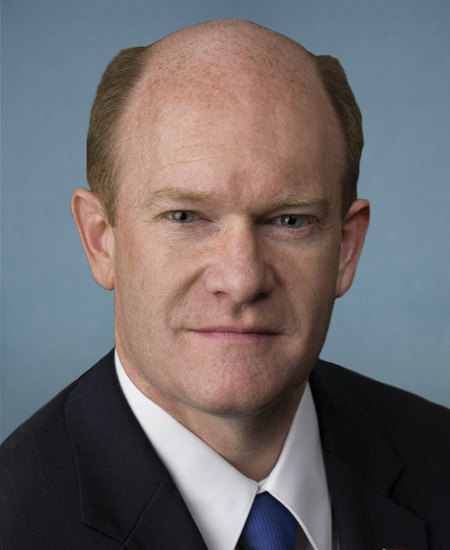
Christopher A. Coons
Christopher A. Coons Senate
D
Strong +
92% 12
Christopher Murphy
Christopher Murphy Senate
D
Strong +
92% 12
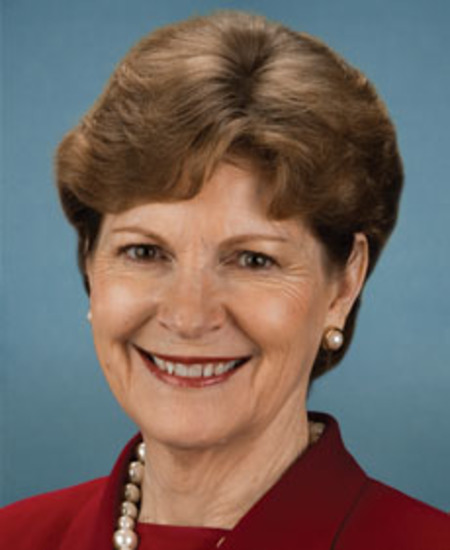
Jeanne Shaheen
Jeanne Shaheen Senate
D
Strong +
92% 12
Alex Padilla
Alex Padilla Senate
D
Strong +
85% 13
AA
Alan Armstrong Senate
R
Strong −
0% 3
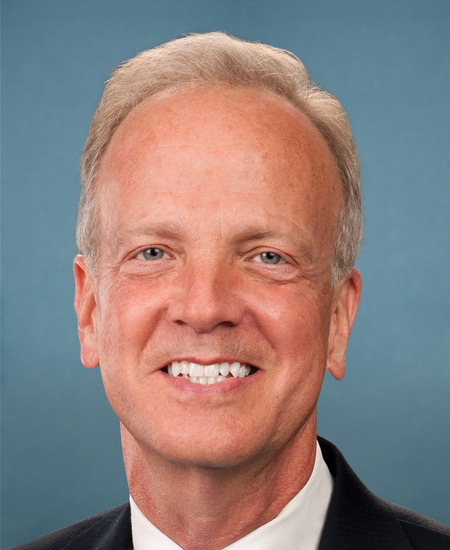
Jerry Moran
Jerry Moran Senate
R
Strong −
8% 12
Marsha Blackburn
Marsha Blackburn Senate
R
Strong −
8% 12
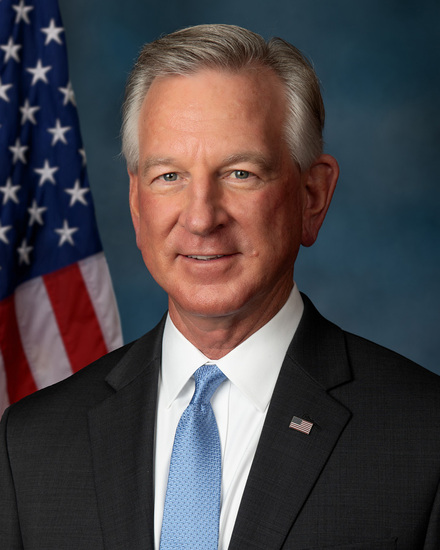
Tommy Tuberville
Tommy Tuberville Senate
R
Strong −
8% 12
Eric Schmitt
Eric Schmitt Senate
R
Strong −
9% 11
Showing 191–200 of 272 bills

All environment bills

in committee · United States · Senate Dec 2, 2025

S 1228: A bill to amend the Public Lands Corps Act of 1993 to modify the cost-sharing requirement for conservation projects carried out by a qualified youth or conservation corps, and for other purposes.

S 1228 amends the Public Lands Corps Act of 1993 to change cost-sharing requirements for conservation projects run by qualified youth or conservation corps on public lands. It increases the federal government's required cost-share from 75% to 90% and decreases the non-federal partner's share from 25% to 10%. This directly affects conservation corps and their partners by reducing their financial burden for projects on public lands. The bill makes no other changes to the Act's provisions.
in committee · United States · Senate Feb 6, 2025

S 476: White Oak Resiliency Act of 2025

This bill establishes the White Oak Restoration Initiative Coalition to coordinate federal, state, and private efforts for restoring white oak forests across the U.S. It directs the Agriculture and Interior Departments to launch 5 pilot projects on public lands (including national forests and wildlife refuges) to improve white oak regeneration and health, and creates a voluntary grant program to help private landowners restore white oak forests through partnerships with organizations like the National Fish and Wildlife Foundation. The bill also requires developing a national strategy to address white oak seedling shortages in nurseries and funds research at land-grant universities on white oak genetics, disease resistance, and reforestation techniques. These provisions directly affect federal agencies, land-grant universities, forest landowners, and conservation groups working on white oak ecosystem restoration.
in committee · United States · House Jun 11, 2025

HR 3930: Roadless Area Conservation Act of 2025

This bill codifies existing protections for designated roadless areas within the National Forest System by prohibiting new road construction, road reconstruction, and logging in these areas. It directly affects National Forest lands already identified as "inventoried roadless areas" under the current Roadless Rule, which covers roughly 58 million acres. The key mechanism requires the Secretary of Agriculture to enforce these prohibitions, maintaining current protections without expanding restrictions to other lands or altering existing multiple-use management. The bill does not create new protected areas but legally solidifies the existing regulatory framework to preserve ecological and recreational values.
in committee · United States · Senate Dec 2, 2025

S 1005: Southern Nevada Economic Development and Conservation Act

The Southern Nevada Economic Development and Conservation Act transfers approximately 48,302 acres of federal land to be held in trust for Nevada's Moapa Band of Paiutes and Las Vegas Paiute tribes, while establishing 10 special management areas totaling over 300,000 acres for conservation in Clark County. The bill authorizes conveyances of federal land to Clark County and local governments for public purposes including fire facilities, water infrastructure, and affordable housing, with requirements that land be used for specific purposes and may revert to the federal government if misused. It adjusts boundaries for Red Rock Canyon and Sloan Canyon National Conservation Areas and adds several new wilderness areas to the National Wilderness Preservation System. These provisions aim to balance economic development with conservation of natural resources in Southern Nevada.
in committee · United States · House Mar 28, 2025

HR 1994: Public Land Renewable Energy Development Act of 2025

The Public Land Renewable Energy Development Act of 2025 establishes rules for solar and wind energy projects on federal public lands and National Forest System lands. It requires project owners to pay current rents and fees (with a limited exception for projects that applied for permits by December 2016) and directs 25% of revenue from these projects to the state, 25% to the county (based on land area), 25% to speed up renewable energy permit processing, and 25% to a new conservation fund. The fund finances habitat restoration, wildlife corridor protection, wetland conservation, and improved public access to federal lands affected by renewable energy development. This bill directly affects renewable energy developers, states, counties, and federal agencies managing public lands.
passed · United States · Senate Dec 15, 2025

S 719: Tribal Forest Protection Act Amendments Act of 2025

This bill amends the 2004 Tribal Forest Protection Act to expand protections for tribal lands and clarify restoration goals. It broadens the definition of "Indian forest land or rangeland" to include areas with historical forest cover capable of restoration and explicitly adds "restore" to the Act’s purpose (previously only "protect"). The changes directly affect federally recognized tribes, Alaska Native Corporations under the Alaska Native Claims Settlement Act, and federal agencies managing land. It also authorizes $15 million annually for fiscal years 2026-2031 to implement these provisions.
Sub-Topics Forestry Public Lands Tags Tribal Nations
in committee · United States · Senate Apr 29, 2025

S 1507: Agriculture Resilience Act of 2025

# Summary of the Agriculture Resilience Act of 2025 This proposed legislation contains comprehensive provisions to enhance agricultural resilience, reduce food waste, and promote sustainable farming practices. Key components include: 1. **Conservation Programs**: - Enhanced conservation reserve program with new "Grassland 30" contracts for long-term grassland protection - Private grazing land conservation assistance focusing on soil health, climate resilience, and advanced grazing management - Support for producers transitioning from confinement systems to managed grazing 2. **Food Waste Reduction**: - Standardized "quality date" (BEST If Used By) and "discard date" (USE By) labeling requirements - Mandatory food donation clauses for Federal contracts over $10,000 - School food waste reduction grant program for local educational agencies - National media campaigns to decrease food waste incidence 3. **Sustainable Agriculture Practices**: - Establishment of agrivoltaic systems (combining solar energy with agriculture) - Alternative manure management program to reduce methane emissions - Composting recognized as a conservation practice - Support for anaerobic digestion systems to reduce methane emissions 4. **Renewable Energy**: - Enhanced Rural Energy for America Program with carbon accounting requirements - New provisions for agrivoltaic systems research and demonstration - AgSTAR program transition to USDA for anaerobic digestion support 5. **Food Donation and Recovery**: - Amendments to the Federal Food Donation Act requiring donation of excess food - Grants for large-scale composting and anaerobic digestion food waste-to-energy projects - Food Waste Research Program to coordinate nationwide efforts The Act includes significant funding allocations for these programs (e.g., $50 million annually for grazing land conservation, $1.5 billion for alternative manure management, $100 million annually for composting/anaerobic digestion projects) with a focus on supporting beginning farmers, socially disadvantaged producers, and underserved communities.
in committee · United States · Senate Dec 2, 2025

S 902: Wildfire Response and Preparedness Act of 2025

S 902, the Wildfire Response and Preparedness Act of 2025, requires federal agencies managing public lands (like the Forest Service and Bureau of Land Management) to establish response time standards for wildfires on federal land within 90 days of enactment. It mandates that initial fire evaluation occur within 30 minutes and suppression assets deployed within 3 hours where practicable. The bill also requires annual reports to Congress detailing unified budget requests, performance metrics, fleet composition, and needed changes to improve dispatch systems and contract processes for firefighting resources. This legislation directly affects federal land management agencies and their wildfire response operations.
in committee · United States · Senate Mar 11, 2025

S 941: A bill to prohibit natural asset companies from entering into any agreement with respect to land in the State of Utah or natural assets on or in land in the State of Utah.

S 941 prohibits "natural asset companies" from entering agreements about land or natural assets in Utah. These companies are defined as corporations managing land for conservation, restoration, or sustainable use, or similar organizations holding ecological rights to specific areas. The bill directly affects such entities by banning all agreements related to Utah land or natural assets located on that land. This is a substantive restriction on business activity, not a procedural measure.
in committee · United States · Senate Feb 12, 2025

S 537: Protecting Access for Hunters and Anglers Act of 2025

This bill prohibits federal agencies (like the Fish and Wildlife Service and Forest Service) from banning lead ammunition or tackle on public lands and waters used for hunting or fishing, directly affecting hunters and anglers who use federal lands. It blocks new federal regulations on lead levels in hunting gear, except in limited cases where a specific area's wildlife decline is linked to lead use and the state wildlife agency approves the restriction. The law requires federal agencies to explain in notices how any exception meets state wildlife department requirements or state law. It does not change existing state laws or allow federal bans on lead where states already prohibit it.
Showing 191 to 200 of 272 bills
Previous 1 19 20 21 28 Next