Key legislators
Who's moving environment in United States
Legislators moving environment in United States
| Legislator |
Party |
Stance |
Support rate |
Votes |
|
|
D |
|
84% |
215 |
|
|
D |
|
79% |
231 |
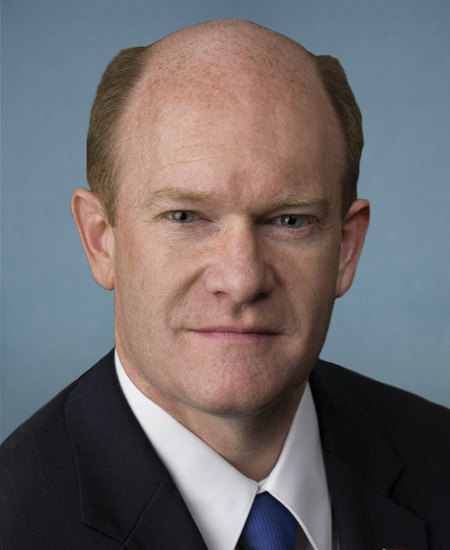
Christopher A. Coons
Senate
|
D |
|
79% |
229 |
|
|
D |
|
78% |
232 |
|
|
D |
|
78% |
232 |
|
|
R |
|
11% |
211 |
|
|
R |
|
20% |
220 |
|
|
R |
|
21% |
229 |
|
|
R |
|
22% |
221 |
|
|
R |
|
23% |
228 |
Showing 5 of 5
bills
All environment bills
This joint resolution seeks to officially disapprove a specific rule issued by the Environmental Protection Agency regarding PFAS chemical reporting. The bill directly affects the EPA by declaring the rule invalid and preventing it from taking legal effect. It aims to stop the agency from changing the timeline for when businesses must submit data about per- and polyfluoroalkyl substances. If passed, the EPA would be unable to enforce the modified submission period outlined in the original regulation.
This joint resolution seeks to disapprove a rule issued by the Environmental Protection Agency regarding Colorado's regional haze air quality plan. If passed, it would nullify the EPA's decision to disapprove Colorado's second implementation period plan for reducing air pollution from distant sources. The measure directly affects the state of Colorado and the EPA by preventing the federal agency from enforcing its disapproval of the state's air quality strategy. Under this legislation, the EPA's rule would have no legal force or effect, leaving the status of Colorado's air plan unchanged.
HJRES 131 blocks a Bureau of Land Management (BLM) rule that would have allowed oil and gas leasing in Alaska's Arctic National Wildlife Refuge Coastal Plain. The bill uses the Congressional Review Act to formally disapprove this specific rule, making it legally void. It directly affects the BLM's ability to advance the leasing program and companies seeking permits for oil and gas development in that area. The resolution became law after passing both chambers of Congress in late 2025.
Senate Joint Resolution 69 (SJRES 69) seeks to disapprove a U.S. Fish and Wildlife Service rule titled "Record of Decision for the Barred Owl Management Strategy" in Washington, Oregon, and California. The rule, issued in September 2024, outlines a plan to manage barred owl populations to protect endangered spotted owls by controlling their numbers in the region. Under the Congressional Review Act, this resolution would block the rule from taking effect, voiding its implementation. This directly affects the federal agency's ability to carry out the barred owl management strategy in the three states.
SJRES 60 is a joint resolution that would disapprove an Environmental Protection Agency (EPA) rule setting pollution emission limits and allocating allowances for Indiana under a revised cross-state air pollution plan. The rule, published in the Federal Register on May 20, 2025, would have required Indiana-based power plants and industrial facilities to adhere to specific emissions caps and manage pollution allowances. If passed, this resolution would cancel the EPA rule, preventing it from taking effect and halting its implementation. The resolution uses the congressional disapproval process under the Congressional Review Act to nullify the agency's regulation.