Key legislators
Who's moving environment in United States
Legislators moving environment in United States
| Legislator |
Party |
Stance |
Support rate |
Votes |
|
|
D |
|
84% |
215 |
|
|
D |
|
79% |
231 |
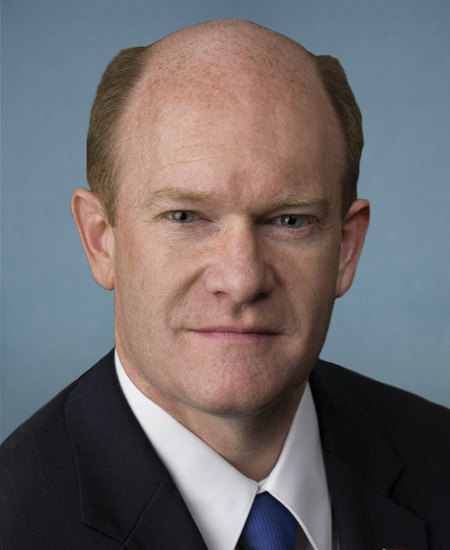
Christopher A. Coons
Senate
|
D |
|
79% |
229 |
|
|
D |
|
78% |
232 |
|
|
D |
|
78% |
232 |
|
|
R |
|
11% |
211 |
|
|
R |
|
20% |
220 |
|
|
R |
|
21% |
229 |
|
|
R |
|
22% |
221 |
|
|
R |
|
23% |
228 |
Showing 5 of 5
bills
All environment bills
This joint resolution seeks to disapprove a rule issued by the Environmental Protection Agency regarding Colorado's regional haze air quality plan. If passed, it would nullify the EPA's decision to disapprove Colorado's second implementation period plan for reducing air pollution from distant sources. The measure directly affects the state of Colorado and the EPA by preventing the federal agency from enforcing its disapproval of the state's air quality strategy. Under this legislation, the EPA's rule would have no legal force or effect, leaving the status of Colorado's air plan unchanged.
HJRES 140 is a procedural resolution seeking congressional disapproval of a Bureau of Land Management (BLM) rule published in the Federal Register (88 Fed. Reg. 6308, January 31, 2023). The resolution targets Public Land Order No. 7917, which proposed withdrawing federal lands in Cook, Lake, and Saint Louis Counties, Minnesota. If passed, this resolution would block the BLM rule from taking effect by invoking the disapproval process under Chapter 8 of Title 5, U.S. Code. It directly affects the implementation of the land withdrawal proposal but does not alter the underlying land status or create new policy.
This resolution seeks congressional disapproval of an Environmental Protection Agency (EPA) rule that approved South Dakota's "Regional Haze Plan for the Second Implementation Period," which addresses air quality standards to reduce haze in national parks. If passed, the resolution would nullify the EPA's approval, preventing the rule from taking effect and directly affecting how South Dakota implements its state air quality program under federal oversight. The mechanism is a standard procedural disapproval under Title 5, U.S. Code, allowing Congress to block agency rules without changing substantive policy. This is a procedural action targeting a specific EPA rule, not a new environmental policy.
SJRES 76 is a joint resolution seeking to block an Environmental Protection Agency (EPA) rule that extended deadlines for oil and natural gas companies to meet emissions standards. The rule, published in the Federal Register on July 31, 2025, would have delayed compliance with existing climate-related regulations for these companies. If passed, this resolution would prevent the EPA rule from taking effect, requiring companies to meet the original deadlines instead. It uses the Congressional Review Act - a standard procedure for Congress to disapprove agency rules - to formally reject the EPA's extension.
SJRES 60 is a joint resolution that would disapprove an Environmental Protection Agency (EPA) rule setting pollution emission limits and allocating allowances for Indiana under a revised cross-state air pollution plan. The rule, published in the Federal Register on May 20, 2025, would have required Indiana-based power plants and industrial facilities to adhere to specific emissions caps and manage pollution allowances. If passed, this resolution would cancel the EPA rule, preventing it from taking effect and halting its implementation. The resolution uses the congressional disapproval process under the Congressional Review Act to nullify the agency's regulation.