Issue · Energy

Energy

Every energy bill, vote, and legislator stance in United States, automatically classified by Maddy, our AI policy reader.

Total bills
607
119th Congress
Top supporter
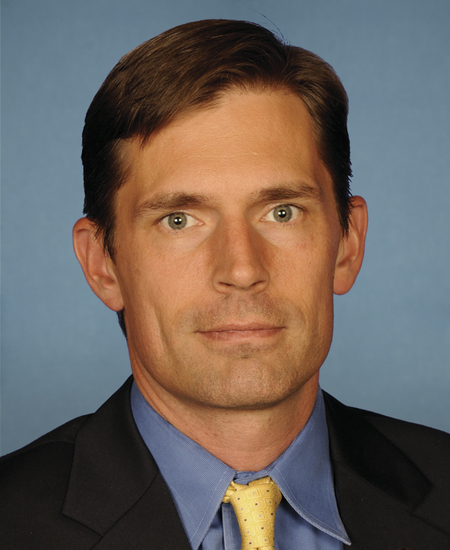
Martin Heinrich
75% support rate
Top opponent
Marsha Blackburn
26% support rate
Ranked legislators
10
5 support · 5 oppose
Key legislators

Who's moving energy in United States

Legislators moving energy in United States
Legislator Party Stance Support rate Decisive votes
Martin Heinrich
Martin Heinrich Senate
D
Support
75% 24
John W. Hickenlooper
John W. Hickenlooper Senate
D
Support
74% 38
Frederica S. Wilson
Frederica S. Wilson House · District 24
D
Support
74% 34
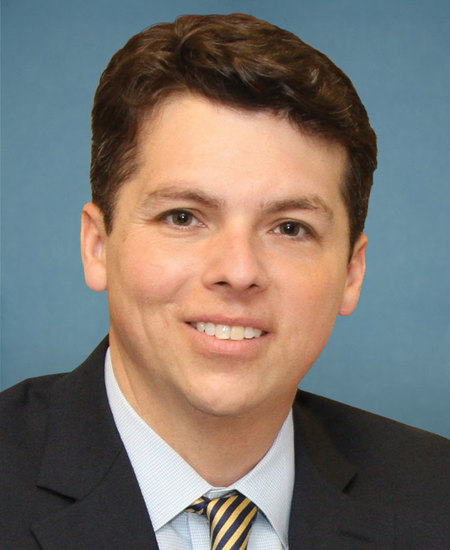
Brendan F. Boyle
Brendan F. Boyle House · District 2
D
Support
73% 49
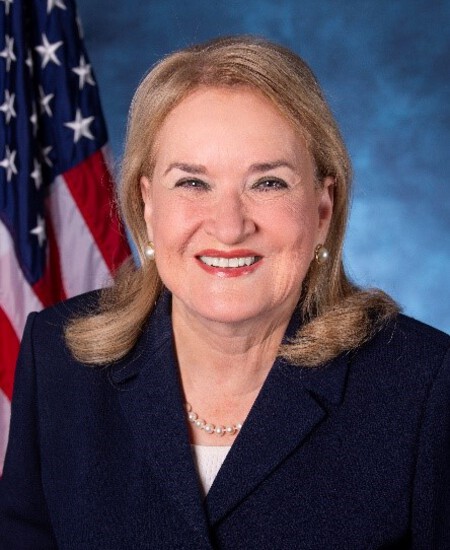
Sylvia R. Garcia
Sylvia R. Garcia House · District 29
D
Support
72% 47
Marsha Blackburn
Marsha Blackburn Senate
R
Oppose
26% 23
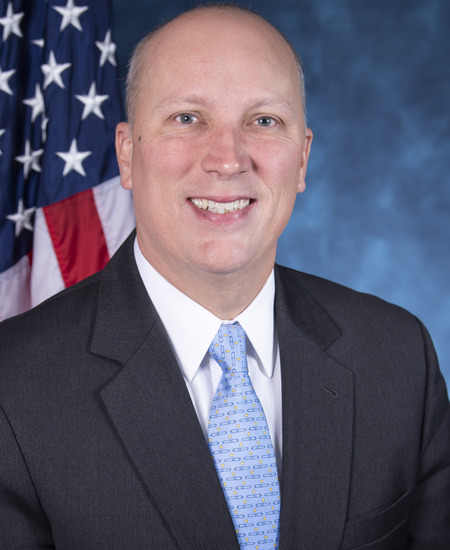
Chip Roy
Chip Roy House · District 21
R
Oppose
27% 52
Ted Budd
Ted Budd Senate
R
Oppose
27% 26
Gregory F. Murphy
Gregory F. Murphy House · District 3
R
Oppose
28% 46
Mike Johnson
Mike Johnson House · District 4
R
Oppose
28% 46
Showing 361–370 of 607 bills

All energy bills

in committee · United States · Senate Feb 11, 2026

S 714: Critical Mineral Consistency Act of 2025

Critical Mineral Consistency Act of 2025 This bill modifies the Energy Act of 2020 to expand the definition of  critical minerals used by the U.S. Geological Survey (USGS) to include  critical materials designated by the Department of Energy (DOE). It also directs USGS to update its list within 45 days of DOE adding a  mineral, element, substance, or material to its critical materials list. Thus, the bill requires the lists to be treated consistently and makes critical materials eligible for the same benefits (e.g., financing support or clean energy tax credits) provided to critical minerals. By way of background, DOE's critical materials list contains certain materials that are essential for energy, including those on the critical minerals list of the USGS. The USGS's list, which contains certain minerals that are essential to the nation's economic or national security, is currently not required to include the materials on DOE's list.
Sub-Topics Renewable Energy
in committee · United States · House Feb 26, 2025

HR 1594: Sustainable Aviation Fuel Act

The Sustainable Aviation Fuel Act establishes national goals for reducing aviation greenhouse gas emissions, aiming for a 35% reduction by 2035 and net zero by 2050 compared to 2005 levels. It creates a low-carbon fuel standard requiring a 20% reduction in carbon intensity by 2030 and 50% by 2050, with a credit system allowing producers of sustainable aviation fuel to generate credits for sale to those who don't meet the standard. The bill requires the Department of Defense to purchase at least 10% sustainable aviation fuel for military aircraft by 2025 if cost-competitive and produced domestically. It also provides funding for research through the FAA and Department of Energy, and extends tax credits for sustainable aviation fuel production through 2032.
in committee · United States · Senate Oct 23, 2025

S 3053: A bill to require a plan to modernize the nuclear security enterprise.

This bill requires the Nuclear Security Administrator to create a detailed modernization plan within 90 days. The plan must accelerate replacing aging nuclear storage and handling facilities (Material Staging Capabilities) with cost estimates and speed up key project milestones by 2026. It also mandates concurrent work with an existing high explosives infrastructure program, including the ongoing High Explosives Synthesis facility project. The Administrator must then brief relevant congressional committees (Armed Services and Appropriations panels in both chambers) on the plan within 180 days. The bill directly affects the U.S. nuclear security infrastructure and its operational planning.
Sub-Topics Nuclear
in committee · United States · House Jul 14, 2026

HR 5549: Efficient Nuclear Licensing Hearings Act

HR 5549, the Efficient Nuclear Licensing Hearings Act, streamlines the licensing process for nuclear facilities by reducing mandatory hearings. It allows the Nuclear Regulatory Commission (NRC) to issue construction permits, operating licenses, or amendments without a hearing if it provides 30 days' notice and Federal Register publication, skipping the hearing requirement only when an amendment involves "no significant hazards." This change applies to all pending NRC applications after enactment, shifting from current rules requiring hearings unless waived. The bill directly affects nuclear facility developers, the NRC, and communities potentially impacted by licensing decisions through its revised notice and hearing procedures.
Sub-Topics Nuclear Pipeline Infrastructure Tags Licensing
in committee · United States · Senate Feb 6, 2025

S 448: CIRCUIT Act

The CIRCUIT Act (S 448) expands a federal tax credit for advanced manufacturing to include distribution transformers, which are critical components in electrical power distribution systems. It provides a 10% tax credit for the production costs of these transformers, directly benefiting manufacturers that produce them. The bill defines "distribution transformer" using an existing term from the Energy Policy and Conservation Act and sets the credit to apply to transformers produced and sold 90 days after enactment. This policy change creates a new financial incentive for companies manufacturing these essential electrical infrastructure components.
in committee · United States · House Mar 14, 2025

HR 2160: Maintaining and Enhancing Hydroelectricity and River Restoration Act

Maintaining and Enhancing Hydroelectricity and River Restoration Act This bill establishes a new investment tax credit in the amount of 30% of the basis of any hydropower improvement property. The bill defines hydropower improvement property as property that adds or improves fish passage at a qualified dam; maintains or improves the quality of the water retained or released by a qualified dam; promotes downstream sediment transport and habitat maintenance; upgrades, repairs, or reconstructs a qualified dam to meet safety and security standards; improves public uses of, and access to, public waterways impacted by a qualified dam; removes an obsolete river obstruction; or places into service an approved remote dam. Further, written approval for hydropower improvement property must be obtained from the Federal Energy Regulatory Commission or state or local officials prior to January 1, 2032. The bill also allows an election to claim the investment tax credit for qualified progress expenses for some types of hydropower improvement property in advance of such property being placed into service. Any investment tax credit amount claimed for qualified progress expenses reduces the amount of the investment tax credit that may be claimed once the hydropower improvement property is placed into service.  The bill authorizes certain entities, including tax-exempt and governmental entities, to treat the investment tax credit for hydropower improvement property as a payment of tax and receive a refund of any overpayment (also known as elective pay).  Finally, the investment tax credit for hydropower improvement property may be transferred (i.e., sold).
in committee · United States · House Sep 2, 2026

HRES 179: Expressing support for the strengthening of United States-Africa partnerships in critical minerals development.

HRES 179 is a non-binding House resolution expressing congressional support for strengthening U.S.-Africa partnerships in critical minerals development. It directly affects U.S. federal agencies (like State, Commerce, and USAID) and African nations with critical mineral reserves, such as the Democratic Republic of Congo and Zambia. The resolution urges the administration to create a 5-year strategy focused on diversifying U.S. mineral supply chains away from foreign entities of concern, providing financing and technical assistance to support responsible mining projects in Africa, and expanding value-added processing to boost both U.S. security and African economic development. It emphasizes mobilizing public-private investment to increase U.S. access to critical minerals like cobalt and lithium while promoting environmentally and socially responsible practices.
in committee · United States · Senate Dec 17, 2025

S 3523: Clean Competition Act

The Clean Competition Act imposes a carbon intensity charge on covered primary goods produced domestically or imported into the U.S., calculated based on how much a facility's carbon intensity exceeds industry benchmarks. The charge starts at $60 per metric ton of CO2-e in 2026 and increases annually, determined by (excess carbon intensity) x (quantity of goods) x (cost of pollution). The bill includes provisions for rebates on exports, reductions for emissions captured directly from the air, and mechanisms to support decarbonization through investments in clean technology. It also establishes "carbon clubs" for international cooperation on climate policies, affecting manufacturers in specific energy-intensive industries and importers of covered goods.
Sub-Topics Climate Change
in committee · United States · House Dec 1, 2025

HR 5661: Water Preservation and Affordability Act of 2025

The Water Preservation and Affordability Act of 2025 amends the Clean Water Act to require federal water infrastructure funding recipients to prioritize "resource preservation techniques," defined as water efficiency (reuse, conservation), energy efficiency, stormwater mitigation, sustainable design, and environmental innovation. It mandates that projects receiving loans for treatment works repairs or expansions must evaluate and use these techniques to the maximum extent practicable. The bill increases annual funding for the Clean Water Infrastructure Resiliency Program from $25 million to $50 million (2026-2031) and authorizes $40 million yearly for a wastewater efficiency pilot program (2026-2031). These changes directly affect municipal water systems and wastewater treatment facilities receiving federal grants or loans under the Clean Water Act.
in committee · United States · House Sep 17, 2025

HR 5424: Energizing Our Communities Act

HR 5424, the *Energizing Our Communities Act*, creates a fund to provide payments to communities hosting major new or upgraded electric power transmission projects (those capable of moving 999 megawatts or more). The fund, financed by a portion of interest collected on specific federal energy loans, pays host communities (municipalities or tribes) within 18 months of project construction starting. Communities must use 80% of funds for local services like schools, broadband, parks, or workforce training, and at least 20% for conservation, recreation, or climate resilience projects like habitat restoration or park access. The bill requires annual reports to Congress on fund usage and payments.
Showing 361 to 370 of 607 bills
Previous 1 36 37 38 61 Next