Issue · Education

Education (K-12 Education)

Every education bill, vote, and legislator stance in United States, automatically classified by Maddy, our AI policy reader.

Total bills
167
119th Congress
Top supporter
Adam B. Schiff
100% support rate
Top opponent
Donald G. Davis
0% support rate
Ranked legislators
10
5 support · 5 oppose
Key legislators

Who's moving k-12 education in United States

Legislators moving k-12 education in United States
Legislator Party Stance Support rate Votes
Adam B. Schiff
Adam B. Schiff Senate
D
Strong +
100% 4
Amy Klobuchar
Amy Klobuchar Senate
D
Strong +
100% 4
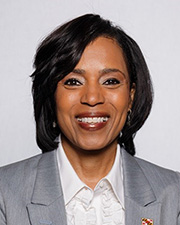
Angela D. Alsobrooks
Angela D. Alsobrooks Senate
D
Strong +
100% 4
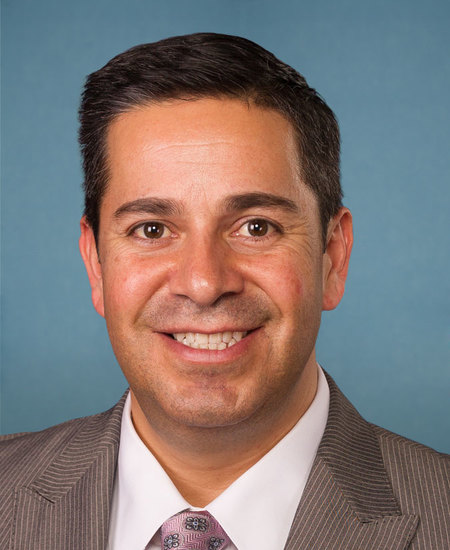
Ben Ray Luján
Ben Ray Luján Senate
D
Strong +
100% 4
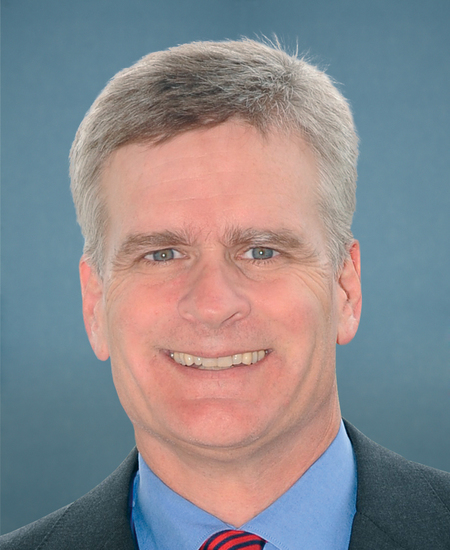
Bill Cassidy
Bill Cassidy Senate
R
Strong +
100% 4
Donald G. Davis
Donald G. Davis House · District 1
D
Strong −
0% 3
Eugene Simon Vindman
Eugene Simon Vindman House · District 7
D
Strong −
0% 3
Henry Cuellar
Henry Cuellar House · District 28
D
Strong −
0% 3
Laura Gillen
Laura Gillen House · District 4
D
Strong −
0% 3
Marie Gluesenkamp Perez
Marie Gluesenkamp Perez House · District 3
D
Strong −
0% 3
Showing 51–60 of 167 bills

All education bills

passed · United States · House Mar 17, 2026

HR 6392: Home School Graduation Recognition Act

Home School Graduation Recognition Act This bill clarifies that students who complete their secondary education in a home school setting recognized under state law are high school graduates for purposes of eligibility for federal student aid.
in committee · United States · House May 21, 2025

HR 3541: See the Board Act

HR 3541, the "See the Board Act," creates a federal grant program to provide free eye care services to students in public elementary and secondary schools. The program, administered by the Secretary of Health and Human Services, awards grants to nonprofit organizations to purchase mobile eye care equipment and cover operational costs like staff, personal protective equipment, and optical services. These grants fund mobile clinics that bring vision screenings, comprehensive exams, and glasses directly to schools, targeting students attending public K-12 schools as defined under the Elementary and Secondary Education Act. The bill authorizes funding for fiscal years 2026 through 2031 to support this initiative.
in committee · United States · Senate Apr 9, 2025

SRES 168: A resolution supporting the goals and ideals of the Rise Up for LGBTQI+ Youth in Schools Initiative, a call to action to communities across the United States to demand equal educational opportunity, basic civil rights protections, and freedom from erasure for all students, particularly LGBTQI+ young people, in K-12 schools.

This resolution (SRES 168) expresses the U.S. Senate's support for the "Rise Up for LGBTQI+ Youth in Schools Initiative," which calls on communities to demand equal educational opportunities, civil rights protections, and inclusion for LGBTQI+ students in K-12 schools. It specifically highlights the need to address anti-LGBTQI+ policies in states - including restrictions on sports participation, bathroom access, and classroom curricula - and cites research showing these policies harm students' mental health, academic performance, and sense of safety. The resolution urges states and localities to adopt inclusive policies like anti-bullying protections and gender-neutral dress codes to create affirming school environments. It does not create new laws but serves as a symbolic endorsement of efforts to combat discrimination against LGBTQI+ youth, particularly transgender, nonbinary, and students of color.
in committee · United States · House Apr 7, 2025

HR 2682: STOP Bullying Act

HR 2682, the STOP Bullying Act, requires each state to establish a state anti-bullying task force using federal grants. The task force must study bullying in K-12 schools, including policies, education efforts, and bullying-related violence or self-harm, and include specific members like teachers, students, parents, psychologists, and LGBTQ+ advocates. States must submit a public report with findings, recommendations for legislation or actions, and best practices for addressing bullying within one year. This bill directly affects all public K-12 schools and students across the country, particularly focusing on reducing bullying against marginalized groups like LGBTQ+ students, Jewish students, and students with disabilities. The law creates a structured process for states to develop evidence-based anti-bullying strategies but does not provide direct funding for school programs.
in committee · United States · Senate Jan 28, 2026

S 3710: SOAR Permanent Authorization Act

The SOAR Permanent Authorization Act extends the District of Columbia's Scholarships for Opportunity and Results (SOAR) program permanently, replacing its temporary authorization. It allows scholarship grants to be renewed for up to five additional years without competitive bidding, expands the eligible service area to include the Washington metropolitan region (adding Maryland and Virginia counties), and updates school accreditation requirements to include U.S. Immigration and Customs Enforcement-approved bodies. The bill increases annual funding from $60 million to $75 million starting in fiscal year 2027, extends scholarships to cover pre-kindergarten, and requires more frequent program evaluations focused on student academic progress, graduation rates, and school safety comparisons. These changes directly affect D.C. students using SOAR scholarships, participating schools, and the entities administering the program.
in committee · United States · House Mar 3, 2025

HR 1810: Safe Schools Improvement Act

Safe Schools Improvement Act This bill requires states to direct their local educational agencies (LEAs) to establish policies that prevent and prohibit bullying and harassment of elementary and secondary school students. In particular, these policies must prohibit bullying and harassment based on race, color, national origin, disability, religion, or sex. Sex includes sexual orientation, gender identity, and sex characteristics (including intersex traits). Further, LEAs must provide (1) students, parents, and educational professionals with annual notice of the conduct prohibited in their disciplinary policies; (2) students and parents with grievance procedures that target such conduct; and (3) the public with annual data on the incidence and frequency of that conduct at the school and LEA level. The Department of Education must conduct and report on an independent biennial evaluation of programs and policies to combat bullying and harassment in elementary and secondary schools. The National Center for Education Statistics must collect state data to determine the incidence and frequency of the conduct prohibited by LEA disciplinary policies.
in committee · United States · House Jul 23, 2025

HR 4685: ICBM Act

HR 4685, the ICBM Act, pauses the $141 billion Sentinel intercontinental ballistic missile program and extends the Minuteman III missile system's operational life until 2050. It redirects all remaining funds for the Sentinel program and its associated W87-1 warhead modification to the Department of Education for K-12 programs under the Elementary and Secondary Education Act. The bill also requires an independent National Academy of Sciences study to compare costs and technical feasibility of extending Minuteman III versus proceeding with Sentinel. This legislation directly affects U.S. defense spending priorities and redirects billions in taxpayer funds from nuclear modernization to education.
Sub-Topics K-12 Education
in committee · United States · House Jan 16, 2025

HR 486: Young Americans Financial Literacy Act

HR 486, the Young Americans Financial Literacy Act, authorizes $27.5 million to $55 million annually through 2029 to fund competitive grants for centers of excellence focused on financial literacy education for individuals aged 8-24. These centers, established by eligible institutions like schools, nonprofits, or financial organizations, must develop research-based programs covering budgeting, debt management, student loan guidance, and avoiding pitfalls like predatory lending. The bill specifically requires programs to address at-risk populations, include evidence-based teaching methods, and serve groups such as high school graduates, college students, young families, and military personnel. It mandates annual reporting to Congress on grant recipients and the populations they serve, with funding ending in 2029.
in committee · United States · House Jun 12, 2025

HR 3968: School Violence Prevention Act

HR 3968, the School Violence Prevention Act, creates a federal grant program to fund school-based violence prevention programs in communities with severe gun violence. It authorizes $25 million annually (2025-2031) for grants to partnerships between state/local education agencies and community nonprofits in areas experiencing high homicide rates (e.g., 35+ homicides annually) or double the national violent crime arrest rate for youth. Grants must support evidence-based programs for K-12 students - including trauma-informed counseling, conflict resolution skills, mental health access, and community engagement - while requiring annual data collection on outcomes like graduation rates. All programs must be evaluated by grantees and independent researchers, with reports shared publicly and submitted to Congress every three years.
in committee · United States · House Nov 19, 2025

HR 6133: Jumpstart on College Act

The Jumpstart on College Act provides $250 million annually to support early college high schools and dual enrollment programs that allow high school students to earn college credits while still in high school. It funds partnerships between colleges and high schools to help low-income students and those from underrepresented groups complete postsecondary credentials within normal timeframes. The bill requires grantees to track student outcomes by demographic groups, use funds for program coordination and professional development, and ensure college credits earned are transferable. States receiving grants must develop statewide strategies to expand access to these programs and address achievement gaps. The legislation emphasizes program quality through established standards and requires annual reporting on student progress toward earning college credits and diplomas.
Showing 51 to 60 of 167 bills
Previous 1 5 6 7 17 Next